


Chinese sci-fi finds passionate Indonesian followers







While science fiction used to be more associated with Western authors such as Isaac Asimov, Arthur C. Clarke, and Ursula K. Le Guin, Liu Cixin from China has now become the center of global attention, including Indonesia.
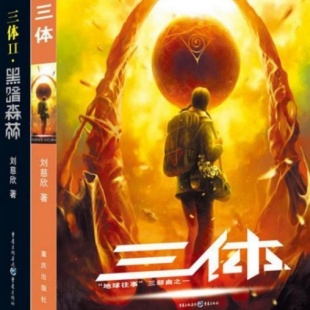
Liu's novel The Three-Body Problem won the Hugo Award for Best Novel in 2015, marking the first time a Chinese author received the honor. The Hugo Award is the most prestigious recognition in the sci-fi and fantasy genres.
For Oni Suryaman, the translator of the Indonesian version of the novel, The Three-Body Problem is not just a story about aliens or science.
"Liu's work raises big questions about the position of humans in the universe and where our civilization is going," he says.
Oni, who is also a mathematics teacher, says he is amazed by the scientific and philosophical depth of the novel, which has been translated into more than 30 languages. "There were many challenges when translating, especially in understanding the Chinese historical context and various complex scientific concepts. If I misunderstand, the translation can go wrong," he adds.
Meanwhile, Silvana, a consultant who is also a sci-fi enthusiast, had a similar experience when she first read Liu's work.
"I am indeed a fan of the space exploration theme, so The Three-Body Problem and The Wandering Earth immediately caught my attention," she says. Liu's win at the Hugo Awards also prompted Silvana's deeper exploration into the world of Chinese sci-fi.
However, both Oni and Silvana mention that Chinese science fiction is not only Liu. Hao Jingfang won the 2016 Hugo Award for Best Novelette with Folding Beijing, and Chen Qiufan won the prizes of best novel and best new sci-fi writer at the 2013 Xingyun Awards with Waste Tide, a dystopian novel depicting the reality of electronic waste and digital capitalism.
"I also highly recommend anthologies like Sinopticon translated by Xueting Christine Ni, and Broken Stars by Ken Liu. Many works by Chinese female writers offer strong social commentary, interpersonal relationships, and inner conflicts," Silvana says.
Another interesting topic is what differentiates Chinese sci-fi from Western sci-fi in the eyes of its readers.
According to Oni, Chinese sci-fi has a distinctive "Asian flavor".
"Western sci-fi now deals a lot with issues like racism, sexism, and other social concerns. Chinese sci-fi tends to return to classic themes, such as space exploration and the future of civilization," he says.
Meanwhile, for Silvana, Chinese sci-fi has a unique background and set of values, as many stories draw from the nation's millennia-old history. "The influence of mythology and culture is very strong, even though the setting is modern or futuristic. It even feels relatable when discussing urban anxiety," she says.
Her interest in sci-fi brought Silvana to attend the 81st World Science Fiction Convention held in Chengdu, Sichuan province, southwest China, in 2023. She found the event very impressive. She described the facilities for foreign participants as excellent, ranging from free shuttle services and merchandise to tours of the museum and the panda conservation center.
"There was even a giant robot from The Wandering Earth at the venue!" says the woman in her 30s. She observed that the event's infrastructure reflects China's seriousness in building a new global sci-fi center and develop it as a brand.
However, challenges still exist. One of them is limited access. "Around 60 percent of Worldcon sessions were only available in Mandarin," says Silvana. This significantly limited the participation of international attendees, including herself.
On the other hand, Oni believes that although Indonesian readers' interest in this genre is still relatively low and less popular than fantasy fiction, its fans are highly critical and dedicated. This reader base has helped strengthen the popularity of The Three-Body Problem trilogy. The first translated book, Trisurya, was published in 2019 and is now in its fourth printing. "Many people said that after reading the Indonesian version of The Three-Body Problem, they understood some of the scientific concepts in the novel better," he says.
Both hope that more Chinese sci-fi works will be translated into Indonesian in the future, and adapted into films or television series. "Film is a very good medium to popularize science fiction," Oni says.
Regarding global influence, Silvana believes that "China can be a pioneer in building an Asian sci-fi community, for example, by creating a regional convention involving writers from the Philippines, Japan, or other potential Asian countries like Indonesia. There is nothing like this in Asia," she says.