New axis for resilient growth








The world is unlikely to return to the pre-2018 era of multilateralism, but Indonesia can leverage the 'China-ASEAN+' model to assert economic autonomy
When leaders from the Association of Southeast Asian Nations, the Gulf Cooperation Council and China convened in Kuala Lumpur in May for the inaugural ASEAN-China-GCC Summit, expectations were high that the event would redefine trade diplomacy for the Global South. Against the backdrop of rising tariff barriers and escalating protectionism, this new trilateral alignment — now widely referred to as the "China-ASEAN+" model — is emerging as a vital counterweight. It offers a pragmatic framework for inclusive global development at a time when the traditional multilateral order is under strain.
The global economy remains in flux. Although a recent partial truce has paused the escalation of United States-China trade tensions, key tariffs remain in place — particularly those targeting Chinese electric vehicles, solar components and critical technologies. This reflects the persistence of strategic decoupling and continues to disrupt global value chains, prompting countries in Asia and the Gulf to recalibrate their economic strategies.
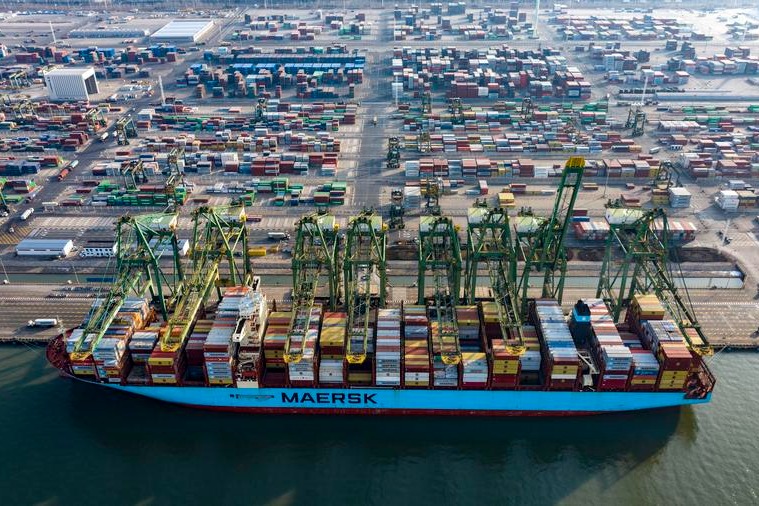
In this environment, the "China-ASEAN+" model emerges as a compelling antidote. It fosters cross-regional South-South partnerships that facilitate trade, investment and innovation through tariff-light corridors. In 2024, trade between China and ASEAN reached $982 billion, with an additional $234 billion recorded in Q1 2025 — placing ASEAN firmly as China's top trading partner. Meanwhile, China-GCC trade surged to $288 billion in 2024.
Together, this triangular alliance represents a $25 trillion economic zone encompassing over 2 billion people. It binds together commodity exporters, advanced manufacturers and capital-rich nations in a networked model of growth.
Unlike traditional blocs formed around security pacts or ideological alliances, the "China-ASEAN+"model is rooted in economic complementarity. China offers advanced manufacturing capabilities, digital infrastructure and green technology. ASEAN contributes abundant natural resources, scalable industrial capacity, and a young, dynamic labor force. The GCC brings energy wealth and deep pools of investment capital.
This synergy is already producing tangible results. Notably, Indonesia's $6 billion electric vehicle battery complex, developed by CATL, Indonesia Battery Corporation and other partners, broke ground in West Java. Saudi Arabia is committed to co-developing Indonesia's nickel and copper mining projects.
In the digital economy, ASEAN's Digital Economy Framework Agreement (DEFA) aims to generate $2 trillion in digital output by 2030. China supplies the core infrastructure (such as 5G and e-commerce platforms), while the Gulf sovereign wealth funds are financing data center expansions across the region. A trilateral green finance platform can be launched to merge GCC capital, Chinese technology and ASEAN renewable energy pipelines.
For Indonesia, the "China-ASEAN+" model is not merely an economic opportunity — it is a strategic tool to achieve national development goals and diversify geopolitical dependencies. By leveraging this platform, Indonesia can secure long-term liquefied natural gas contracts with Qatar or the United Arab Emirates, denominated in rupiah or renminbi via China's Cross-Border Interbank Payment System (CIPS). This would help insulate its current account from dollar volatility and commodity price swings.
Indonesia's central bank, Bank Indonesia, is reinforcing this strategy by expanding local currency settlement arrangements with key trading partners, including China, Malaysia and Thailand. These frameworks provide exporters and importers with alternatives to dollar-based transactions, helping reduce currency risk and enhance financial stability. Indonesia's participation in the CIPS pilot, along with its development of a central bank digital currency under "Project Garuda", positions the country to align with emerging financial architectures in Asia and the Gulf.
Meanwhile, market integration is progressing. China has become the largest importer of Indonesian durian. The Kuala Lumpur summit laid the groundwork for harmonized sanitary and halal standards — easing market access for Indonesian SMEs. Gulf investors such as the Saudi Arabia's Public Investment Fund and the UAE's Mubadala are filling financing gaps left by Western lenders, with equity stakes in geothermal projects and interest in broader renewable sectors.
Indonesia's e-commerce unicorns, meanwhile, are poised to integrate with China's super apps and Gulf fintech ecosystems under a unified data governance framework, supported by ongoing DEFA negotiations. These digital bridges are enabling Indonesian companies to scale beyond traditional markets, riding the momentum of South-South integration.
The true strategic value of the "China-ASEAN+" model lies in its ability to buffer economies from trade shocks. Each new wave of US tariffs redirects production and trade toward lower-friction partners. After the US raised tariffs in the last few months, ASEAN's share of Chinese exports jumped to 16.6 percent.
Similarly, Gulf countries are increasingly transacting in renminbi and dirham to sidestep secondary US sanctions. For oil exporters and machinery importers, this kind of "currency hedging" is becoming essential in an era where finance is increasingly politicized. With Bank Indonesia strengthening local currency liquidity and modernizing payment systems, Indonesia is well-placed to thrive in this new financial landscape — without sacrificing macroeconomic stability.
That said, this model is not without risks. Maritime tensions in the South China Sea may erode investor confidence. On the trade front, the US is escalating enforcement. Anti-circumvention investigations into Vietnamese and Malaysian exports have begun, and Washington is weighing the removal of Generalized System of Preferences privileges. If ASEAN's growing trade role is mischaracterized as a conduit for tariff evasion, it may invite external scrutiny.
To reap the full benefits while managing downside risks, Indonesia should move swiftly on several fronts. Ratifying the China-ASEAN Free Trade Area 3.0 would ease rules-of-origin restrictions, helping exporters avoid transshipment accusations. Deepening participation in the CIPS pilot could enable cross-border rupiah settlements for key commodities such as nickel and LNG — furthering the de-dollarization agenda. Issuing green sukuk, a type of Islamic bond, aligned with both Chinese and Saudi ESG taxonomies, would unlock diversified investment flows. Leading efforts to harmonize ASEAN-GCC halal standards would elevate Indonesia's role as a global Islamic economy hub.
The world is unlikely to return to the pre-2018 era of free trade and multilateralism. But rather than choosing sides in a binary geopolitical contest, Indonesia can leverage the "China-ASEAN+" model to enhance resilience, access new markets and assert economic autonomy. In line with its bebas-aktif (independent and active) foreign policy tradition, this approach is not anti-Western — it is a pragmatic hedge against uncertainty.
The opportunity now is to convert bold summit declarations into concrete cooperative moves. With careful diplomacy and economic foresight, Indonesia can help shape a new era of shared prosperity before the next wave of protectionism closes yet another chapter in global growth.
The author is an assistant professor at the Faculty of Economics and Business at the Indonesian International Islamic University and a member of the advisory board at the Reform Initiatives, Indonesia. The author contributed this article to China Watch, a think tank powered by China Daily.
Contact the editor at editor@chinawatch.cn.