KPMG: China's manufacturing ecosystem to show resilience riding on IoT, AI prowess







China's future economic growth will be increasingly propelled by green technology, smart manufacturing and the digital economy, and the country has demonstrated immense potential for industrial transformation, said Norbert Meyring, head of industrial manufacturing and automotive sector at KPMG China.
"China's focus on nurturing new quality productive forces marks a strategic shift from scale-driven growth to innovation-led and sustainable development. This approach leverages cutting-edge technologies, such as artificial intelligence, green tech and advanced manufacturing to upgrade industries and drive high-quality economic expansion," Meyring said in an exclusive interview with China Daily.
Critically, this model prioritizes value over volume and will help the transition from "Made in China" to "Designed and Automated in China." By embedding sustainability and digitalization across supply chains, these forces redefine competitiveness beyond GDP metrics, he added.
Highlighting that China has made important strides in the field of AI, with over half of all AI patents globally coming from China, Meyring said that by integrating AI across manufacturing and services, China can pivot from labor-intensive exports to high-value tech-driven growth.
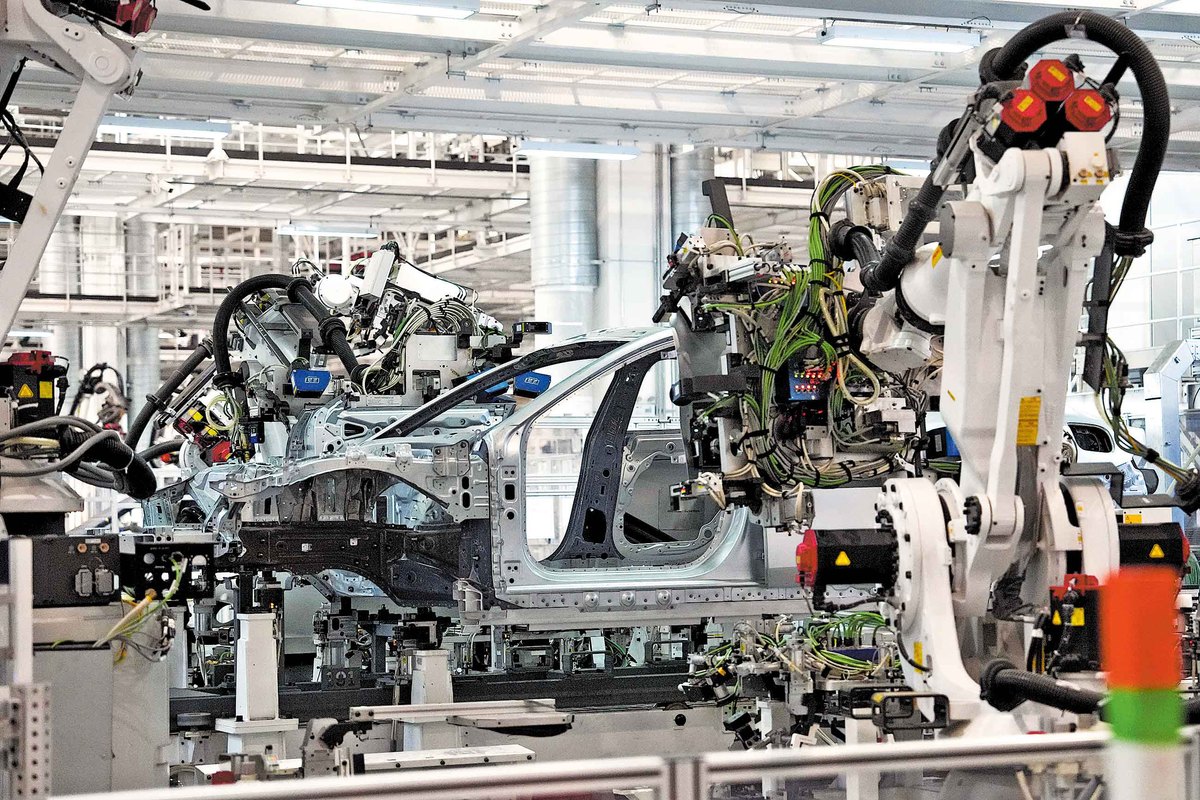
"Integrating AI, robotics and the internet of things into production processes enhances efficiency, flexibility and quality. This does not simply mean automation — it also means creating a more resilient, customizable and higher-value manufacturing ecosystem that boosts global competitiveness," he said.
The digital economy's wave will involve deep integration into all sectors such as fintech, industrial IoT, AI-driven services and next-generation internet infrastructure, which will fundamentally reshape China's economic structure toward higher value-added, innovation-led and sustainable growth.
Moreover, the imperative for sustainability is a powerful catalyst, and so investments in renewable energy, energy storage, electric vehicles, and carbon capture will drive massive industrial upgrades, create new markets and position China as a leader in the global green transition, he added.
Despite external uncertainties such as rising trade protectionism and supply chain disruptions, Meyring said China's attractiveness to foreign businesses remains fundamentally robust, as the country's vast consumer base and integrated industrial ecosystem remain irreplaceable for companies' global business expansion, especially in advanced sectors like electric vehicles, green tech and digital services.
"Foreign firms increasingly value China's deep talent pool, advanced infrastructure and burgeoning innovation clusters for research and development and high-end manufacturing — assets harder to replicate elsewhere quickly," he said, adding China's unique combination of scale, advanced manufacturing capabilities and innovation potential ensures it remains a strategic hub.
When asked about China's accelerated push toward advanced manufacturing, Meyring said the move is a crucial strategic shift, focusing on quality over quantity. "By prioritizing automation, AI integration, and green technologies, China aims to move beyond basic assembly and into high-value, knowledge-intensive production."
To fully build a modern industrial system, he said China should cultivate a workforce with advanced technical skills and cross-disciplinary expertise, such as AI engineers and green tech specialists, and foster systematic innovation and encourage deeper integration between foundational research, applied R&D and commercialization, particularly in critical areas like core semiconductors, industrial software and next-generation materials.
"These approaches, combining cutting-edge technology, skilled talent and a supportive innovation ecosystem, will solidify China's position in high-end manufacturing," he noted.
As for the role of China's EV industry in the global automotive landscape, Meyring deemed the country's EV industry a powerful catalyst for global automotive transformation, and noted that its rapid scaling has dramatically accelerated worldwide electrification timelines, forcing traditional automakers to pivot faster and invest more heavily.
Crucially, China's integrated approach — spanning battery innovation, charging infrastructure and smart vehicle tech — provides a compelling blueprint for holistic industry upgrading, he added.
Sci-tech innovation is crucial for cultivating new growth engines and competitive advantages, said Zhu Keli, founding director of the China Institute of New Economy, adding China's sharpening focus on leveraging cutting-edge digital technologies, such as AI and 5G, is conducive to reducing the operational costs of enterprises and improving production efficiency.