



Where bullet holes still speak
Village rises from ashes of war to become a model of rural vitalization, Zhao Ruixue reports in Zaozhuang, Shandong.







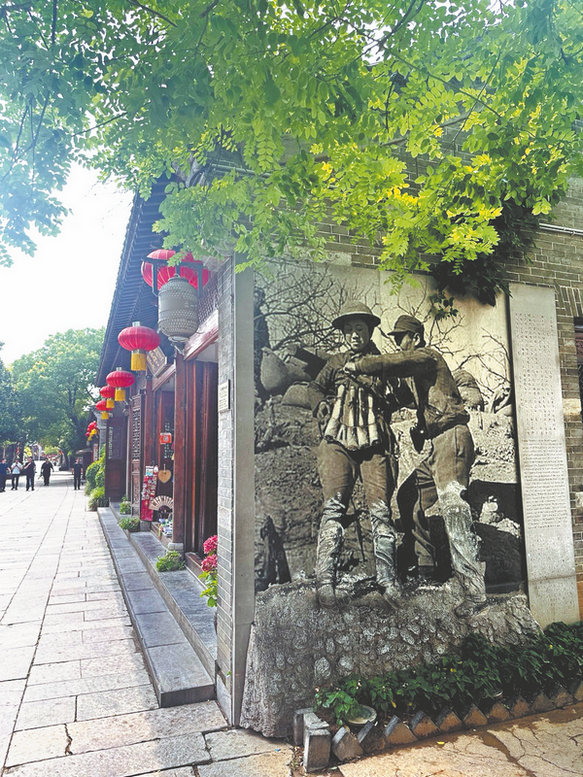
After a refreshing morning rain, sunlight bathed the Taierzhuang War Ruins Park in Zaozhuang, Shandong province, as crowds of visitors gathered around a bullet-riddled old house — a silent witness to the fierce fighting that once raged here.
This scarred building is one of 53 wartime relics preserved in the park, standing as a powerful reminder of the brutal Battle of Taierzhuang that took place in 1938, a pivotal conflict in the Chinese People's War of Resistance Against Japanese Aggression (1931-45).
"We will never forget how our nation united to resist foreign invasion. The peace we enjoy today was hard-won," says a 77-year-old tourist surnamed Zhou, visiting with a group of elderly travelers. "Young people must understand this history, love their country, and help it thrive."
The Battle of Taierzhuang is the best-known part of the Battle of Xuzhou.
Located on the northern bank of the Grand Canal 30 kilometers northeast of Xuzhou in Jiangsu province, Taierzhuang was the gateway to Xuzhou. Zhou Enlai, who later became premier of the People's Republic of China, sent Zhang Aiping, then a staff officer who became minister of defense in 1982, as a representative of the Eighth Route Army to meet with Li Zongren (or Li Tsung-jen), a Kuomintang military commander, and suggested that a major offensive be launched at Taierzhuang to deal a heavy blow to the Japanese army. Li agreed.
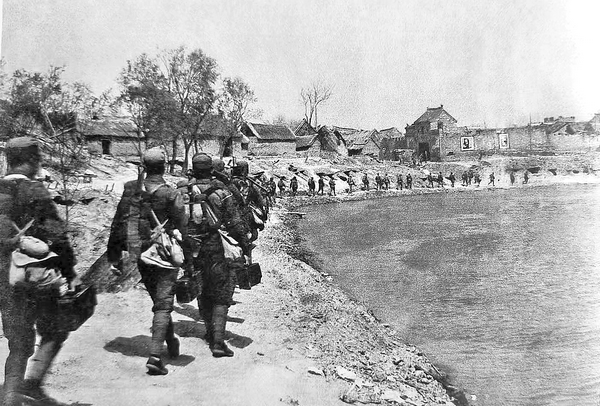
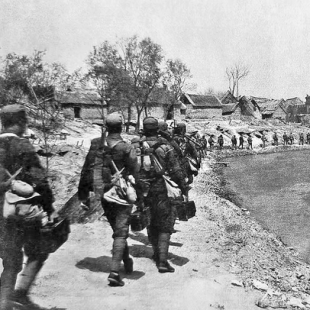
In March 1938, Japanese troops launched a surprise attack to quickly capture Xuzhou.
What followed was two weeks of brutal street fighting. The Japanese army's advantage in tanks and weapons was of little use in the narrow streets and dense buildings of Taierzhuang. Chinese troops also targeted the Japanese supply lines, adding to the pressure. Eventually, the Japanese were forced to retreat.
"This victory gave the Chinese people new confidence and shattered Japan's hopes for a quick conquest," says Kong Lingxin, director of the Taierzhuang War Memorial Hall.




















