When AI spices up classic Chinese dishes







Budweiser's "recipe" is as meticulous as a battle plan, only that the battle plan is for a brewery: a 30-day brewing process with primary fermentation for exactly six days, followed by 21 days of beechwood aging, with brewmasters tasting each batch at least five times.
Since 1867, when Adolphus Busch perfected the formula, this meticulous process has ensured all Budweiser taste the same, whether you're drinking it in St. Louis or Shanghai.
Now imagine the consequences had Busch, for instance, written, "Ferment until it smells right, age until the color looks good." The company would have collapsed in a short time. Yet this is exactly how most Chinese recipes are written — and yet Chinese cuisine has thrived for millenniums.
Tower of Babel in the Kitchen: "When my American friends ask me for my 'secret' dumpling recipe, I don't know what to tell them." This is a common refrain among overseas Chinese people. In the West, recipes read like laboratory protocols — precise measurements, exact temperature, specific timing. Such a recipe would make a Budweiser brewmaster, who controls the temperature, and pressure and oxygen levels at every stage, most comfortable. But in China, cooking is more like jazz, full of improvisation and personal flair.
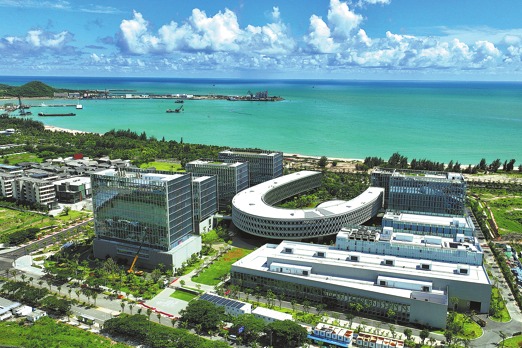
In Suzhou Industrial Park of Jiangsu province, a company called Tineco is trying to bridge this Tower of Babel. Yu Jiong, Tineco's global product director, pointed out that the main challenge in standardizing Chinese cuisine lies in the simplicity of Western cooking methods and ingredients. Tineco, which made its name with "smart floor washers", is now tackling a far more complex challenge: teaching machines to understand Chinese cooking through their AI-powered cooking robots.
Consider the numbers: French cuisine has five mother sauces, Italian 10 basic pasta sauce families. But in China, tofu alone has more than 100 preparations, not to mention that each region defines "spicy" differently — Sichuan province's numbing-hot "mala", Hunan province's dry heat, Guizhou province's sour-spiciness — each a completely different experience.
This complexity creates a curious phenomenon. McDonald's can ensure a Big Mac tastes identical, if not the same, in New York City, Paris and Tokyo, but Chinese restaurants, despite being spread globally, rarely venture beyond Chinatowns. Why? Because authentic Chinese food is too alien for most Westerners, and "adapted" American-Chinese cuisine — think General Tso's Chicken or fortune cookies — leaves Chinese diners somewhere between laughter and tears.
"Even di san xian ("three earthly bounties" or stir-fried eggplants, potatoes and peppers) meticulously prepared by a state banquet chef received only 40 percent approval in user testing. If Chinese people themselves can't agree on what tastes good, how can we expect foreigners to grasp the essence of Chinese cuisine? It's like asking someone who's never heard jazz to appreciate Miles Davis.
Lost in translation: In Western kitchens, "caramelization" has a precise scientific definition — sugar begins breaking down at 170 degrees Celsius to produce caramel flavor. Budweiser's mashing process has three specific temperature rests — protein rest, conversion rest and mashing off — each activating different enzymes at an exact temperature. But how do you translate the Chinese term wok hei, or the smoky flavor of stir-fries? The elusive smoky aroma achieved only through extremely high heat and rapid tossing has no equivalent expression in English.
From wok hei to algorithms: The invention of every culinary tool has transformed food culture. The iron wok, for example, was invented during the Song Dynasty (960-1279), when iron production in China reached about 150,000 tons a year, resulting in its widespread adoption, which in turn gave birth to "stir-frying", fundamentally reshaping Chinese cuisine.
Today, AI could trigger a similar revolution. Suppose a Chinese-American youth in Los Angeles wants to recreate grandmother's lion's head meatballs, but his grandma's instruction was only "30 percent fat, 70 percent lean meat, chop until it gets sticky". AI can translate these vague instructions into precise parameters — 30 percent fat content and 150 chops to achieve specific protein cross-linking. AI can also adjust for, or recalibrate, local ingredients, because the fat content of American pork is different from that of the pork available in China.
That Sichuan cuisine is now a best-seller in Suzhou may prove a universal language of taste. How can a dish maintain its cultural identity while appealing to diverse palates?
AI offers an elegant solution: by not creating a compromised "fusion" version, but personalizing for each individual. You can ask for an authentic Sichuan mapo tofu. Or you can say "I'm from Suzhou, make it milder", and the system will adjust accordingly — not simply by reducing chili, but rebalancing the entire flavor profile.
This approach might be the future of Chinese cuisine's globalization — not creating a uniform American version like "Panda Express", but allowing everyone to find their own authentic experience.
While at Budweiser's 12 US breweries, brewmasters gather daily to taste and compare batches, ensuring absolute consistency in every bottle, China's AI kitchens are attempting something far more ambitious: preserving and translating millions of family recipes that exist only in grandmothers' memories.
The next time you see General Tso's Chicken in a New York City Chinese restaurant, remember: real Chinese food is far more complex and fascinating. And there's a way for the world to taste this complexity — not through simplification, but through understanding.
Sun Yacheng is professor of Marketing in the School of Economics and Management at Tsinghua University.
The views don't necessarily reflect those of China Daily.
If you have a specific expertise, or would like to share your thought about our stories, then send us your writings at opinion@chinadaily.com.cn, and comment@chinadaily.com.cn.