Smarten up
China is shouldering its responsibility to play an active and constructive role in global AI governance








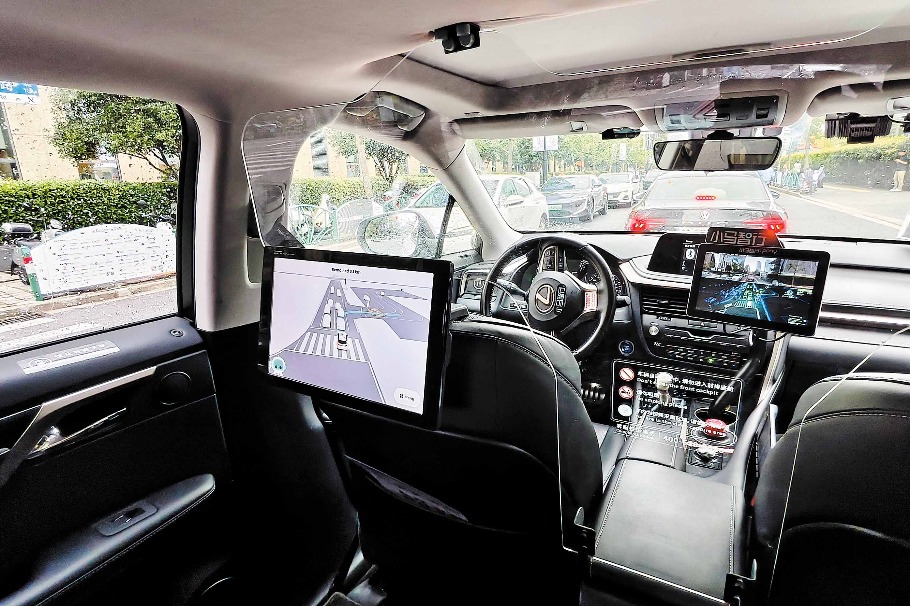
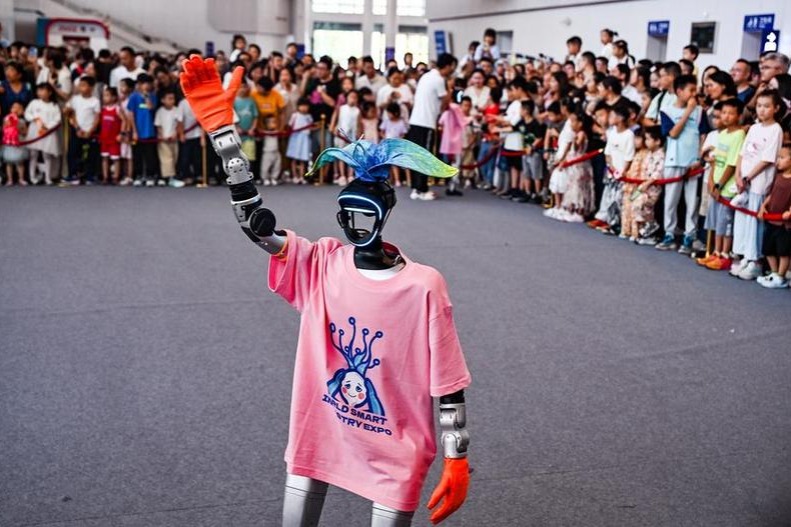
In recent years, generative artificial intelligence has achieved major breakthroughs, making the large-scale application of AI technologies increasingly tangible and bringing humanity one step closer to "artificial general intelligence" — systems capable of thinking and acting like humans.
As a strategic technology driving a new wave of scientific revolution and industrial transformation, AI offers immense opportunities for societal development while simultaneously posing significant security risks and challenges to humanity.
First, the rapid pace of AI development, which is still in its early phase of large-scale social application, means that national regulatory policies are constantly evolving, adding uncertainty to the formation of international consensus on AI governance. Maximizing AI innovation and development potential has become the primary consideration for governments when formulating regulatory policies. For instance, the European Union adopted the world's first comprehensive AI regulation, the EU AI Act, in 2024. Yet, in response to the accelerating global AI development, EU leaders have since indicated plans to streamline AI regulations to reduce constraints on technological innovation. In the United States, upon taking office, the Donald Trump administration explicitly opposed overregulation of AI.The AI Action Plan released in July made winning the AI race and consolidating US leadership in AI its top strategic priorities, calling for removing barriers to US leadership in AI and accelerating AI innovation. Such significant shifts in national regulatory stances — particularly the trend toward lighter regulation — during the innovation and development phase of AI technology are likely to shape the future of global AI governance.
Second, AI has become a key front in major-country competition, and intensifying geopolitical rivalry may further enlarge disagreements over global AI governance. As a transformative force accelerating the evolution of the global order and reshaping international power structures, AI plays a critical strategic role in determining a nation's comprehensive strength and core competitiveness. The strong reaction from the US and other Western countries to the release of Chinese AI model DeepSeek has further concretized geopolitical competition among major powers. As more nations join the global AI race, conflicting national visions for AI to that of the West are likely to deepen international divisions, trigger new geopolitical confrontations, and make the establishment of unified global AI governance rules increasingly difficult.
Third, national security concerns related to AI represent a double-edged sword that shapes the direction of global AI governance. On the one hand, all nations face common challenges in preventing and mitigating AI-related risks, ranging from mass-scale disinformation to automated cyberattacks. On the other hand, the weaponization and militarization of AI are reshaping the nature of warfare, adding further uncertainty to an already volatile global geopolitical landscape. Policymakers are thus caught between the need to secure first-mover advantages and the risk of falling into a security dilemma. Enhancing national competitiveness and deterrence capabilities often becomes the top priority, which may significantly dampen countries' willingness to engage in global AI governance.
Confronting these challenges, China, as the world's second-largest economy and a major AI power, has been playing an active and constructive role in global AI governance, serving as both an advocate and a practitioner of global AI governance for good.
In October 2023, Chinese President Xi Jinping, during his keynote speech at the third Belt and Road Forum for International Cooperation, put forward the Global AI Governance Initiative, charting the direction and path for China's active participation in global AI governance.
In July, at the World AI Conference and High-Level Meeting on Global AI Governance, China put forward the Global AI Governance Action Plan, calling on all parties to take concrete and effective actions to advance global AI development and governance based on the objectives and principles of promoting AI for good, respecting national sovereignty, aligning with development goals, ensuring safety and controllability, upholding fairness and inclusiveness, and fostering open cooperation.
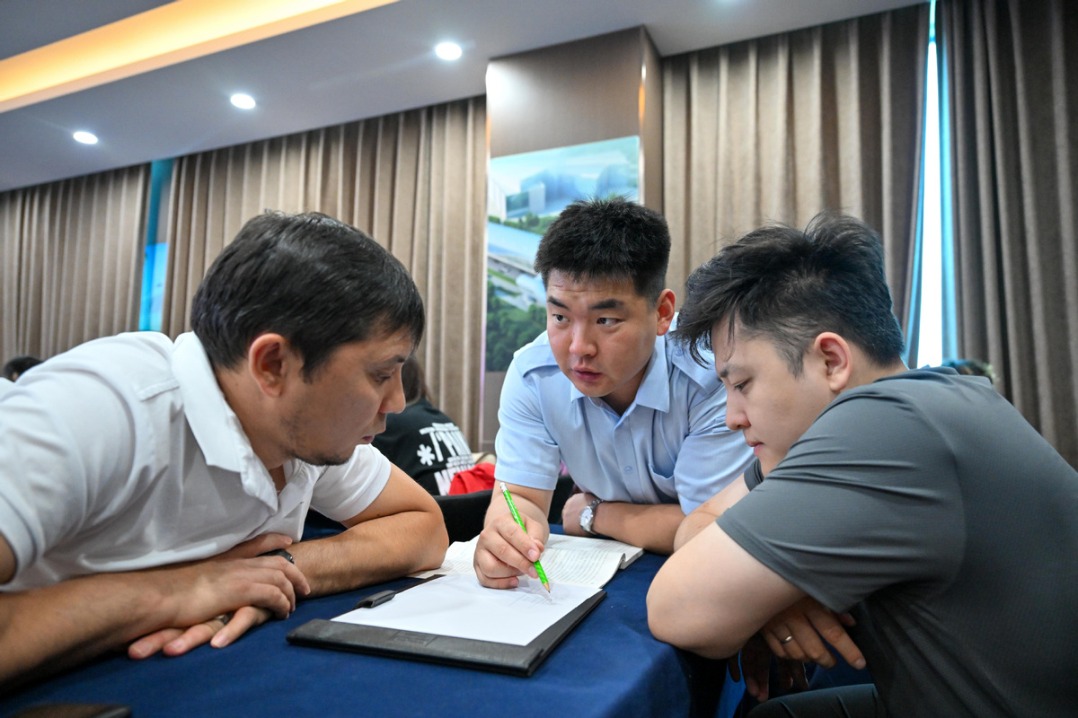
In the meantime, China has been actively promoting international dialogue and cooperation in AI, empowering bilateral and regional collaboration and helping bridge the global intelligence divide. In September 2024, China launched the AI Capacity-Building Action Plan for Good and for All, outlining five visions and launching 10 actions in response to the widespread expectations of the Global South, and initiated the Group of Friends for International Cooperation on AI Capacity-building.
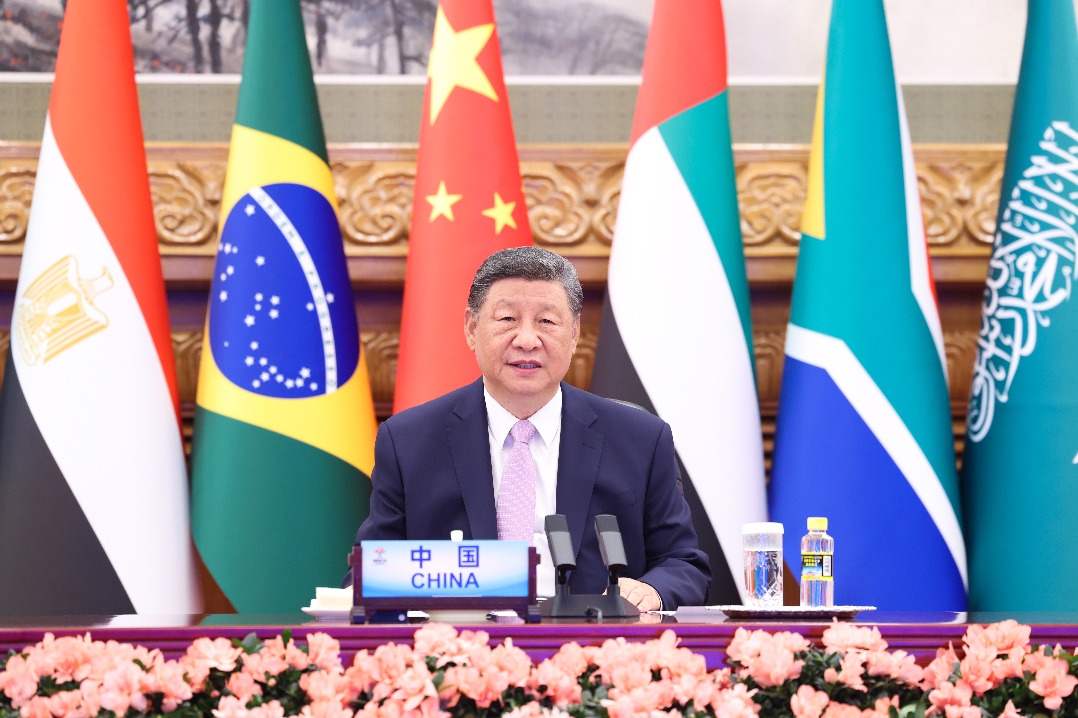
China places high importance on sharing digital opportunities with other Global South countries. Through bilateral and multilateral mechanisms such as the Digital Silk Road, BRICS cooperation, the Forum on China-Africa Cooperation and China-ASEAN cooperation, China has integrated AI into its collaborative frameworks, actively promoting broad cooperation with other Global South countries in areas including AI technical standards, infrastructure development and industrial collaboration.
As the digital technology revolution continues to deepen and evolve, the international community needs to engage in extensive consultation, joint contribution, and shared benefits on the basis of equality and mutual respect, uphold the principle of "developing AI for the people and for good", and seek certainty amid uncertainty, so as to jointly advance AI development for the benefit of the world.

The author is a senior research fellow at the Institute of World Economics and Politics at the Chinese Academy of Social Sciences. The author contributed this article to China Watch, a think tank powered by China Daily.
Contact the editor at editor@chinawatch.cn.