A new utopia near the city
Rising costs in city havens push China's youth toward rural areas near urban centers, sparking a new kind of settlement.







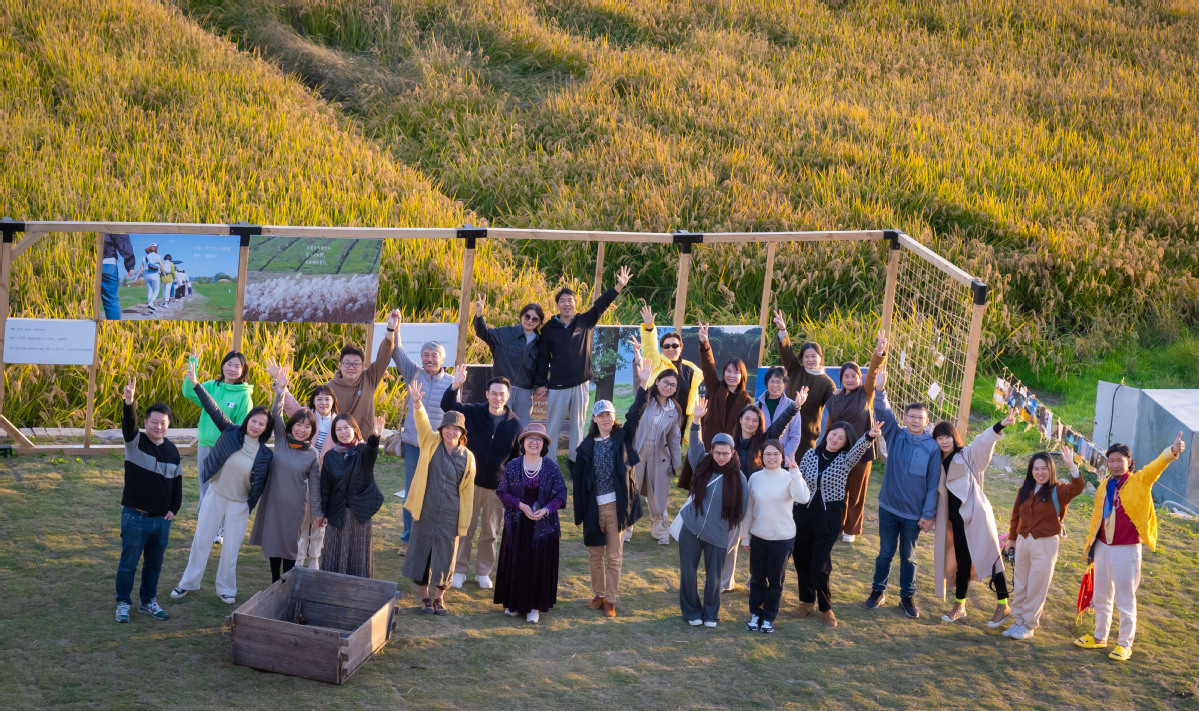
In Nuancun — literally "warm village" — in Liangzhu, Zhejiang province, as the morning mist lingers, Guo Yanhe begins grinding coffee beans in his cafe.
Not far away, freelance programmer Zhu Weitian (William) types out his first lines of code in a shared workspace, while Zhu Lu organizes the day's class schedule at the nearby Nuanshufang, or "warm study".
These newly settled "villagers" are redefining what "countryside" means through their diverse, modern lifestyles.
They aren't traditional farmers but pioneers of a growing trend in the Jiangsu-Zhejiang-Shanghai region — a quiet movement of youth migration and rural revitalization that is steadily gaining ground.
In the past, young people looking to escape the pressure of big cities often turned to places like Sanya and Wanning in Hainan province, or Dali in Yunnan province.
But as living costs and housing prices rose in those areas — and as some began to feel disconnected from major cities and cutting-edge industries — the rural outskirts of Jiangsu, Zhejiang, and Shanghai have become appealing alternatives.
Nuancun, located in the suburbs of Hangzhou, is one such destination.
"The attraction of Liangzhu is about freedom, inclusivity, and the possibility of living life on your own terms," said Zhao Dan, head of Nuancun's operations team, who relocated from Beijing.
"Compared to the monotony of city life, this place leaves room for imagination."
Zhao and her team are using their unique understanding of space and community to help shape this new model of rural living. Their goal is to support residents in realizing their ideal lifestyles and becoming their most vibrant selves.
Nuancun was officially launched a year and a half ago, but its story began much earlier.
Once known as Changming village, the area has a long and rich history. In 2019, when the Archaeological Ruins of Liangzhu City were proposed for UNESCO World Heritage status, the original villagers were relocated. But their farmhouses were carefully preserved. Today, these homes are centrally managed and rented out to newcomers from across China.
"Nuancun didn't undergo a uniform makeover — it still retains the authentic character of the old village," said Zhao. "We're planning to add more public spaces, like commercial complexes and youth communes, which provide relatively affordable housing for young people."
What truly sets Nuancun apart is that these new residents bring their own projects and passions.
They rent homes or rooms, embrace a slower, nature-oriented lifestyle, and open cafes, bakeries, innovative education spaces, or even run internet startups.
"These newcomers come from diverse industries, age groups, and regions, but they have one thing in common: a desire to live differently — to escape the fast pace and pressure of city life," Zhao said.
"With rice fields right outside their doors, this environment offers something impossible to find in the city."
Village drifters?
William, originally from Guangdong province, used to work in the internet industry, spending many years with major companies in Beijing, Shanghai, and Shenzhen. But the endless cycle of "office to apartment" left him feeling trapped.
"The constraints of time and space held back my personal growth and my search for meaning in life," he said.
Seeking a lifelong direction, William moved around — to places like Dali and Shaxi in Yunnan, and Xiaoshan in Zhejiang — before eventually settling in Liangzhu.
"In big cities, it's hard for small, agile teams to thrive due to the dominance of tech giants. Small towns may offer great scenery and fresh air, but they often lag behind in technology, marketing, and commerce," William explained. "For young people who want to achieve something without relying on big companies, Liangzhu offers the ideal middle ground."
Just as terms like beipiao (Beijing drifter) and hupiao (Shanghai drifter) describe young migrants chasing dreams in major cities, a new term — cunpiao, or "village drifters" — has emerged to describe those heading to the countryside. But William believes "drifting" only scratches the surface.
"This movement is about more than just relocating to new environments — it's also about addressing our inner dilemmas," he said. In Liangzhu, he hopes to build what he calls a "new utopia".
William has founded a youth commune in Nuancun that brings together young entrepreneurs and digital nomads — people who rely on technology to work remotely from anywhere.
He organizes seminars and public lectures, provides startup incubation support, and contributes to rural revitalization by planning large-scale events like hackathons and community markets.
"We came here because we didn't want to get stuck in the rat race of big cities," he said. "But that doesn't mean we're just 'lying flat'. We're here to create — to create a new possibility of life."
Co-builders
Guo, originally from Qiqihar in Heilongjiang province, is passionate about literature and sociology. He has spent the past decade in Hangzhou, working as a travel planner, English teacher, and cafe owner.
At the end of last year, he relocated his cafe to Nuancun, where he now divides his time between brewing coffee and writing.
He is working on a novel inspired by his experiences running the cafe and the diverse people he meets there. Unlike city cafes, where conversations often revolve around work, the new villagers in Nuancun are more likely to discuss art and philosophy.
In addition to his novel, Guo conducts social observations and shares his insights through a WeChat public account.
"What we see today are no longer traditional villages," he wrote. "Although neighbors share the same land, they each chase their own ideal lifestyle — something that goes far beyond conventional rural living."
Guo is especially interested in how newly formed communities develop cohesive social bonds, as people from across the country settle in rural areas to explore new ways of living.
"I want to understand how long it takes for an empty village to grow into a relatively stable and mature community," he said.
"Right now, there may be gaps in infrastructure or cooperation — but that's only when measured by urban standards. If we stop imposing those expectations and instead allow the community to develop organically, evolving from an imperfect state at its own pace and in its own style, then perhaps we'll find there's nothing to be dissatisfied with at all."
Zhu, originally from Mudanjiang in Heilongjiang province, strongly resonates with the concept of co-growth and co-construction.
In 2014, seeking a less stressful environment for her two children, she and her family moved from downtown Hangzhou to Liangzhu.
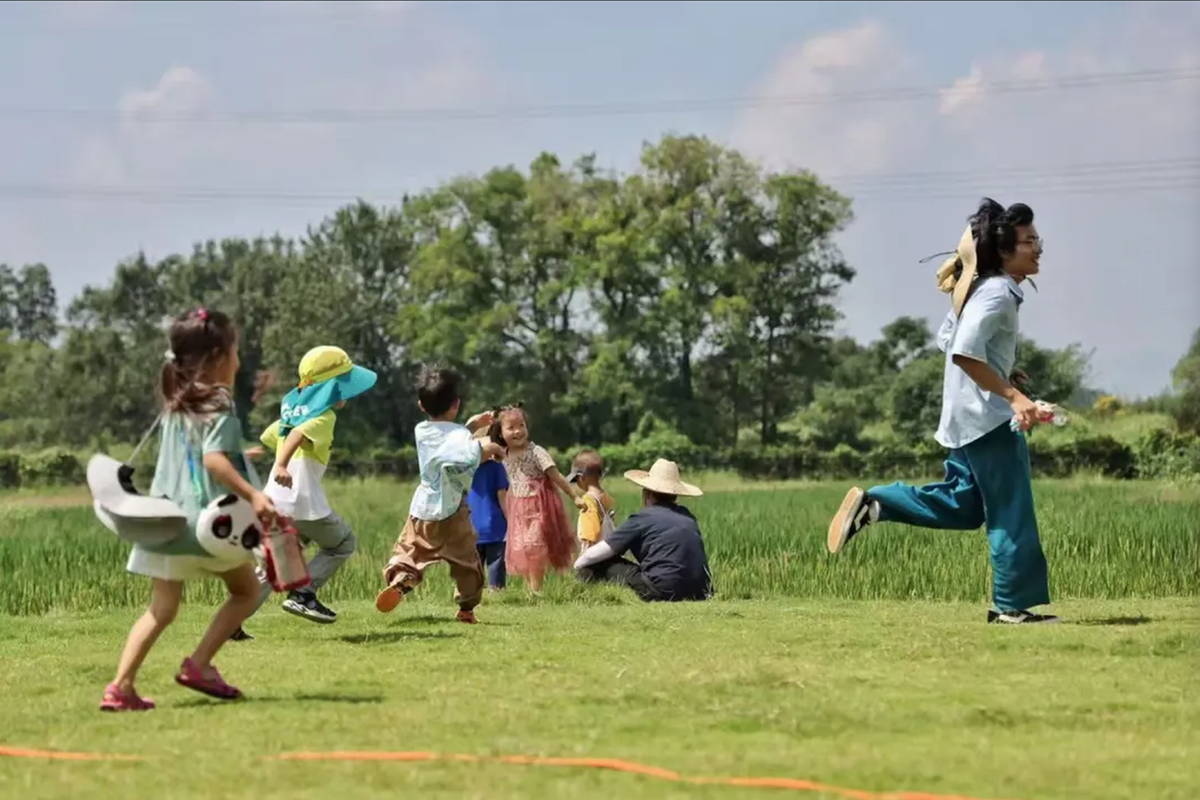
She left her job at an overseas corporation and went on to found a kindergarten in Liangzhu, where she took the children on weekly hikes and encouraged them to play freely in nature.
"Parents need to step away from the pressures of a competitive environment in order to truly let go of their anxiety," Zhu said. "For me, I couldn't stay calm under that kind of pressure — I needed to remove myself from it."
In the spring of 2023, she launched Nuanshufang, a learning hub for the village. It quickly became a platform for villagers to share their passions and skills — folk musicians, craft experts, and Chinese studies teachers now run their own courses and earn income independently.
In Nuancun, personal interests and entrepreneurial spirit naturally intertwine. Today, diverse communities — from mental wellness circles and book clubs to zero-waste collectives — coexist and thrive.
The "co-build, co-share" ethos fuels the future of this rural experiment, Zhu noted.
"Let go of preconceptions and expectations," she said. "Dare to slow down and wait, and see where things lead us."
guiqian@i21st.cn





Today's Top News
- Chinese Vice-Premier He Lifeng to go to Spain for trade talks with US: commerce ministry
- China tests moon-mission rocket
- Martyrs' remains return to homeland
- Forum eyes world peace and stability
- FM urges US to 'exercise prudence in words, deeds'
- Large lenders go all in on tech finance