Robots take center stage at Beijing expo, pointing to tech revolution







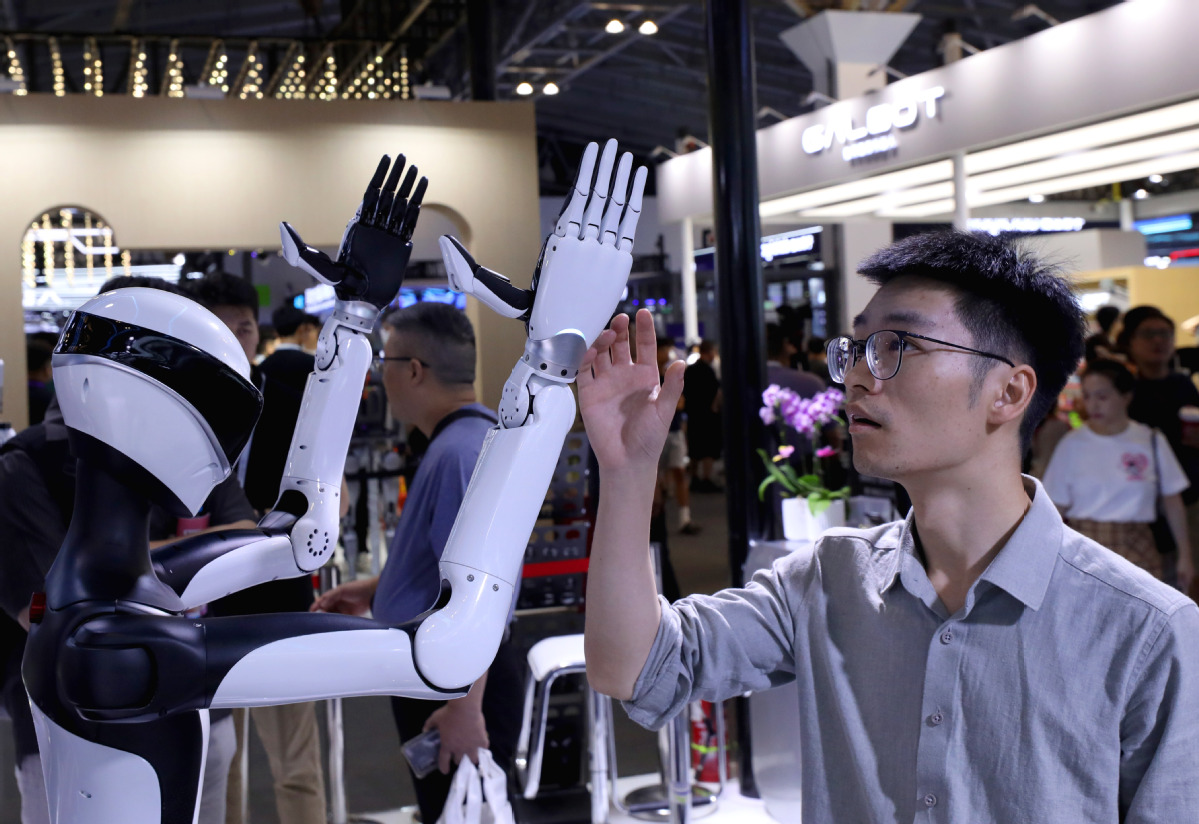
BEIJING - As I pushed my four-year-old daughter's stroller through a robotics exhibition in Beijing's suburbs -- a sprawling showcase of over 1,500 cutting-edge machines -- it struck me that she belongs to a "robot-native generation."
Unlike our childhoods, when we glimpsed the future through lens of science fiction, these technologies are set to be woven into the very fabric of her world from the very beginning.
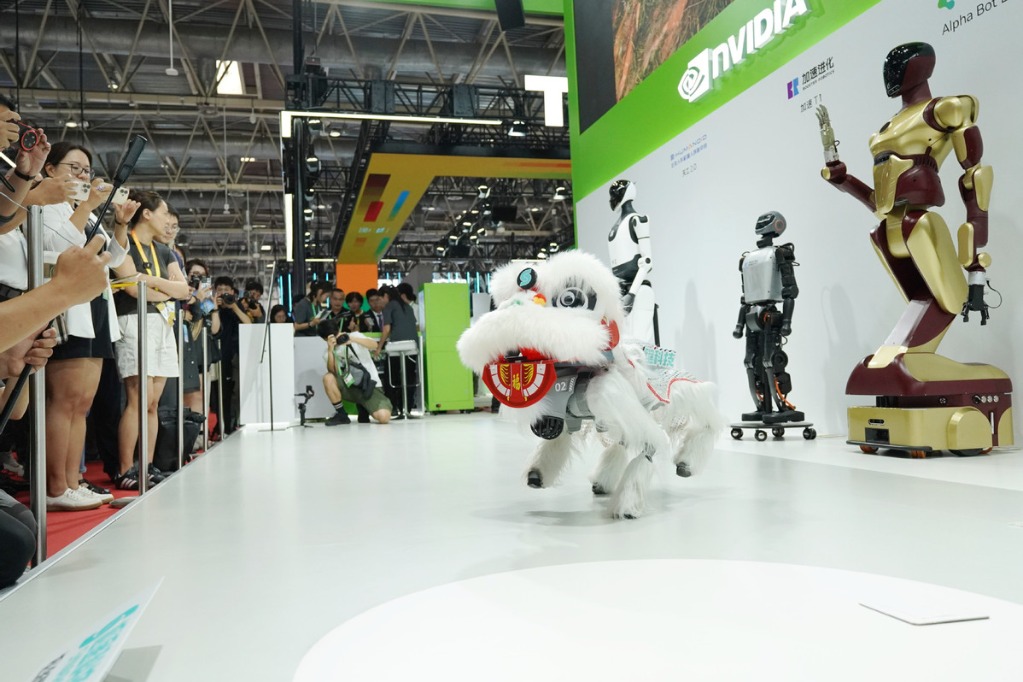
At the ongoing World Robot Conference (WRC) in Beijing's E-town, the city's innovation hub, more than 200 robotics companies are showcasing over 1,500 products, including more than 100 global debuts.
The exhibitors span the entire industry spectrum, ranging from China's leading robotics firms and renowned international giants such as Switzerland's ABB, to university-born startups fresh out of research labs.
Provinces like Zhejiang, Guangdong, Sichuan and Hubei have set up exclusive booths, signaling local governments' commitment to championing robotics and embodied intelligence as strategic growth engines.
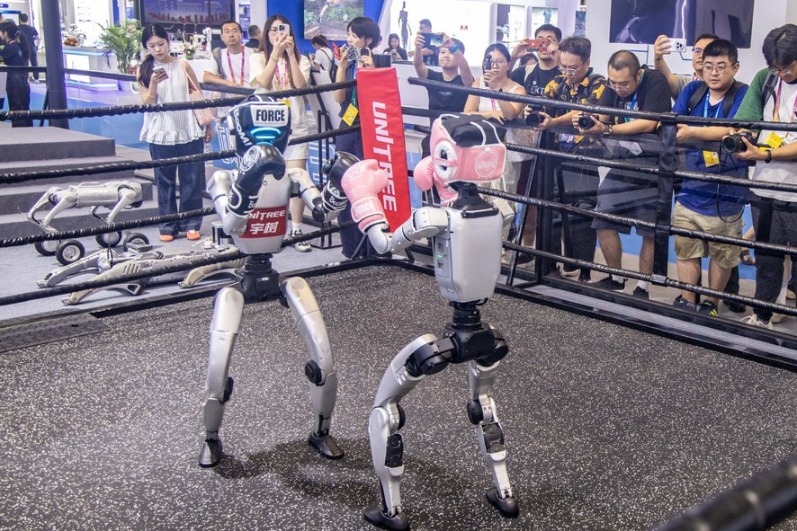
One of the highlights at the expo was Unitree Robotics' robot combat competition, featuring robots famous for their remarkably smooth martial arts moves. My daughter Alice watched in awe, perched on my shoulders, as the packed crowd made it nearly impossible to move.
Nearby, the robotic soccer penalty shootouts drew a crowd of excited children. The machine shooter, created by Beijing-based startup Booster Robotics, was fresh off its win at the 2025 RoboCup in Brazil in July.
Humanoid-robot Tien Kung, winner of the world's first half-marathon for robots this April in Beijing, glided on a treadmill with metronomic poise. Later this week, the Chinese capital is set to host the inaugural World Humanoid Robot Games at a Winter Olympics venue, featuring 538 events and over 500 humanoids from 16 countries.
But the true transformative power rests in robotics' potential to revolutionize daily life, redefining how the next generation will work and live.
The future factory floor is poised to see a new model of human-robot collaboration. Companies like UBTECH from Shenzhen, Kepler from Shanghai and Siasun from Shenyang have demonstrated robots capable of carrying out factory tasks, such as material handling, transporting and sorting, at the ongoing expo.
At an exhibition booth close by, a crowd gathered around the humanoid GR-3, running their hands over its warm skin. Shanghai-based Fourier Robotics was making a quiet promise that the next generation of machines could feel as alive as any family member.
Alice was particularly captivated by the Galbot wheeled robot, which precisely picked a drink from warehouse shelving. It was the one thing she couldn't stop talking about when she recounted that evening to her mom. This autonomous smart retail pod, developed by a Beijing startup, recently launched in the city's Haidian District, coinciding with the district's new status as a city-level humanoid robot pilot hub announced just last week.
About 2.5 kilometers from the exhibition, a newly opened robot restaurant offers a fascinating lineup with robot stand-up comics, dancing quadrupedal robotic dogs, and an autonomous band.
Adjacent to it is the world's first robot 4S store, where UBTECH's industrial-grade Walker S sorting robot sells for a subsidized price of 972,000 yuan ($135,300).
Not all robotic products are so expensive. Educational and companion robots, as well as home service robots, are also available for affordable purchase at the expo, with subsidies of up to 1,500 yuan.
Among the machines most accessible to everyday visitors, rehabilitation cyborg-like exoskeletons, brain-computer interfaces worn as headsets, and elderly-care assistants drew the most interest. Many of these models have already been tested in nursing homes, offering practical ways to ease the strain on China's rapidly aging population.
The subsidy on purchasing robots was a genuine WRC innovation, breaking the myth that future industries rely only on costly, unprofitable upfront investments.
By accelerating cutting-edge tech into consumer robotics, these subsidies tend to bridge long-term industrial strategy with near-term economic growth. It's not just about getting a new phone; it's also about considering bringing a robot home.
Since the launch of the "E-town Robot Consumer Festival" this month, as of Aug. 6, the event has redeemed over 2.6 million yuan in consumer vouchers, driving sales of more than 30 million yuan.
Whether it's just to broaden the kids' horizons or for industry insiders seeking business opportunities, everyone can find what they are looking for.
As casual visitors lined up for robot-brewed coffee and ice cream and enjoyed dazzling robot dance shows, insiders gathered around booth-side tables, deep in conversation about bearing tolerances, torque specs and servo precision.
A QR code pasted on a hall pillar invited visitors to join a WeChat group for robot company leaders, reflecting the strong spirit of collaboration between upstream innovators and downstream integrators. It's this vibrant ecosystem, built on China's mature supply chain, that forms the foundation of its recent robotics boom.
According to a recent Morgan Stanley report, "Humanoid Robot 100: Mapping the Humanoid Robot Value Chain," Asian companies constitute 73 percent of the top 100 listed firms in this sector, with Chinese firms alone accounting for 56 percent.
China's startups are "benefiting from established supply chains, local adoption opportunities and strong degrees of national government support," the report noted.
Indeed, the zeal for robotics goes far beyond China's rising entrepreneurs. A younger generation is already diving in. Upstairs at the exhibition hall, the 2025 World Robot Contest Championships in Beijing buzzed with energy as primary school students raced to build efficient power devices from LEGO bricks.
In China's first-tier cities, a growing number of parents are signing up their young children for robotics classes, seeing it as a new path to gain entry into competitive middle schools. Here, children's curiosity, parental ambition and national strategy all come together around emerging technology.
Having attended the WRC for three consecutive years, I found this year truly exceptional. The event matched the excitement of CES in Las Vegas. More importantly, the remarkable diversity of exhibits shows how far China's robotics industry has come in just twelve months, even if many products have yet to find widespread practical use.
The robot industry's "ChatGPT moment" is coming within one to two years if the pace is fast, or three to five if it's slower, said Wang Xingxing, founder and CEO of Unitree Robotics, in a speech at WRC.
Seeing this progress firsthand, especially a majestic robot from Shenzhen-based EngineAI perched on a replica Iron Throne from Game of Thrones, surrounded by flashing cameras, I felt it was quite evident that China stands on the brink of a transformative tech revolution.
Funny enough, the impact lingered. Before going to sleep that night, my little daughter said she wanted to become a robot.