Bilateral bridge desire endures
Chinese academics in the US say mutual understanding key to building relationship







When Minxin Pei came to the United States in the fall of 1984 as an international student, there were roughly 12,000 Chinese students in the country.
Forty years later, Pei is in the US, working as a professor of government at Claremont McKenna College.
When Zongyuan Liu came to study in the US in 2011, the number of Chinese students had grown to more than 194,000. That number would peak at 370,000 in 2019.
More than a decade later, Liu is now a senior fellow at the Council on Foreign Relations with a focus on international relations in East Asia and the Middle East.
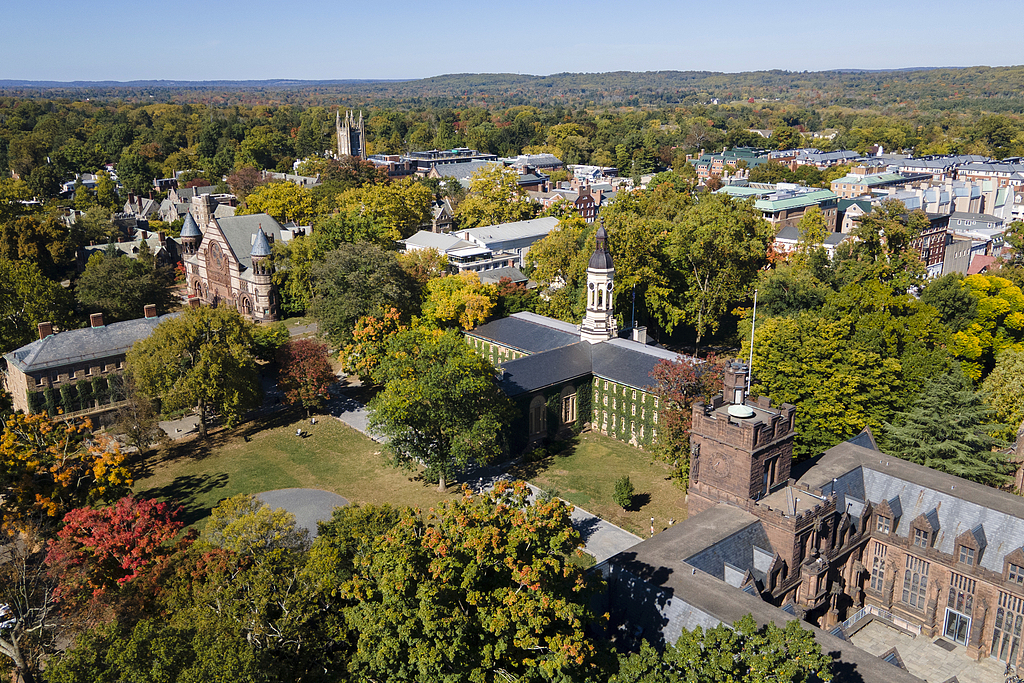
Zichen Wang came to the US to complete a mid-career master's program in public policy at Princeton University in 2024-25. He completed it and went back to China last month to continue his work at Pekingnology, a newsletter he founded. Geared toward an international readership, Pekingnology provides information on China's current affairs both domestic and international.
Wang said he was able to get more systematic training on how to approach policy analysis and issues from a more scholarly fashion at Princeton, and learned to develop more scientific methods to analyze information.
Sharing their experiences at an online discussion organized by the US-China Education Trust on Tuesday, the panelists said that educational exchanges between the US and China are beneficial because they help the two countries understand each other better.
Despite the current strained bilateral relationship that has led to fewer Chinese students studying in the US compared to 2019, the bridge is still open, and the desire for connection is still there, said the panelists.
"Things may look bad, but they are not as bad as before 1979 when the total number was zero," said Pei. "I hope that as long as the bridge is there, we should maintain hope."
Pei said American people are still friendly and welcoming to Chinese students, judging from his own experience in the academic field.
"You have to separate the American people from its government policy, and I would also submit that the education policy for China probably is driven by a relatively small number of people who have very strong views, but deeply committed to a certain perspective on China."
Wang, who was in Princeton in the past year, said his overall experience in the US was friendly.
"I did not encounter any instance of racism or some sort of hate or unpleasant experiences because I was Chinese. I find the American people — my professors, my classmates, the people I had the opportunity to meet and talk with — they were very friendly," Wang said.
He said he was actually a bit surprised by the presence of Chinese students in STEM majors in Princeton.
"I think the university was very open-minded about welcoming Chinese students, and I think that people within the higher education sector realize — perhaps that is missing from the minds of some US politicians — is that when it comes to STEM studies it's a simple symbiotic process."
Liu, who works at the Council on Foreign Relations in New York, said she saw firsthand that there is a demand and desire for bridge building, and she has personally hosted several visiting Chinese delegations and officials since the end of 2022, when the pandemic ended.
"The need and desire to understand China is even higher today than perhaps when the relationship was good," Liu said.
"Despite a lot of those conversations or concerns about decoupling or de-risking, the American companies at least realize that it's impossible to entirely move, separate their supply chain out of China," Liu said.
"Through my work, I do see continued interest in understanding China. The challenge is how to provide an apolitical, nonpartisan, fact-based explanation about why China did what it did, or how, why the US conducted the policy it did," she continued.
Pei does worry about the future consequences of the current challenges facing US-China relations.
"All of these things would lead to a decline in the capabilities of Americans, of the China-focused intellectual capital. Right now, my sense is the US is still taking advantage of 40 years of engagement, which produced really several generations of very talented scholars on China. But I worry about 10 to 20 years from now, if they will have a shortage of talent," Pei said.
mayzhou@chinadailyusa.com