Inclusive, multipolar SCO is recasting globalization







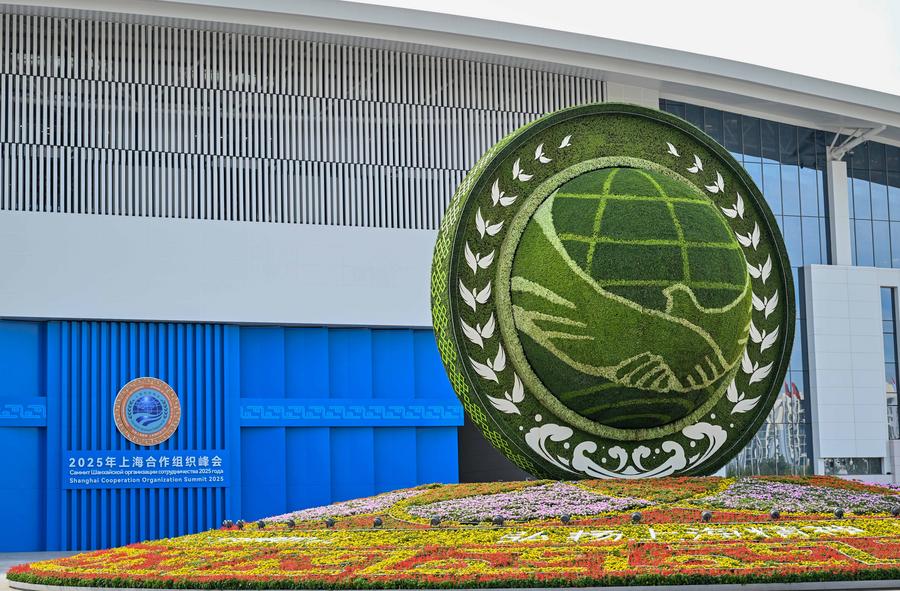
As leaders from across Eurasia converge on Tianjin for the Shanghai Cooperation Organization Summit, a quiet but unmistakable shift in global economics is unfolding: the emergence of a new architecture of global cooperation that is more inclusive and multipolar than Western-led assumptions.
The numbers are persuasive. Annual trade between China and SCO members has surged past successive milestones — $300 billion, $400 billion and $500 billion — culminating in a record $512.4 billion in 2024. When observers and dialogue partners are included, the figure balloons to $890 billion. In the first half of this year, China's trade with fellow SCO members reached $247.7 billion, climbing to $293 billion by July — a 3 percent increase over the same period last year.
These figures are not just economic milestones; they are markers of resilience. In an era defined by sanctions, protectionism and geopolitical fragmentation, the SCO's expanding economic footprint signals a deeper shift: the consolidation of a Eurasian group that is increasingly confident in its ability to chart its own course.
This year's summit, held under China's rotating presidency, marks the SCO's 24th anniversary. What began in 2001 as a modest security forum among six nations — China, Russia, Kazakhstan, Kyrgyzstan, Tajikistan and Uzbekistan — has evolved into a potent platform for regional cooperation.
With the accession of India and Pakistan in 2017, Iran in 2023 and Belarus in 2024, the SCO now comprises 10 full members representing nearly half the world's population and about a quarter of global GDP.
The symbolism is hard to miss. In today's world, the SCO has quietly matured into a space where diversity coexists with dialogue. Its ethos of mutual respect and noninterference stands in contrast to the West's more prescriptive approach to diplomacy.
Indeed, the SCO's evolution reflects a broader trend: the gradual erosion of unipolarity and the rise of a more distributed global order. While the organization's initial focus was on counterterrorism and regional stability, its economic dimension has become the new glue binding its members.
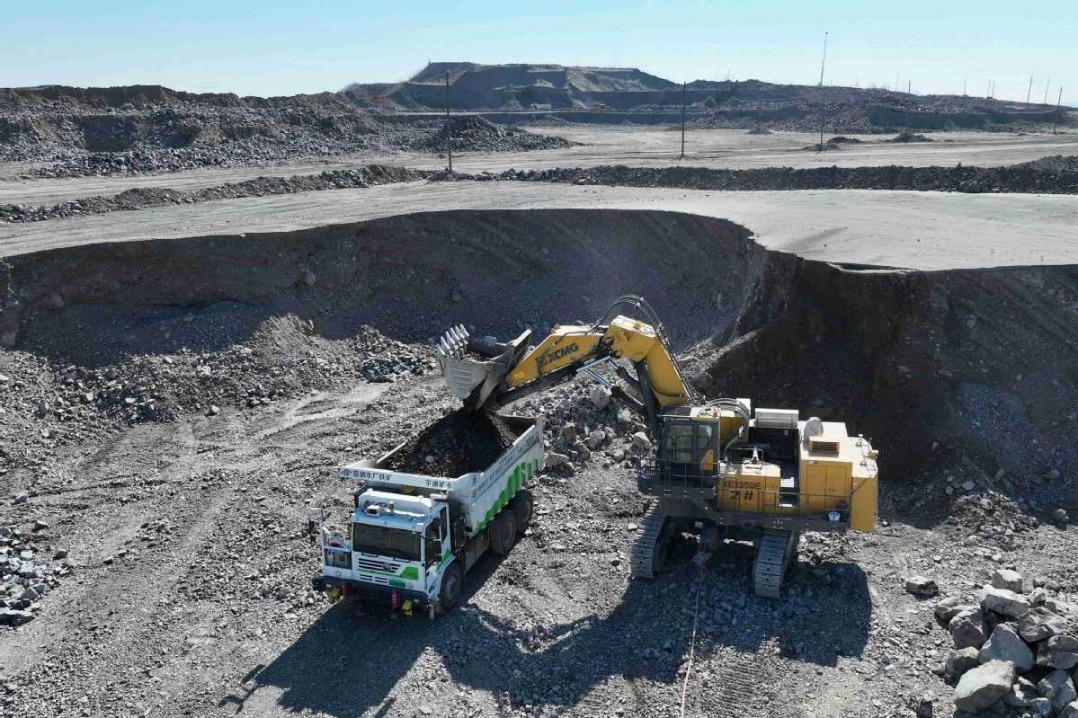
This trade is not merely transactional. It reflects a pragmatic symbiosis. China exports machinery, automobiles, garments and chemicals — products emblematic of its manufacturing prowess. In return, it imports oil, gas, coal, agricultural goods and minerals from resource-rich partners like Russia, Kazakhstan and Iran. Investment follows trade: As of July, China's total investment stock in other SCO member states had exceeded $84 billion, spanning traditional sectors like energy and mining but increasingly venturing into digital infrastructure, smart cities and renewable energy.
This pivot toward sustainability is no accident. It aligns with both the strategic imperatives of member states and the broader vision of the Belt and Road Initiative. The April 2025 SCO Sustainable Development Forum in the Russian city of Omsk marked a turning point, with members debating carbon reduction targets, green trade standards and renewable energy corridors. These ideas are already taking root. In Qingdao, Shandong province, the China-SCO Local Economic and Trade Cooperation Demonstration Area has become a test bed for green innovation, with trade through the zone rising 26.1 percent to $7.45 billion in the first seven months of 2025.
Infrastructure is also being reimagined. Highways, railways and energy pipelines are weaving together economies long neglected by Western capital. The proposed SCO Development Bank could institutionalize this momentum. Equally significant is the push toward yuan-denominated trade and digital payment systems, providing a buffer against the volatility of dollar-dominated systems.
Yet the SCO's greatest strength — its diversity — is also its most persistent challenge. India's participation, for instance, encapsulates this challenge. Indian Prime Minister Narendra Modi's appearance in Tianjin, his first visit to China in more than seven years, signals positive progress. Recent gestures, such as the talks of resumption of direct flights between major cities, point to a cautious rapprochement. Still, New Delhi remains ambivalent though pragmatic, partly because of its deepening ties in the United States-dominated Quadrilateral Security Dialogue and its military policies on Pakistan.
It is proof that the SCO's expanded membership amplifies its role as a counterweight to Western alliances. Iran's accession strengthens Eurasia's energy backbone, even as Tehran defies US and Israeli pressure. Belarus' entry inserts the SCO into Europe's security landscape, potentially attracting more post-Soviet states disillusioned with NATO's eastward expansion.
Western critics often dismiss the SCO as an "authoritarian club". Such caricatures serve their own ideological purposes, but fail to account for the organization's record. Whether in stabilizing Central Asia, encouraging dialogue in Afghanistan, or offering alternatives to punitive sanctions regimes, the SCO has achieved more in two decades than many Western interventions combined.
The stakes in Tianjin go beyond trade statistics. Contracts worth $655.5 million were signed between local companies and SCO partners even before the summit began, underscoring tangible progress. The possible advance of yuan-based settlements, the establishment of a development bank and formalization of green and digital cooperation will send a clear message: multipolarity is not a theoretical aspiration but a reality under construction.
As the summit unfolds in Tianjin, a different narrative is being written — one of countries once deemed peripheral asserting agency and shaping a new template for globalization. The SCO's trade surge is not just a tale of economic arithmetic; it is a reflection of an alternative vision, where cooperation supplants coercion and dialogue replaces diktat.
If Tianjin delivers on its promise, it could illuminate a pathway toward a more equitable world order — one in which the Global South is no longer a passive spectator but an active architect. In the end, the true triumph of the SCO may not lie in the billions exchanged, but in its quiet defiance of unipolar illusions. Amid global turbulence, it stands as a beacon of multipolarity — a reminder that the future need not be scripted in Washington or Brussels alone, but can be written in Tianjin, Tehran, Tashkent and beyond.
The author is an international affairs commentator and freelancer based in Karachi, Pakistan.
The views do not necessarily reflect those of China Daily.