Torture ordeal spurred courage of resistance fighters
Patriotic Hong Kong families joined CPC-led guerrillas to liberate city from Japanese invaders







Collective resistance
The Lams' journey mirrored this collective resistance.
By 1943, Lam Chin was already a member of the battalion's international work division in charge of translation and intelligence. She kept working in the unit until she became chief of the enemy operations department, where she used her self-taught Japanese to reeducate Japanese prisoners of war. She served as a personal interpreter for Dongjiang Column Commander, Tsang Sang.
Her mother was involved in military logistics, proving that even those who'd never held a gun could contribute to the fight.
Lam Chun, just a child at the time, was a messenger, threading her way through enemy lines with matchstick-sized intelligence scrolls tucked into her collar or hidden among fruit baskets. She mastered the Hakka dialect and learned to decipher secret trail markers that included scratched tree trunks and arranged stones.
"We received tremendous support from local farmers," she recalled. "They helped not just with our missions, but also with our personal hardships."
After six months as a courier, Lam was assigned to a guerrilla field hospital. She started with basics like feeding patients and soon progressed to dressing wounds and reusing sterilized gauze, a grim necessity.
The worst were the surgeries without anesthesia. She'd clutch her hands as doctors dug bullets from screaming soldiers-only to hear some of those men days later, insisting: "Don't worry, Ah Chun. We'll win this war."
Great rescue
In one of the war's boldest missions, the battalion smuggled over 800 Chinese cultural figures, their relatives, and soldiers of international allies out of occupied Hong Kong.
The city had been a precarious refuge since 1937, when artists, writers, and scholars from the Chinese mainland fled there to avoid Japan's invasion. They published underground newspapers, staged anti-fascist plays and broadcast messages of defiance. This made them prime targets.
When Hong Kong fell to Japanese invasion forces in 1941, the occupiers moved swiftly to crush China's intellectual resistance. Propaganda flooded the streets, and cinema screens ordered prominent figures to report for "collaboration".
Peking Opera legend Mei Lanfang, filmmakers Cai Chusheng and Situ Huimin, and writer Mao Dun were summoned by occupiers under the guise of an invitation.
Trapped in a Cantonese-speaking city where their accents marked them out, escape seemed impossible. Yet a covert network of guerrillas, fishermen and locals orchestrated their evacuation — sneaking them past checkpoints and through jungle to Free China.
"It was an epic operation — moving 800 people under the noses of the Japanese, undetected for over 200 days," said Chan Hoi-lun, daughter of guerrilla leader Chan Leung-ming.
Her mother, Tsau Sheung-ling, played a key role. At 20, she disguised herself as filmmaker Cai's niece, guiding him and his wife past patrols with acting so convincing she fooled the soldiers. They reached a safe house in Central and later escaped to Guilin in Guangxi via Macao.
Her bravery came with a high price. After helping run a Lantau Island resistance base, Tsau was betrayed by a traitor and arrested by the Japanese. Right after giving birth to her daughter, she was seized and tortured. She watched the 12-day-old girl die of malnutrition in prison. Her in-laws were later executed by Japanese troops.
"Patriotism has always been here in Hong Kong," Chan Hoi-lun said. "This rescue was fought and won here."
Remembrance
Hong Kong is launching a series of events to educate its youth on national history and commemorate the 80th anniversary of the victory in the war. The initiative includes exhibitions, workshops, film screenings, and exchange tours to historical sites on the Chinese mainland.
The need for such education is felt personally by the likes of Chan Hoi-lun, who says she was exhilarated to hear about the new memorial started on Aug 12 at Silvermine Bay.
The site on Lantau Island is where her father once organized guerrilla fighting and where a tragic massacre unfolded from Aug 19 to 26, 1945. Even after Japan's surrender, Japanese troops accused villagers of harboring guerrillas, arresting 300 and killing 11 of the bay's 500 residents.
Upon its completion in October, the Silvermine Bay memorial will join other commemorative sites, including those in Sha Tau Kok in the New Territories, and in Sai Kung's Wong Mo Ying village and Tsam Chuk Wan.
"It's not fair for those who gave their lives decades ago that today's Hong Kong youth don't even know the history," Chan said, citing the colonial-era authorities' neglect of local efforts to fight Japanese aggression.
She highlighted the importance of physical memorials erected where battles were fought, calling them the basic infrastructure for patriotism education. "They can help tell the stories that unfolded there across time," she said.
At a recent forum, Hong Kong Special Administrative Region Chief Executive John Lee Ka-chiu underscored the city's significant role in China's war efforts. He cited the city's work in shipping war supplies, rescue operations, and front-line defense, embodied by brave groups like the Hong Kong Independent Battalion.
Lee called the victory a hard-won lesson in the importance of peace. He urged the public to honor these historical sacrifices and firmly oppose any distortion of history or glorification of aggression.
In a recent interview with China Daily, Hong Kong lawmaker Chan Yung said that while history education has improved significantly since the 1997 handover, more must be done to strengthen the understanding of national history — particularly amid current global tensions.
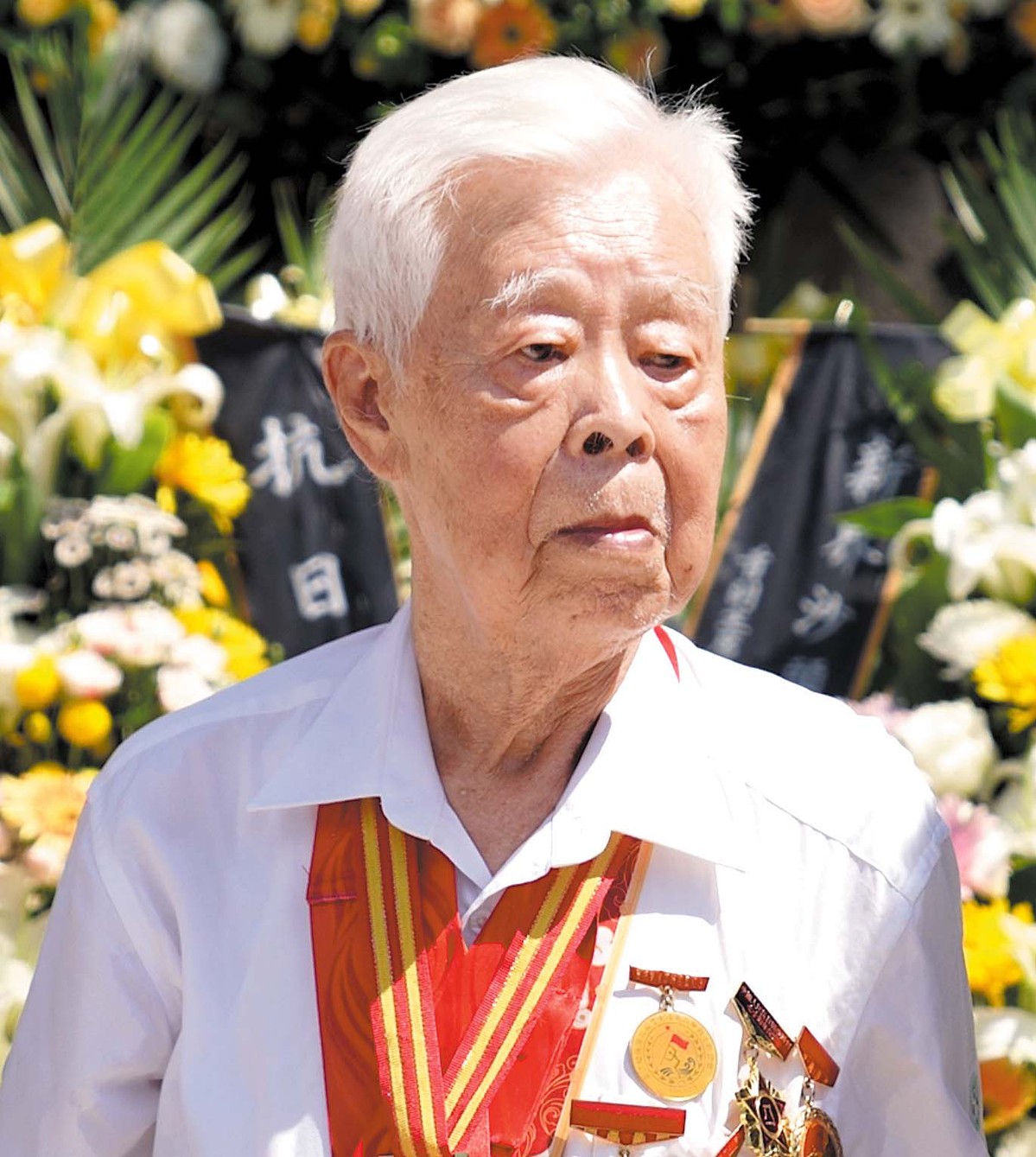
This history remains etched in the memory of Lam Chun. Holding a black-and-white photograph of herself with her older sister and brother taken at Sung Wong Toi Park before the Japanese invasion, Lam recalled how her sister Lam Chin would constantly bring home friends to sing:
My home is on the Songhua River in the Northeast,
Where there are forests and coal mines,
And soybeans and sorghum all over the mountains and fields.
"I would listen and sing along, but couldn't understand at the time," she said. "It was not until the 1941 invasion started that I realized they were songs of resistance against Japanese aggression."



- Scientific community, netizens pay tribute to late Nobel laureate Yang Chen-Ning
- Ancient Confucian ideas inspire today
- US professor eyes retirement in Wuyi Mountains
- Guyuan promotion conference enhances Ningxia and Jiangsu ties
- ECNU's intl student program benefits mother and daughter from Vietnam
- Digital creativity shines at intl copyright expo in Qingdao