Master potter shapes ancient art to suit modern tastes
From clay to ceramics, Yu Dahua keeps Yanshantou's traditional craft alive







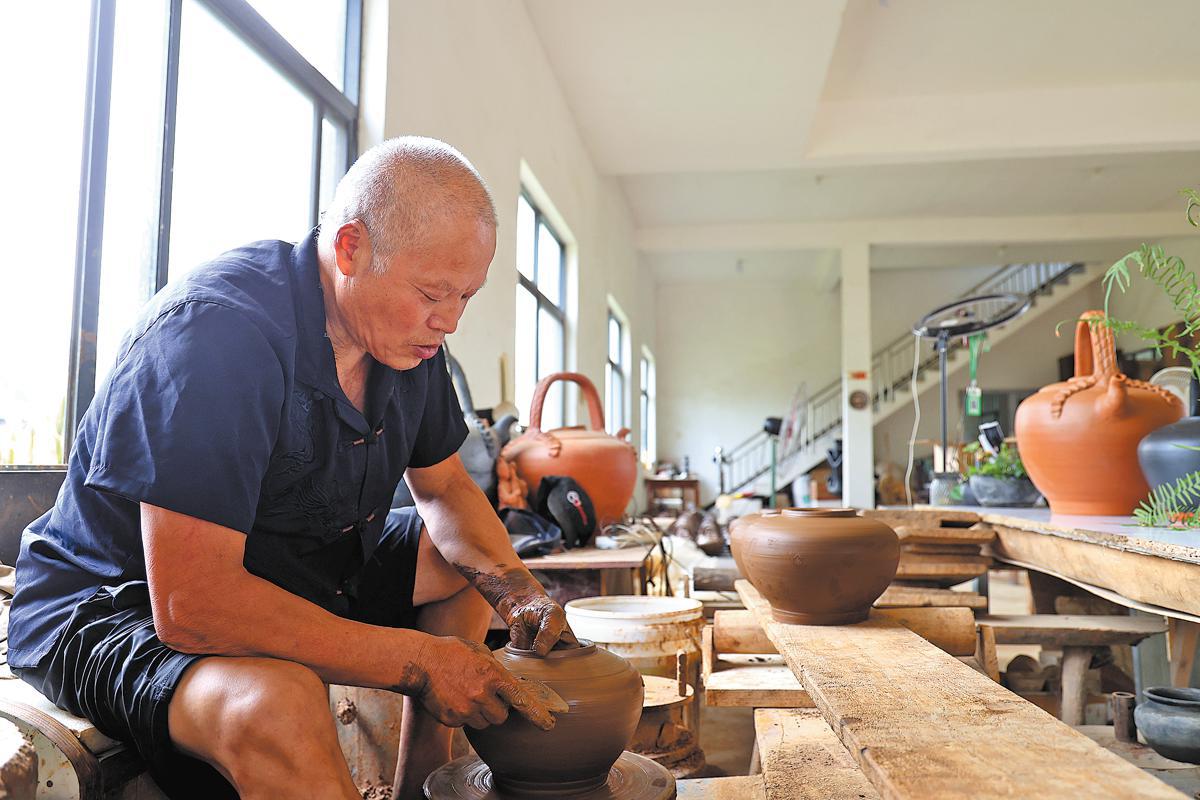
In his workshop in Yanshantou, an area of Zhongxiang city in Hubei province beside the Hanjiang River, Yu Dahua shapes a pottery vessel, his fingers coaxing the clay into a smooth form. Nearby, rows of rustic pots wait to be packed and sent across the country.
For more than three decades, Yu has been molding more than just clay. He is the last master potter in Yanshantou, once a thriving hub whose abundant clay and firewood supported generations of artisans.
The craft of earthenware here dates back to the Shang and Zhou dynasties (c.16th century-256 BC) and flourished for centuries. In the 1960s and 1970s, dozens of family-run kilns lined the area, producing pottery that was sold across the province.
Yu embarked on his journey into pottery in the 1990s, when modernization had already pushed the local industry into decline.
In 1990, he inherited the craft from his foster father and foster brother — both pottery craftsmen themselves. Beyond his enthusiasm about the art and natural talent, he also felt a responsibility to live up to his family's expectations.
"What my foster father told me struck my heart," Yu recalled. "He said people wouldn't be able to find a pot like ours if our generation failed to carry it forward."
That May, Yu built his first kiln. What followed was practice and perseverance for over three decades.
Pottery making is a demanding art. The process involves more than a dozen steps, from selection and refining of clay to shaping, detailing, and firing — each done by a single person with patience, precision, and a readiness to accept failure.
"Making a pot is not just about the technique. It is about experience and feelings," Yu said. "Knowing when the clay is ready and when the fire is right is the hardest part. That takes years of practice."
A single kiln load, which can hold 300 to 600 pieces, takes at least 20 days to complete. The firing alone can last a whole night, with Yu keeping watch beside the flames.
For him, firing is to open a "blind box". Warped and broken pieces scattered around his courtyard are reminders of the cost of mastery. Yet it is in failure that Yu often finds inspiration.
The most satisfactory experience came when an early, high-temperature firing experiment failed and ruined most of the batch. "Still, two pieces came out with natural glazes — one chicken-fat yellow, the other sky-blue. I've kept them," he said. "That's when I saw hope. Even failure can create beauty."
Over the years, Yu has refined his techniques and his designs, blending history with modern needs. While assisting a museum in the city of Jingmen, Hubei, in restoring cultural relics, he deepened his understanding of pottery's cultural roots and expanded his artistic vision.
The market tells what people need. Combining traditional craftsmanship with contemporary tastes, Yu began producing high-fired, unglazed teaware. "Customer feedback also pushed me to improve," he added. "I'd take notes, go back and fix it. That's how my pots become more delicate over time."
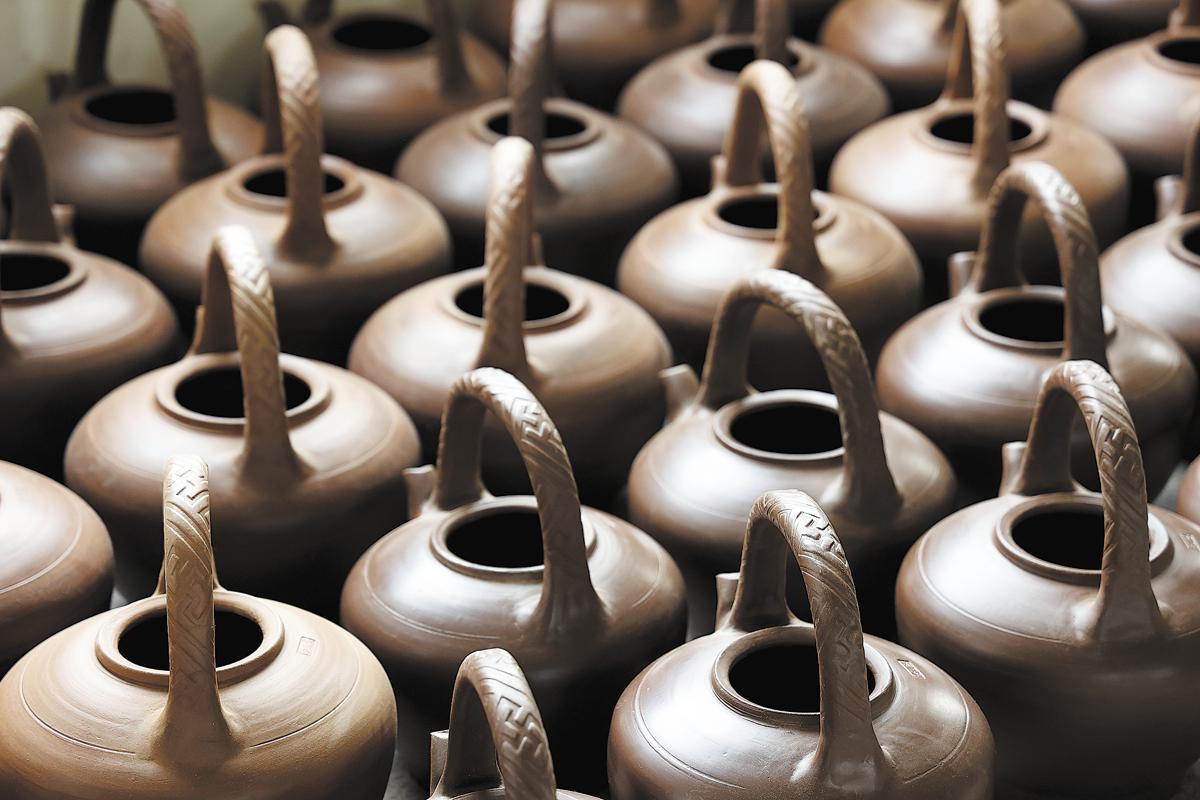
Rooted in the ancient summer farming practices, Yanshantou teapots are prized for their rough charm, porous texture, and cooling properties. These are ideal for brewing and storing tea that stays refreshingly cold for days. Some customers also display them as garden decorations.
Yu's handmade, unglazed teapots have gained popularity in the market. But production is seasonal.
Due to the freezing conditions in winter, he works only nine months a year, producing up to 600 teapots a month and selling more than 5,000 annually. Today, his workshop is reaching customers through e-commerce platforms, offering a full range of rustic pottery, from teapots and crockery to vases and planters.
Yu has a team of more than ten practitioners and another three apprentices. Still, the future of the craft weighs on him as it demands mastery of all processes and long-term practice.
"I hope this ancient craft endures and thrives in the future," Yu said. "While keeping the old methods alive, we should also explore new forms and colors that suit modern tastes so that the tradition can continue to live and breathe."
Contact the writers at guoyanqi@chinadaily.com.cn




- China studies in the era of digital intelligence
- New platform aimed at China-Africa economic and trade cooperation launched
- Guangzhou upgrades tax refund services for visitors
- Xiong'an supporting policies attract talent
- Meng Fanli elected as Guangdong's new governor
- Taiwan residents to get entry permits on arrival at more mainland ports