New initiative will help foster a multipolar world







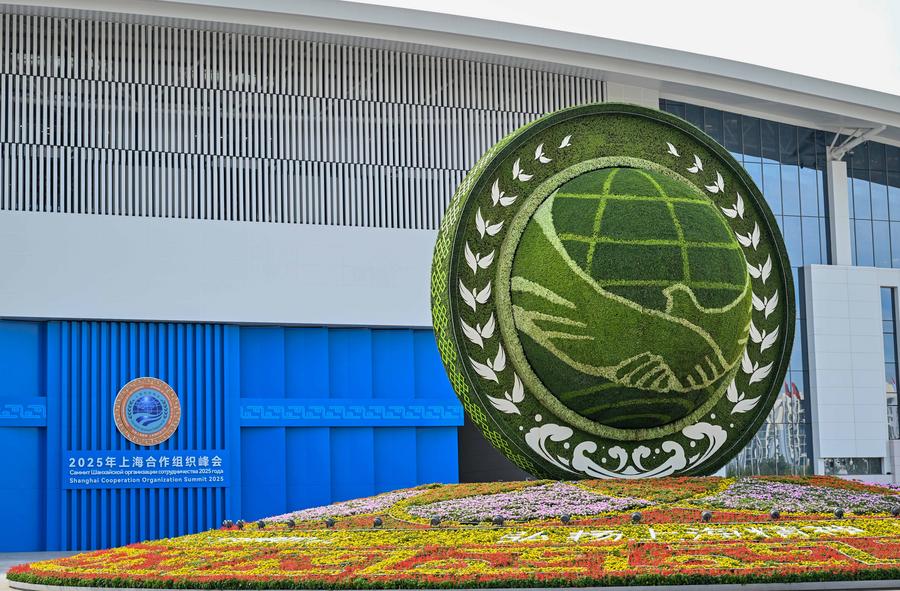
The global political landscape has entered a period of turbulence, with protracted and intensified geopolitical tensions and escalating confrontations. In this pivotal year of 2025 — commemorating both the 80th anniversary of the victory in the World Anti-Fascist War and the founding of the United Nations — President Xi Jinping put forward the Global Governance Initiative at the "Shanghai Cooperation Organization Plus" Meeting in Tianjin, calling for all countries to jointly build a more just and equitable global governance system. He highlighted that hegemonism and protectionism have become rampant.
As China has been a responsible major country with enhanced international stature, along with its rapid socioeconomic development in recent years, the Global Governance Initiative is synonymous with offering a momentous solution with Chinese wisdom to the world to foster a multipolar world order.
The initiative champions five core concepts: adhering to sovereign equality, abiding by the international rule of law, upholding multilateralism, advocating a people-centered approach, and focusing on real results. China has positioned the initiative as a global public good — after previously advocating for the Global Development Initiative, the Global Security Initiative and the Global Civilization Initiative to enhance international cooperation and development.
It is imperative that the sovereignty and dignity of each country should be respected under the Global Governance Initiative. Fostering sovereign equality is the foremost premise of global governance and the most important norm to govern state-to-state relations. All countries, regardless of size, strength or wealth, should have their sovereignty respected. Some Western countries, including the United States, have strived to maintain their hegemonic power and infringed on other nations' sovereignty. Banking on the US' consistent backing, Israel recently launched an airstrike against Hamas leaders in Qatar, expanding its military offensive to the territory of a sovereign nation in violation of international law.
China has respected other nations' sovereignty and has not treated other nations with the posture of a superpower. It has upheld the principles of nonalliance, nonconfrontation and not targeting any third party. During the China-Central Asia Summit, held in Kazakhstan's capital of Astana in June, China and several Central Asian countries affirmed each other's sovereignty and fostered friendly neighborhood relations.
Also, it is of utmost importance that all countries should abide by the international rule of law, safeguarding the international order with the UN at its core. The purposes and principles of the UN Charter have been universally recognized as basic norms of international relations. Unfortunately, the UN Security Council's resolutions on Middle East issues have been repeatedly derailed by some Western nations.
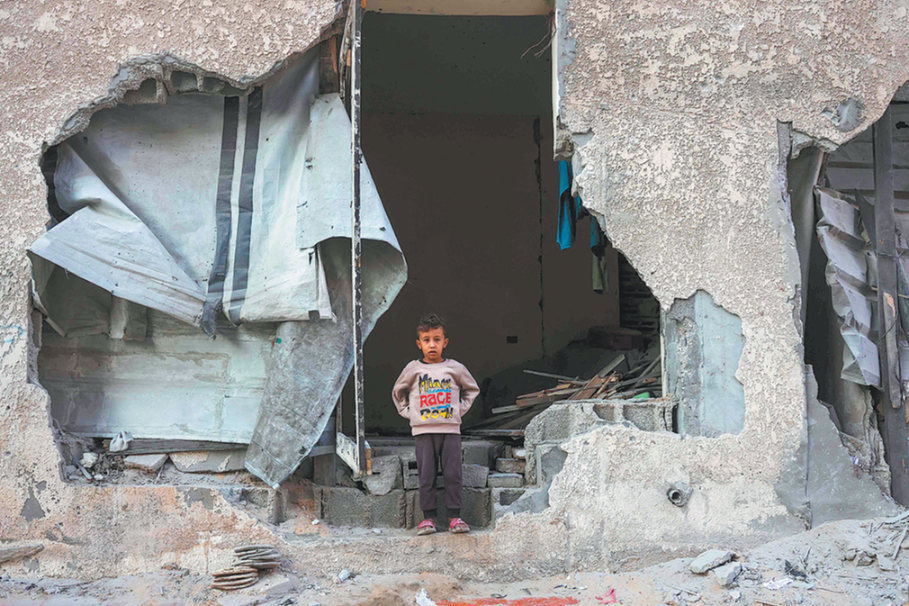
A notable example is the US, one of the UN Security Council's permanent members, which has blocked resolutions seeking a ceasefire in Gaza. China has firmly upheld the UN-centered international system for resolving global conflicts, including the Palestine-Israel conflict, through dialogue and peace talks, enhancing the world body's crucial role in bolstering global governance.
By promoting the Global Governance Initiative, China is striving to foster international cooperation and solidarity by upholding multilateralism. The principle of multilateralism emphasizes cooperation among countries through multilateral platforms, eliminating unilateralism and protectionism.
The leaders of China and other member states of the Shanghai Cooperation Organization issued the Tianjin Declaration during their Tianjin meeting, in addition to signing a plethora of documents to promote cooperation in areas such as finance, trading, security, energy and technological development.
Based on statistics from China's Ministry of Commerce, the country's trade with SCO members soared 2.7 percent to $512.4 billion in 2024. More than 3,000 Chinese enterprises engaging in various businesses have been established in other SCO countries in the past few years. China and other SCO countries have agreed to expand cooperation with global and regional bodies, including the UN and the Association of Southeast Asian Nations, to uphold a multilateral economic and trade order and enhance global governance.
Under the Global Governance Initiative, the well-being of all people around the world will be cared for. The Global South has been underrepresented in the global governance mechanism. China, as a big developing country, has been striving to work with other developing economies in the Global South. As President Xi pointed out in his speech at an online BRICS summit earlier this month, BRICS stands at the forefront of the Global South. It has embraced the spirit of openness and inclusiveness, injecting economic momentum into the Global South. Chinese enterprises have invested heavily in infrastructure projects — which range from transportation networks to renewable energy systems — across Africa and Latin America, significantly facilitating economic development and enhancing people's well-being in these regions.
China has also called for a focus on producing results to resolve various pressing issues. Effective global governance will no doubt facilitate the resolution of problems. It is crucial that the international community should join forces to address pressing issues, such as climate change and poverty, and developed countries should take on more responsibilities. Furthermore, China has advocated that developed countries should take concrete actions to fulfill their responsibilities and provide more financial support to developing countries to cope with challenges and problems.
By putting forward the Global Governance Initiative, China has demonstrated its commitment to playing a more prominent role in building a global governance system that embodies the spirit of openness and inclusiveness, and is conducive to fostering a multipolar international order. The initiative will gain traction as more people realize its significance to the well-being, and even survival, of humanity.
The author is a member of the Beijing Municipal Committee of the Chinese People's Political Consultative Conference, and founder and chairman of the One Country Two Systems Youth Forum.
The views do not necessarily reflect those of China Daily.