China offers trade anchor for Latin American countries







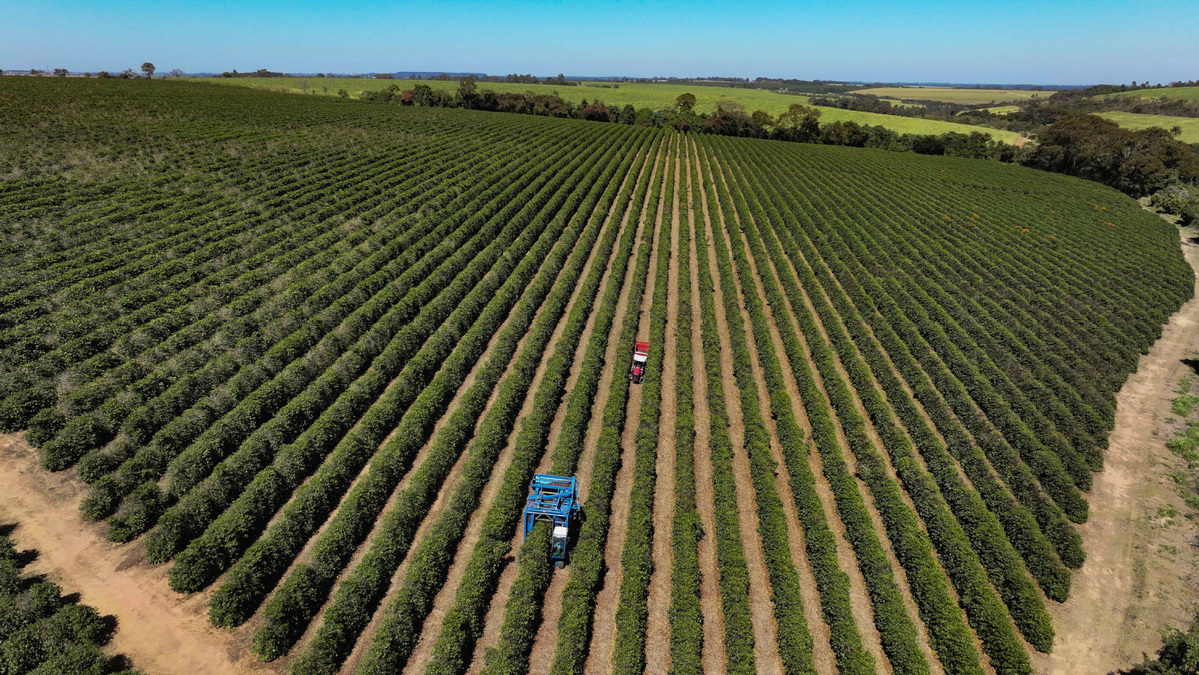
When Chinese buyers snapped up nearly 17 million metric tons of Brazilian soybeans in the first quarter of this year, about three-fourths of Brazil's total exports of the crop, a clear signal was sent about who sets the pace in South America's farm trade.
For Brazil's growers, the ability to redirect sales to China has become a critical hedge against the tariff swings and political disputes that have become the hallmark of most trade relationships with the United States.
For Brazil, this might be particularly significant. Washington has zeroed in on the country, with new tariffs of 50 percent on a range of Brazilian imports, raising the stakes for producers who once relied heavily on the American market. In August, Brazil's exports to the US fell 18.5 percent to about $4 billion. Exports to China, on the other hand, jumped almost 30 percent to $7.3 billion.
In the face of US unpredictability, Beijing is cutting tariffs and providing preferential access, all of which supports more trade.
This dynamic is not unique to Brazil. Across Latin America, Beijing has been lowering tariffs and expanding free trade agreements to anchor demand for everything from Chilean cherries to Uruguayan beef. By deepening South-South ties, China has created a stable outlet for exporters whose reliance on US markets has too often left them exposed to sudden changes in Washington.
China's efforts are not new but have been underway for years. What's new is that in the face of sudden US volatility, China has emerged as something of a beacon of stability and predictable trade policy.
Beijing's strategy in Latin America has been deliberate. Free trade agreements have provided tariff certainty for key partners such as Chile, Peru, Costa Rica and, most recently, Ecuador. Chile's deal, signed in 2006 and upgraded in 2019, now covers about 98 percent of tariff lines, according to Chile's Ministry of Foreign Affairs. Ecuador's free trade agreement, effective in May 2024, immediately eliminated duties on thousands of products and lowered barriers for hundreds more, according to China's Ministry of Commerce.
These agreements are more than paperwork. They anchor South-South trade in predictable rules, giving Latin American exporters long-term access to the world's second-largest economy. By contrast, Washington's approach has grown more volatile, marked by tariff surges, countervailing duties and abrupt policy shifts that can disrupt export planning from one harvest to the next. Often, as in the case of Brazil, tariffs have nothing to do with trade but aim instead to influence domestic politics.
For Latin America, the divergence is stark. Facing US tariff volatility, China is offering predictability, and that is proving to be a powerful trade hedge.
Brazil remains the clearest example of how tariff policy and demand from China provide stability. In the first quarter of 2025, Brazil shipped 16.9 million metric tons of soybeans to China worth $6.6 billion, 7 percent more than a year earlier, according to the US Department of Agriculture's Agricultural Marketing Service. Those sales represented about 76 percent of Brazil's total soybean exports.
Even without a formal free trade agreement, Brazil's soybeans move smoothly into China, thanks to low tariffs and well-defined sanitary protocols. The structure of that trade has allowed Brazilian producers to weather US tariff hikes. China has emerged as the ultimate hedge against Washington's unpredictability.
Argentina has also turned toward China to stabilize its trade. The country exported nearly $80 billion worth of goods in 2024, posting a trade surplus of almost $19 billion, according to Argentina's National Institute of Statistics and Census. But as US tariffs and political headwinds limited opportunities, China's demand became essential.
Monthly trade data from the Argentine institute consistently places China among Argentina's top partners, accounting for more than one-fifth of imports and a rising share of exports. Soybeans and oilseeds are central.
In Uruguay, the China hedge is most visible in beef and pulp exports.
China was the top destination for Uruguayan goods in 2024, accounting for 24 percent of total shipments, ahead of Brazil and the European Union, according to Uruguay XXI, the government's export promotion agency.
Beef alone generated $2.1 billion in export value, underpinning about 10 percent of GDP and more than 90,000 jobs, the National Meat Institute reported. For Uruguay's ranchers, the link to Beijing provides income stability at a time when US trade has become a moving target.
Chile offers perhaps the clearest benefits of China's tariff diplomacy. The Chile-China Free Trade Agreement eliminated duties on nearly all goods, helping transform cherries into a seasonal powerhouse. In the 2023-24 marketing year, Chile exported more than 413,000 tons of cherries worth about $2.4 billion, according to the US Department of Agriculture's Foreign Agricultural Service. China alone absorbed about 90 percent of those shipments.
For Chilean growers, tariff-free access combined with strong demand around the Chinese New Year created an unmatched opportunity. What was once a niche product has become one of the country's leading agricultural exports.
These examples show a clear pattern. Tariff preferences, sanitary protocols and South-South trade frameworks have allowed China to serve as an anchor for Latin American exports. Where Washington's tariffs inject volatility, Beijing's agreements and demand have supplied stability.
Latin American countries are not turning from the US but are being pushed away. And to hedge against this push, they are leaning into China's trade opportunities.
The result is a stronger, more stable trade relationship that allows Latin American economies to plan for growth rather than react to disruption. China has become the trade anchor for many, if not most, of them and, in so doing, is reshaping the region's future.
The author is managing director of Bahati, a communications agency in Hong Kong and Canada.
The views do not necessarily reflect those of China Daily.