Understanding nation's new consumption reality







BEIJING — As China prepares the 15th Five-Year Plan (2026-30) for its next development phase, the resilience of its consumer market, with domestic demand being tapped as a main growth engine, is under scrutiny.
For years, the chatter of a "consumption downgrade" in China has sporadically made the headlines. This narrative often goes: Chinese consumers are tightening their belts as the economy navigates headwinds, swapping premium brands for budget alternatives.
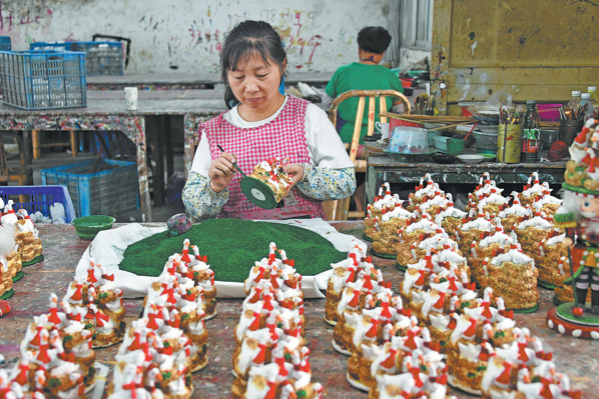
However, given China's vast consumption market, viewing the trend through a simple "upgrade or downgrade" lens would amount to lazy analysis that ignores a more nuanced reality. Take a closer look, and evidence from the market floor tells a rather complex story, one that consists of evolution and not retreat.
One of the defining moments in China's consumption landscape this year is the phenomenal rise of "new consumption" equities, led by trendy toy brand Pop Mart, jeweler Laopu Gold and tea chain Mixue Bingcheng, whose share prices have surged dramatically on the Hong Kong stock exchange.
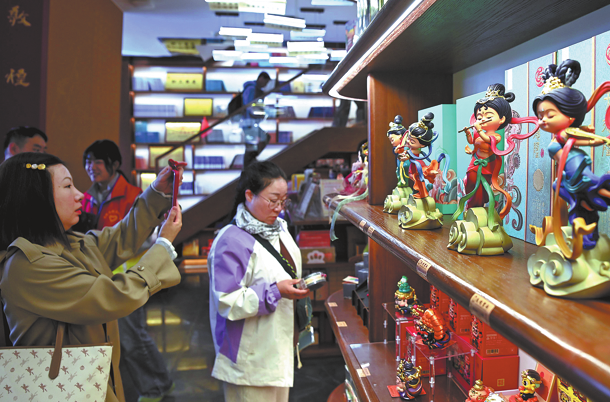
Pop Mart has created a global craze with its Labubu toys. Laopu Gold, meanwhile, has drawn long queues of loyal customers by blending traditional Chinese craftsmanship with contemporary aesthetics.
Though its products are mostly priced between 10,000 and 60,000 yuan ($1,400-8,420), significantly higher than its peers, the jeweler's business revenue soared by 167.5 percent year-on-year in 2024 to over 8.5 billion yuan, and shot up by another 251 percent in the first half of 2025.
Mixue Bingcheng, a budget-friendly tea maker known for its ice cream and drinks priced under a dollar, has expanded to over 46,000 stores worldwide, the biggest global footprint in the made-to-order drinks industry.
At first glance, the tales of this trio seem different. But their successes are threads of the same story, all catering to a distinct, yet converging, consumer mindset that represents China's new reality, which sees Chinese consumers shopping with both sense and sensibility.
A trending principle among Chinese consumers, especially the young generation, is captured in the popular phrase: "Buy expensive, but don't overpay." Armed with information from social media and online platforms, they carefully pick the best buys of everyday items like bubble tea, but also justify premiums for their feel-good spending on products such as pet accessories and collectible toys.
Less impressed by brand hype, even when they splurge on jewelry, Chinese consumers favor gold pieces that champion Chinese heritage, a smart, value-preserving investment that is both a financial asset and a cultural statement.
"Consumers are rationalizing their spending and prioritizing quality-of-life upgrades," consulting firm McKinsey & Company said in a survey report on China's new consumption reality earlier this year.
During this year's eight-day National Day and Mid-Autumn Festival holiday in early October, new spending trends featuring green, smart and China-chic products gained significant traction.
According to official data, sales of green organic food surged 27.9 percent year-on-year during this period, while those of smart home appliances and China-chic clothing rose 14.3 percent and 14.1 percent, respectively.
Broader economic data also show evidence for robust consumption. In the first eight months of 2025, China's retail sales of consumer goods expanded by a solid 4.6 percent year-on-year.
"Driven by policy support, technological advancement and the consumer demand upgrade, the consumption sector is currently showing a trend of overall high-quality expansion with varied levels of growth across sub-sectors," said a research note from Huatai Securities.
The essence of the new consumption trend, this note concluded, is a shift in consumption philosophy from the pursuit of "scale" to a comprehensive consideration of "quality, personalization, emotional connection and sustainability".
Xinhua



Today's Top News
- PLA fully capable of crushing secessionist attempts
- China holds central rural work conference
- President Xi to deliver New Year's message to ring in 2026
- Xi's diplomacy in 2025: Shedding light on a world at crossroads
- FTP has given Sanya a complete makeover
- China to apply lower import tariff rates to unleash market potential