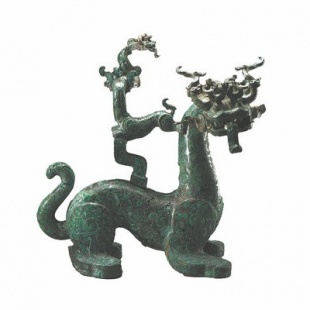



Relics chronicle the evolution of the Yangtze River civilization








The exhibition is organized into five thematic sections based on material: Crystal Jade Splendor, Radiant Lacquerware, Elaborate Bronze, Shiny Gold and Silver, and Exquisite Ceramics. These sections systematically trace the development of civilization in the Yangtze River basin from the Neolithic Age through the Ming and Qing (1368-1911) dynasties, highlighting distinctive craftsmanship and artistic achievements.
According to the show's curator Shen Meichen, each section features between 20 and 40 carefully selected artifacts. "We chose the most representative, visually appealing and widely recognized pieces to illustrate the developmental journey of the Yangtze civilization," she explains.
Shen emphasizes that all five categories of artifacts — jade, lacquer, bronze, ceramics, and gold and silver — share a common pattern: they each have an origin phase, experience continuous development, and exert lasting influence on later cultures.
"This continuity reflects the long and profound history of Yangtze culture and underscores its prominent role in the evolution of traditional Chinese culture," Shen says.
She talks about the deep interconnections among civilizations across the upper, middle and lower reaches of the Yangtze. Citing lacquerware as an example, she says that the earliest known lacquer artifact, dating back about 8,000 years, was found at the lower reaches, Jingtoushan in Yuyao, Zhejiang province. Lacquerware flourished during the Chu culture of the middle and lower reaches in the Spring and Autumn (770-476 BC) and Warring States (475-221 BC) periods. However, research indicates that while most lacquer items were produced in the upper reaches, they were widely used in the Chu state downstream.