Young people carry torch of reunification







Editor's note: At a commemorative event held at the Taiwan Guild Hall in Beijing on Oct 21 to mark the 80th anniversary of Taiwan's restoration to China, four young representatives from Taiwan shared their reflections on this historical period.
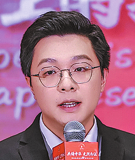
Lu Ying-chu, from Taipei
During World War II, Japan's imperial subject policies in Taiwan forced Taiwan residents to change their names and banned the Chinese language, aiming to sever ties with Chinese culture and highlighting the cruelty of colonization. Taiwan society responded in varied ways; some adapted, but most resisted in different forms.
My family is an example. While many details are lost, my elders recount that my mother's side originally hailed from Quanzhou, Fujian province, moving to Taiwan during the Ming (1368-1644) and Qing (1644-1911) dynasties and settling in the Yunlin Plain for over a century. My great-grandfather, a resilient family elder and local gentry leader born in the late Qing Dynasty, lived through the Japanese occupation most of his life. He steadfastly wore traditional clothing and kept his long braid, resisting Japanese influence. He preserved the ancestral three-section compound, hall and genealogy, viewing them as the family's root and soul, and quietly awaited the end of colonial rule.
Reflecting on history through family stories, I've gained respect and understanding for my great-grandfather, whom I never met. This awareness also underscores the mission our generation carries — peace and unity.
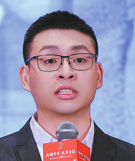
Lo Chih-ying, 23, from Changhua
Seeking roots was once a vague concept to me. Watching my elders embark on their journeys to trace our ancestry, I often wondered about my origins. This curiosity led me to ask my family elders, and I was delighted to discover our family genealogy.
Carefully preserved in a vacuum bag in my grandmother's cabinet, the family tree, with its yellowed pages, revealed that I am the 17th generation of my family. The first to cross the Taiwan Strait and settle in Taiwan was the ninth generation, born during the Emperor Kangxi era. My ancestors left Nanjing county, in Zhangzhou, Fujian province, possibly seeking a better life, and took root in Taiwan.
Remarkably, the genealogy includes ancient medical prescriptions. As a medical student, I was thrilled to find remedies for common ailments, some with classic combinations and others using herbs uncommon on the mainland. This booklet, transcending time and the Strait, felt like a precious gift, linking my medical pursuits with my family's past.
This year marks the 80th anniversary of Taiwan's restoration, a testament to the unbroken blood ties and cultural connections between the two sides. As our genealogy records, generations brought language, customs, beliefs and medical knowledge from the mainland to Taiwan. These cultural genes have flourished, becoming part of our lives today. Commemorating Taiwan's restoration is about affirming our national roots. No matter how geography changes, Taiwan and the mainland share a common cultural and familial lineage, jointly writing the destiny of Chinese descendants.
Lin Chingmao, from Changhua
Taiwan people's 50-year resistance against Japanese rule proves they have always been Chinese — an identity unshaken by national weakness or outside oppression. This history also shows that any "de-Sinicization" efforts in Taiwan are a betrayal of their ancestors' sacrifices.
From battlefield struggles to cultural enlightenment, peasant uprisings to youth joining the fight on the motherland, these events reveal Taiwan people proudly identify as Chinese. Whether in times of crisis or during the country's development, they have stood shoulder to shoulder with mainland compatriots, fighting for the Chinese nation's destiny.
This history is a vital bond for cross-Strait integration and reunification today. Yet, it is heart-wrenching that openly declaring "I am Chinese" in Taiwan is now deemed "politically incorrect". The "independence" forces fabricate the "unresolved status of Taiwan" theory to deny China's antifascist war achievements and distort Taiwan restoration's significance, labeling it as "colonial rule" while suppressing its commemoration.
Correcting the damage from "de-Sinicization" curricula and media narratives requires presenting the historical truth to Taiwan's youth. We must clarify history: Taiwan people have a glorious tradition of patriotism, rooted in the unwavering belief in being Chinese.
Observing this year's commemoration, a stark contrast emerges between the mainland's grand celebration and Taiwan's indifference. The "Taiwan independence" forces work to erase restoration's memory or smear it when unavoidable, revealing their fear of Taiwan society facing this history squarely and their apprehension of Taiwan's youth recognizing the truth.
Lin Kuan-ting, from Taipei
I am a patriotic Taiwan youth whose ancestral home is in Putian, Fujian province. My grandfather, Lin Wen-fang, born in 1926, was stranded in Taiwan for decades but never forgot his roots. After cross-Strait relations thawed in the late 1980s, he returned to Putian and brought back half a family genealogy, reminding us to "never forget our roots". In 2021, my brother and I reunited with our relatives in Putian after just a single day's search.
Studying on the mainland, I've participated in cross-Strait exchange activities in Beijing, as well as Fujian, Liaoning and Jilin provinces.
Just as the Taiwan compatriots who fought Japanese aggression believed "to save Taiwan, we must first save the motherland", today's youth recognize that as the nation grows stronger, the Taiwan question will naturally be resolved.
More Taiwan compatriots take pride in being Chinese. I believe complete reunification is within reach.
Zhang Yi


Today's Top News
- Xi meets IOC chief and its honorary president
- National Games an embodiment of China's strength, unity and progress: China Daily editorial
- Xi declares 15th National Games open
- Xi attends opening ceremony of 15th National Games
- Xi meets national honorees in sports
- Xi meets IOC president, honorary president