1
1
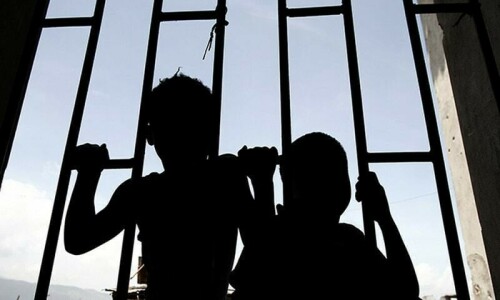
Let’s suppose a 13-year-old boy in Lahore joins a gaming chat group after school. Within days, someone in the group begins messaging him privately, offering virtual coins in exchange for “fun” pictures. At first, it feels like a game. Then come the threats that the photos will be shared unless he sends more. It sounds extreme, but incidents like this are happening daily, often silently, across Pakistan’s fast-expanding digital landscape.
Pakistan now ranks 8th among countries with the largest internet user base, with 82.9 million internet users and 71.7m active social media accounts as of 2022. Internet penetration stands at 36.5 per cent of the total population, and it grew by 22m new users in a single year. The country also has 186.9m mobile connections, a number that shows how deeply technology has penetrated every layer of society. Yet, while connectivity has surged, digital literacy and child safety mechanisms have not kept pace.
With the country’s median age around 22 years, millions of minors use digital devices unsupervised. The National Commission on the Rights of Child report on Child Online Protection reveals an alarming rise in exposure to online risks, from cyberbullying to sexual exploitation. In 2022, over 2m cases of child sexual abuse material were linked to users in Pakistan through global reporting systems. However, the Federal Investigation Agency (FIA) recorded just 250 cases locally in the same year. This gap reflects not a lack of crime but a lack of reporting, detection, and coordination.
The problem lies partly in awareness and partly in enforcement. Parents and teachers, often digital immigrants themselves, rarely have the tools to understand online grooming, sextortion, or the dark patterns of social media. Schools generally focus on academic content, leaving digital safety out of curricula. Meanwhile, law enforcement agencies struggle with resource constraints, outdated investigation tools, and jurisdictional barriers when crimes cross borders, as they almost always do online.
In 2022, over 2m cases of child sexual abuse material were linked to users in Pakistan through global reporting systems; however, the FIA recorded just 250 cases locally in the same year
To make real progress, Pakistan’s approach must move beyond crisis response and toward prevention, education, and systemic accountability. Policymaking needs to treat online child protection as an economic and governance priority. Safe online environments are critical for the digital economy to sustain public trust. When families fear the internet, participation drops, and the country’s potential digital dividend narrows.
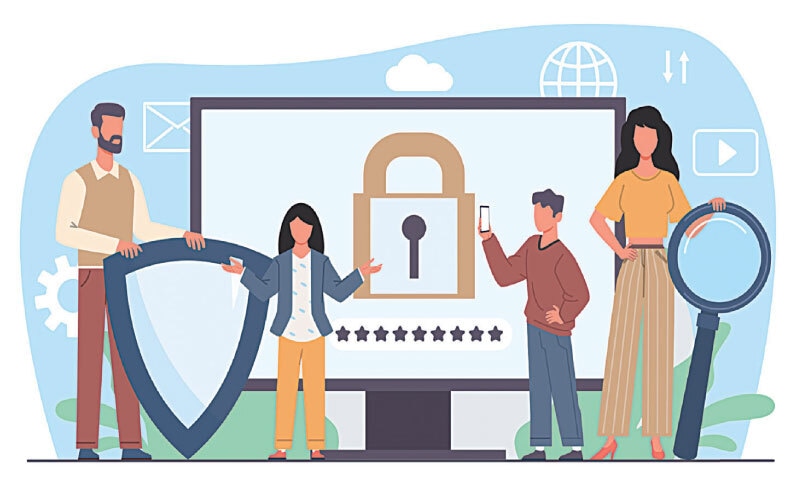
There is an urgent need for a coordinated national digital safety framework that brings together the Pakistan Telecom-munication Authority, Ministry of IT and Telecom, Ministry of Education, and private sector platforms. PTA’s regulatory powers can be expanded to include mandatory child safety audits for tech companies operating in Pakistan. Schools can integrate digital literacy modules into their curricula, teaching technical skills as well as focusing on online ethics, data privacy, and responsible social media use.
Awareness campaigns should be simplified and localised, using relatable examples in Urdu and regional languages. Parents, especially in low-income and rural areas, must be equipped with easy-to-follow guidance on supervising children’s online activities. Collaboration with telecom operators can also help, for instance, by sending periodic safety reminders via SMS or including digital protection leaflets with SIM activations.
Another crucial step is building capacity within law enforcement. FIA’s cybercrime wing has made progress, but the scale of online abuse demands specialised training, forensic technology, and inter-agency coordination. More female officers and child psychologists should be included in investigative teams to handle sensitive cases. Victims and their families often avoid reporting due to fear, shame, or mistrust in the system, an issue that can only be addressed through confidential, victim-centred reporting channels and visible convictions.
Pakistan’s legal framework, including the Prevention of Electronic Crimes Act 2016, does provide for penalties related to online child exploitation. However, implementation remains fragmented. Provincial child protection authorities often lack the digital expertise or budgets to address online crimes. National data collection on child exploitation cases should be made consistent and publicly accessible to inform better policymaking.
The private sector also carries significant responsibility. Digital service providers and social media companies must deploy stronger age-verification systems, content moderation, and AI-based detection of exploitative content. For instance, Meta’s recent launch of “teen accounts” offers an encouraging precedent. The new model creates built-in restrictions on content exposure, interaction requests, and ad targeting for younger users. It signals that safeguarding children online is not just the government’s job but a shared responsibility between platforms, regulators, and society.
Digital safety should not be treated as an afterthought to connectivity. It is a precondition for sustainable growth in Pakistan’s digital economy. As the country moves toward wider 5G rollout, digital payments, and AI integration, the vulnerabilities of children will multiply unless policy acts faster than technology evolves.
Protecting young users will require better laws and a shift in mindset: from reactive policing to proactive care, from blame to awareness, and from fragmented programs to a unified national policy. The internet has become an extension of childhood, a space for learning, play, and connection. But it can only serve that role if it is supported by informed adults who understand the stakes.
The question now is not whether Pakistan can connect its youth to the digital world, but whether it can make that connection safe, equitable, and humane.
The writer is the head of content at a communications agency
Published in Dawn, The Business and Finance Weekly, November 3rd, 2025