


Where martial passes guard poetic passages
The Yangguan and Yumen Great Wall sections stand as citadels of timeless verse that echo beyond boundless desert, Erik Nilsson and Hu Yumeng report in Dunhuang, Gansu.







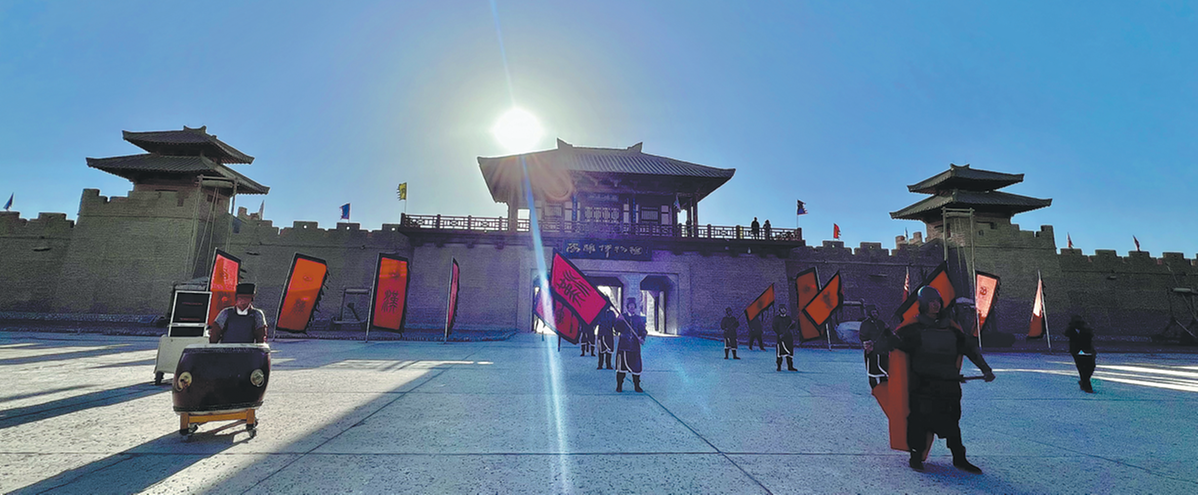
The Yangguan and Yumen passes were born of imperial strategy but survive as strongholds of poetic imagery. The phrase "the spring breeze never crosses Yumen Pass", from eighth-century poet Wang Zhihuan's Song of Liangzhou, evokes a boundary where the cultivated, clement and civilized empire ended, and the desolate, dangerous badlands began. It drew a line in the sand so sharp not even the rejuvenating breath of the seasons dared cut across.
Likewise, "I urge you to drink one more cup of wine; for once you go west beyond Yangguan Pass, you will find no old friends", from Wang Wei's Song of Wei City, written around the same period, captures the sorrow of farewell. He penned this poem in the early Tang Dynasty (618-907) as a send-off for his friend, Yuan Er, who was dispatched on a diplomatic mission to Anxi in the west. Its poignancy hails from the fact that Yangguan faces the Taklimakan Desert, whose name translates as "place of no return" — for good reason.
The phrase "going west beyond Yangguan" remains a lyrical idiom for a long and lonely journey into friendless territory, with the emphasis on the melancholy of saying goodbye. Think of it like a Chinese corollary to Shakespeare's "for parting is such sweet sorrow" — but flavored with bitterness alone.
A contemporary couplet composed in the ancient biansai shi (frontier poetry) style and displayed at Yangguan today declares of the view from Yumen: "Infinitely clear and snowy skies from Mount Tianshan, with endless clouds and winds blowing in from the end of the Earth."
Centuries after they've ceased to protect political authority, this pair of passes still stands as outposts of literary inspiration. They echo across ages and throughout our world from Dunhuang, Gansu province.
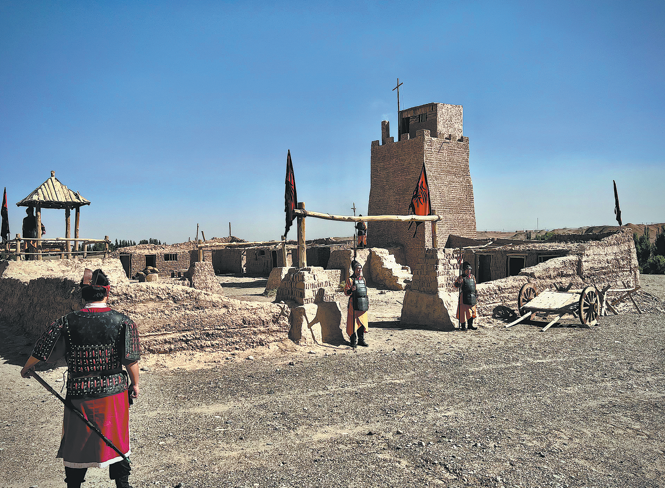
Their very names color lyrical subtexts. Yumen translates as "jade gate", since precious nephrite extracted from the Hotan and Yarkant regions entered the Central Plains through this passageway. It invokes prosperity. Yang — as in yin-yang — intimates sunlight and alludes to Chinese geomancy, given Yangguan's location south of a river and facing the Taklimakan. It invokes radiant vastness.
Emperor Wu of the Western Han Dynasty (206 BC-AD 24) commanded the construction of the 1,600-kilometer Great Wall sealing the Hexi Corridor from 121 to 101 BC. This bulwark, bolstered by forts and watchtowers, was the backbone of a strategy to secure the frontier. It repelled threats from nomadic groups while welcoming Silk Road traders along its southern route, delineating and controlling the crossroads linking the Central Plains and the Western Regions, which refers to today's Xinjiang Uygur autonomous region and part of Central Asia.
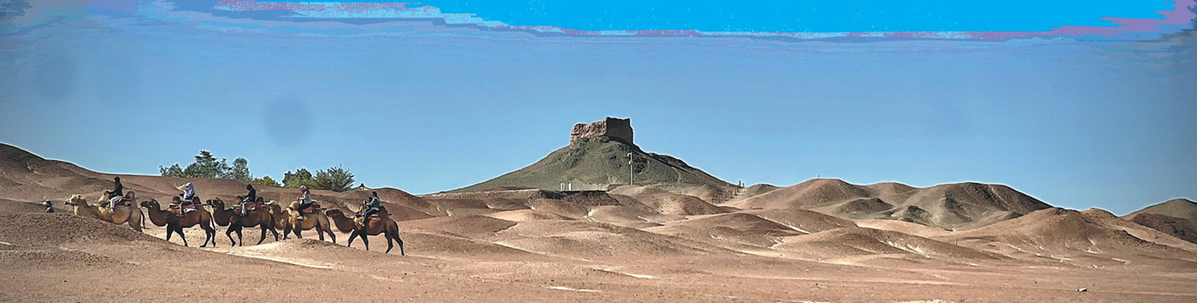
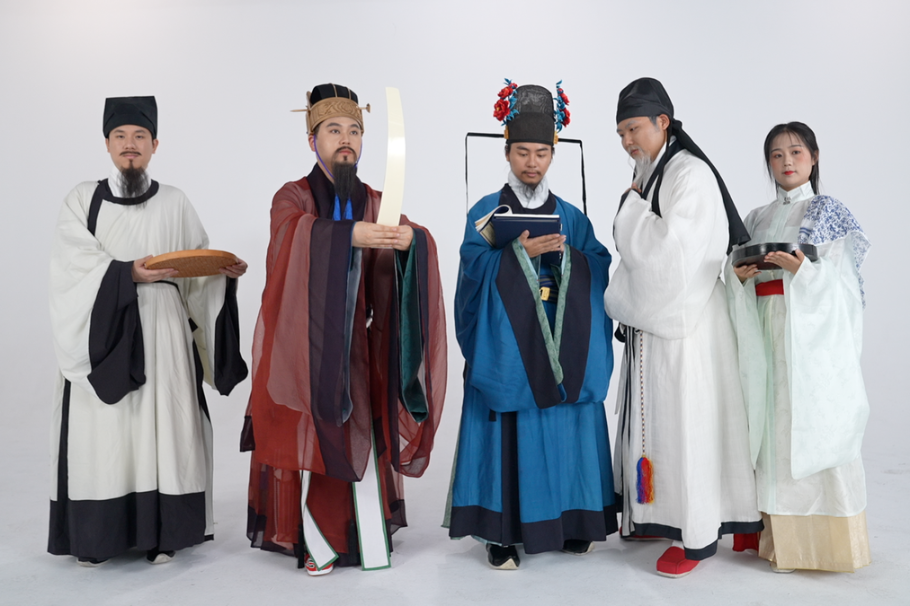
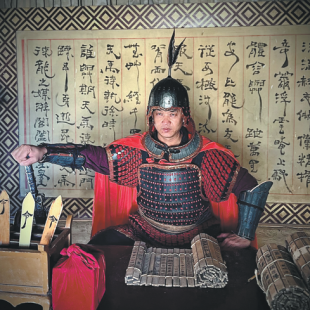
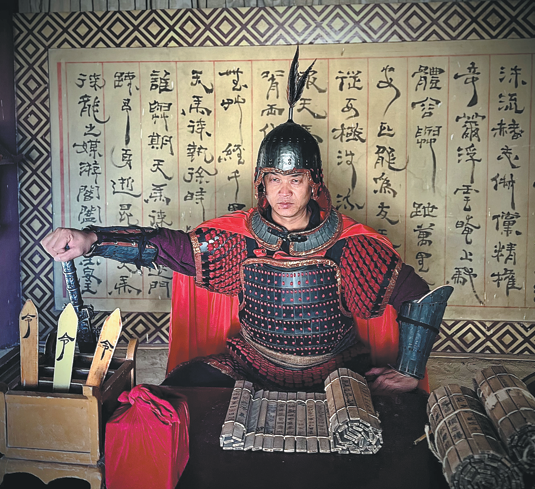
An on-site museum presents swords, arrowheads and a mummified infant that testify to the traversal of borders, not just among nations but between life and death. Today, at Yangguan, performers in period costume don't just bring history to life — they stage live-action role-playing reenactments, journeying across centuries to perform as soldiers and officials. One of the most popular activities for visitors is receiving "travel documents" — like passports to travel through time — scrawled on bamboo slips and ceremoniously presented by an ancient official. Visitors can ride to the Yangguan Beacon Tower in an ancient-style donkey-drawn cart or on camel-back. At a nearby outpost, they can team up with soldiers to start fires using the bow-drill technique, as was employed long ago to incinerate stacks of straw to emit smoke signals in the daytime or flames at night.
Yangguan's original beacon tower was erected between 104 and 101 BC to oversee every direction and relay visual warnings. It lingers as a 4.7-meter-high nub ground down by the sands of time. In its heyday, it functioned along with the nearby Qingshanliang beacon tower as the "eyes and ears of Yangguan". They arguably acted more like a mouth that screamed "danger" without words but shouted with flames and fumes, igniting a chain reaction of signals that spanned hundreds of kilometers along a connect-the-dots string of signal towers.
The Yumen Pass features a cluster of ruins inscribed as a core component of the UNESCO World Cultural Heritage-designated Silk Road: the Routes Network of Chang'an-Tianshan Corridor. These include the Xiaofangpan Fortress, distinguished by its foreboding ramparts and zigzagging horse path. It stands as a monument to the legacies of second-century BC explorer and envoy Zhang Qian (164-113 BC), whose expeditions and diplomatic missions paved the way for the Silk Road, and first-century general Ban Chao (32-102 AD).
The Dafangpan Fortress divulges insights into the logistical mastery that administered regional operations. It features a "triple granary layout", set among fertile wetlands surrounded by arid wastelands, that shows how food was grown, stored and transported to sustain soldiers and administrators among the borderlands. Tucked behind these frontline defenses was the Bowang Frontier Inspectorate, a nexus of regional border administration, intelligence and command.
Time has transmuted these frontier passes' implications. The Han Dynasty's martial urgency forged golden Tang-era verse that still sparkles. These garrisons now guard the border between our prosaic present and poetic past. Yumen and Yangguan testify to a dialogue between earth and sky, the pragmatic and romantic, substance and spirit.
Yumen is rooted in the ground, in the delicate jade dug from far-flung riverbeds and the solid rock of its foundations. Yangguan, with its very name, reaches upward and forward toward the vast beyond, for the sunlight that illuminates and the existential expanse that confronts and embraces every traveler.
They narrate two celebrated sentences of a single epic inscribed on the edge of the Taklamakan. The first speaks of what fortunes we carry — the second, of what we leave behind.
They still whisper, wordlessly, of jade and light, and of a final cup of wine lifted toward an endless sky in a woeful toast to our fates.
Contact the writer at erik_nilsson@chinadaily.com.cn