


Finding unity in the spirit of tai chi







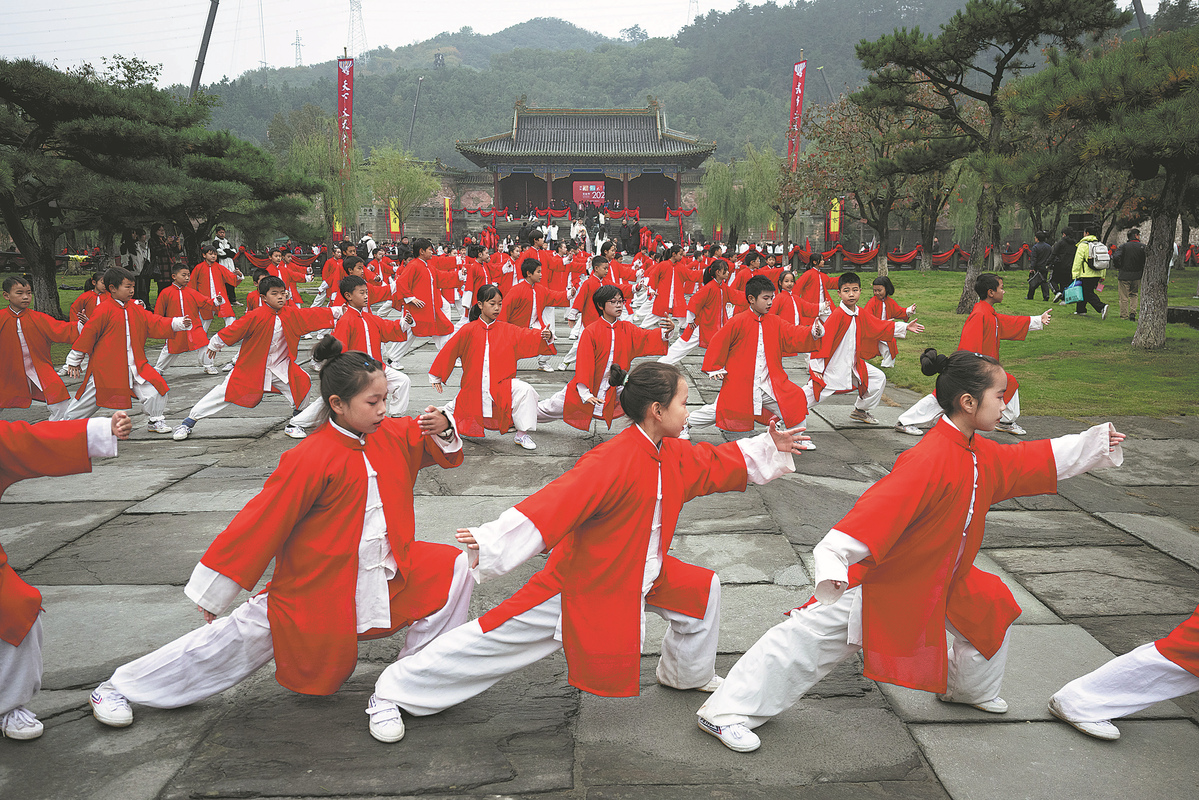
WUHAN — In the cool, misty morning air around the Wudang Mountains in Hubei province, a tall German man dressed in black robes slowly shifts his weight from one leg to the other at the Wudang International Martial Arts Exchange Center, his arms moving in smooth circles as if tracing the air.
For Thomas Weib, a 53-year-old engineer, tai chi began simply as exercise. But a decade later, it has become a daily ritual that keeps his body and mind in balance.
"Tai chi movements look slow, but that's to help us precisely control our posture and actions," he says. "Through tai chi, I've learned to calm my mind and reflect on the essence of life. What makes it truly special is how it acts as a bridge, connecting people from different countries and languages."
Weib is one of more than 2,000 participants at the 2025 International Wudang Tai Chi Culture Festival held this week in Central China's Hubei province. Athletes and experts from 32 countries and regions have gathered to practice, compete, and explore the ancient art born in the Wudang Mountains, the birthplace of Wudang martial arts and Taoist philosophy.
While tai chi is known for improving physical fitness, many say its real power lies in its philosophy.
Louis Dang, a 35-year-old from Minnesota in the United States, first tried tai chi during a meditation retreat in Australia. What began as curiosity about Chinese martial arts turned into a deeper search for inner peace.
"Tai chi is like water," Dang says. "It's elegant and beautiful, but also powerful. It helps you let go of what weighs you down and find balance in a world that moves too fast."
He explains that the slow movements train not just muscles but awareness, helping him synchronize his fast-thinking mind with his slow-moving body. "Your mind can go really fast while your body goes slow," he says. "Tai chi helps bring the two together."
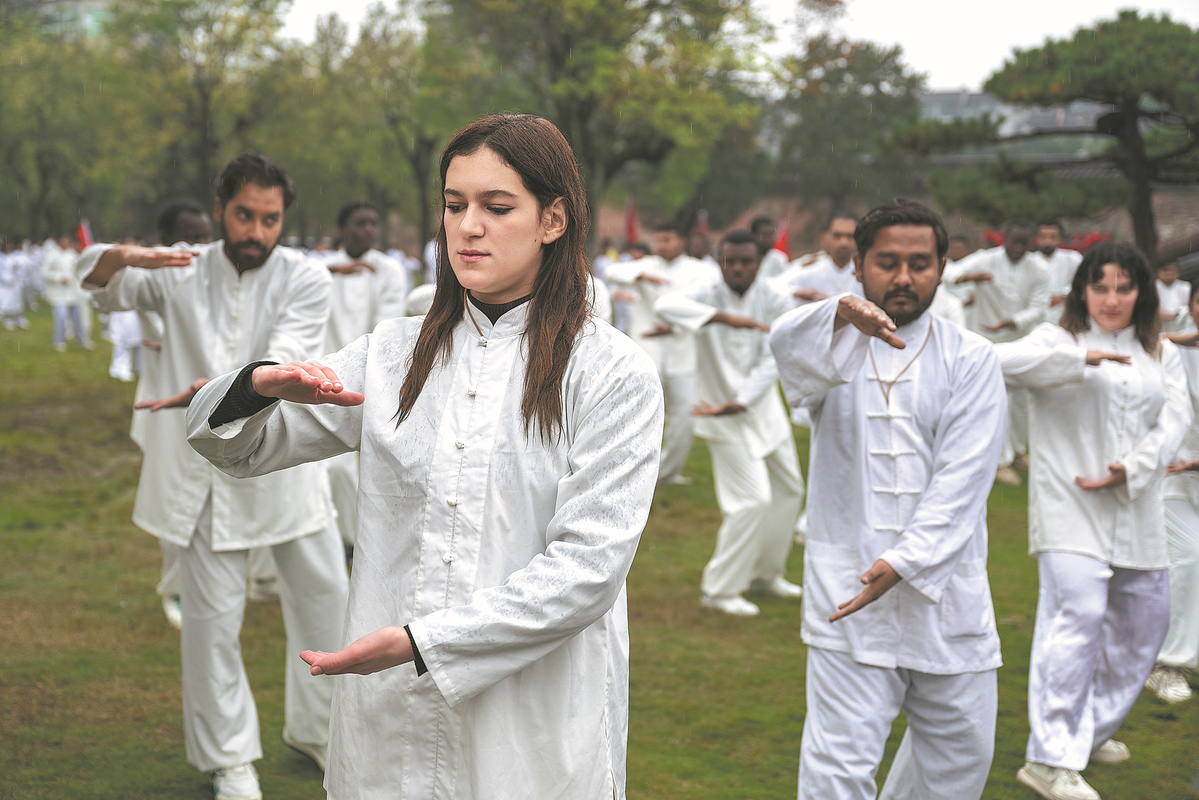
For Dang, tai chi's philosophy of harmony and flexibility reflects values that go beyond culture. Rooted in Taoist ideas of the balance between yin and yang and the unity of nature and humanity, it offers something modern life often lacks.
For Jake Pinnick, a native of Illinois in the United States and a 16th-generation disciple of the Wudang Sanfeng martial arts lineage, tai chi's universality lies even deeper.
"Tai chi is fundamentally a theory of how to perceive the world," says Pinnick, adding that the concept of tai chi applies to all parts of our lives, and we can embody it through the practice of tai chi boxing.
"We all experience the world differently, but through the same sensory organs. In this way, we have the same fundamental capacities for our own individual experiences," Pinnick says. "Through the movement of tai chi boxing, we learn to balance and coordinate our steps. By leading the breath as we pass through movements, we center our minds and relax away tension that builds up not just in the body but within the mind as well."
When Liu Cuifang, a tai chi coach from North China's Hebei province, first arrived in Paris 18 years ago, the only French words she could say were bonjour and merci, which mean "hello" and "thank you", respectively.
"But the magic of tai chi," Liu says, "is that it doesn't really need words. Once you raise your arms, lift your feet, and focus your spirit, people will follow."
This week, Liu brought a 38-member group from France to the Wudang Mountains to observe the competitions and study the art at its source.
"You can learn the movements by imitation, but to truly understand the philosophy behind them — Chinese culture and Taoist philosophy — you need someone who can explain it in a language that international practitioners can understand," says Liu, who speaks fluent French and sees herself as an ambassador for Chinese culture.
Among her students is Natacha Paquignon, a 51-year-old French choreographer, who says tai chi has become key to her creative process.
"Achieving unity between emotion, spirit and physical movement is the core of choreography," Paquignon says. "Taoist wisdom and the spiral motions of tai chi have deeply inspired my body and mind, helping me unlock new potential."
If personal experience and cultural depth explain why people start practicing tai chi, its worldwide spread shows how that appeal endures.
Statistics provided by Hubei's publicity department show that more than 150 countries now have active tai chi communities, and over 80 countries have formal associations. The Wudang Martial Arts Association alone has set up 21 international promotion centers, training more than 3 million overseas students.
At this year's festival, Chen Min, president of the Argentine Martial Arts Association, led a 28-member delegation to compete in the Wudang Tai Chi International Fellowship Competition, a three-day event featuring more than 1,500 athletes across multiple tai chi styles and age categories, from children to seniors.
"This is my fifth time leading delegations to China," Chen says. "Our members range from 37 to 83 years old. Some of them are lawyers, judges and accountants. Tai chi has become part of everyday life for many people in Argentina."
Chen's organization has promoted Chinese martial arts across South America for over two decades. Regular classes now draw more than 500 members each month.
"Tai chi teaches patience and balance," Chen says. "People everywhere can understand that message, no matter what language they speak."
Xinhua