China-ASEAN FTA 3.0 seen spurring biz
Nation's trade with region up 9.6%at 5.57 trillion yuan during Jan-Sept







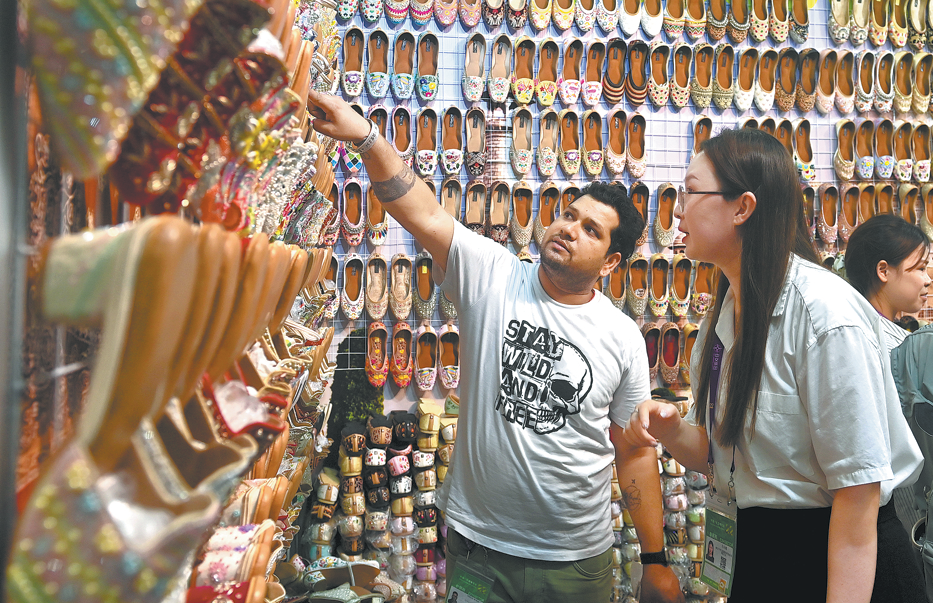
The China-ASEAN Free Trade Area (CAFTA) 3.0 Upgrade Protocol will inject more confidence and momentum into regional and global economic growth, officials and experts said.
Signed on Oct 28 in Kuala Lumpur ahead of the 28th China-ASEAN Summit, and witnessed by Chinese Premier Li Qiang and Malaysian Prime Minister Anwar Ibrahim, the agreement marked a major step in regional economic integration.
Singapore Prime Minister Lawrence Wong said the effective implementation of the agreement would bring new economic opportunities to the region.
"As long as ASEAN and China continue to redouble our efforts to cooperate, we can keep driving sustainable and inclusive growth in our region and deliver lasting benefits for all," Wong said.
He Yadong, spokesman for China's Ministry of Commerce, said the two sides will now complete their respective domestic approval procedures to ensure the protocol takes effect as soon as possible.
The CAFTA 3.0 Upgrade Protocol expands cooperation to nine major areas, adding five new pillars: the digital economy, green economy, supply chain connectivity, competition and consumer protections, as well as support for micro, small and medium-sized enterprises. The ministry said the framework reflects a shared commitment to shaping global trade rules and deepening collaboration in emerging sectors.
He described the signing as a milestone that extends economic integration beyond traditional trade and investment facilitation into digital, green and standards-related domains.
The upgrade, he said at a news conference, will promote digital enablement, green industry cooperation, supply chain interconnectivity, and regulatory and standards alignment, accelerating the integration of the regional market and industrial and supply chains.
"Enterprises on both sides are highly attentive to the protocol because they see the substantial business opportunities it contains," he added.
Trade data underline the relationship's weight. In the first three quarters, China's trade with ASEAN reached 5.57 trillion yuan ($763 billion), up 9.6 percent year-on-year and accounting for 16.6 percent of China's total foreign trade, said the General Administration of Customs. ASEAN remains China's largest trading partner.
Corporate leaders see the upgrade reinforcing structural shifts.
"China's cooperation with ASEAN continues to deepen. We are seeing investments in next-generation sectors such as electric vehicles, digital payments and consumer brands that are accelerating the ongoing build-out of regional supply chain systems," said Sunil Kaushal, co-head at corporate and investment banking of Standard Chartered.
"This transition strengthens the widespread use of the renminbi in the region, enabling companies to conduct business with greater certainty and financial efficiency."
Several Chinese provincial-level regions with close economic and trade ties to ASEAN are ramping up efforts to tap into regional cooperation opportunities. Guangxi Zhuang autonomous region, a key driver of China-ASEAN cooperation, inaugurated the CAFTA 3.0 enterprise service station on the same day the upgrade protocol was signed. The station aims to provide comprehensive services for businesses, including policy interpretation and market expansion support.
On the same day, Nanning, Guangxi's capital, hosted a cooperation exchange conference focusing on rule alignment and trade promotion related to ASEAN. The event featured policy briefings, achievement releases and practical experience sharing to assist enterprises in meeting ASEAN compliance requirements.
Li Guanghui, dean of academic affairs at the China-ASEAN School of Economics at Guangxi University, said the protocol will advance deep integration of production and supply chains and play an important role in deepening China-ASEAN economic and trade cooperation.
Lei Xiaohua, deputy director of the Institute of Southeast Asian Studies under the Guangxi Academy of Social Sciences, said the inclusion of the digital economy, cross-border e-commerce and the green economy offers fresh opportunities for upgrading, transforming and optimizing trade cooperation by expanding its scope and enhancing quality.
A defining feature of the 3.0 arrangement is stronger coordination of standards and mutual recognition of rules, providing institutional safeguards for more efficient, stable and convenient cooperation in future digital economy domains as well as traditional trade areas, Lei said.



Today's Top News
- Drills demonstrate China's resolve to defend sovereignty against external interference
- Trump says 'a lot closer' to Ukraine peace deal following talks with Zelensky
- China pilots L3 vehicles on roads
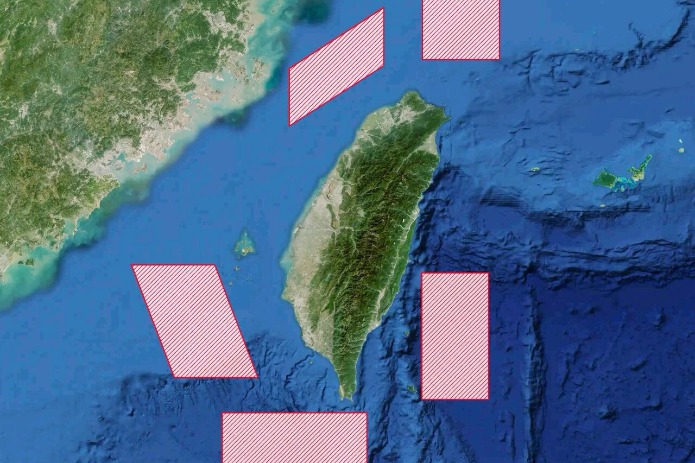
- PLA conducts 'Justice Mission 2025' drills around Taiwan
- Partnership becomes pressure for Europe
- China bids to cement Cambodian-Thai truce