Healing the green heart of our planet







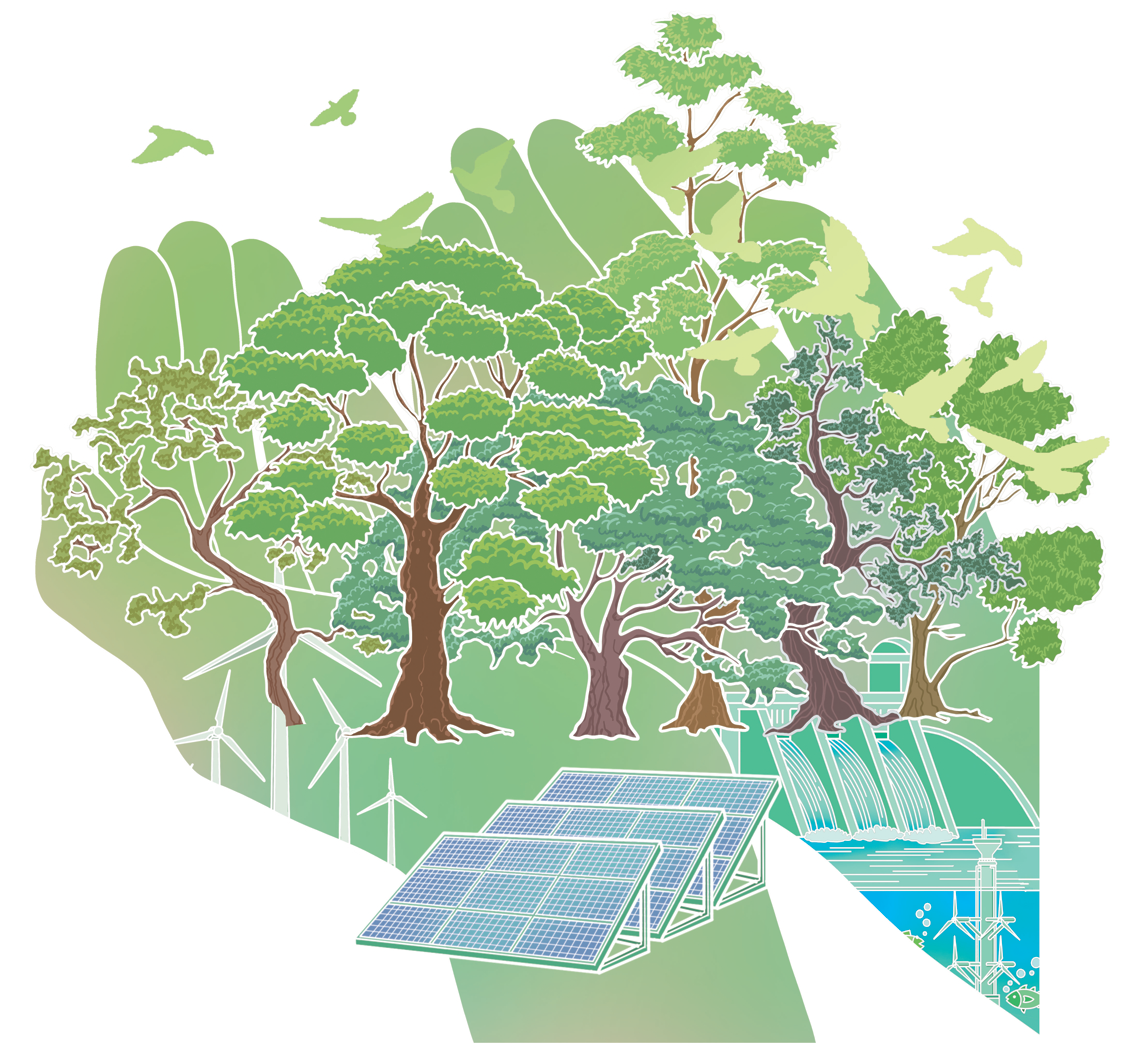
The Amazon region is the green heart of the planet — an essential part for keeping the Earth habitable in the coming decades. Considered the cradle of biodiversity, it harbors about 20 percent of all species known to science and plays a decisive role in regulating both regional and global climate. Its forests sustain the rain cycles that feed much of South America. Each of the billions of trees releases around 500 liters of water into the atmosphere every day, creating a vast, self-sustaining humidity system that feeds rainfall and supports food production far beyond the Amazon region. This immense biological engine generates what scientists call "flying rivers" — invisible air streams that carry moisture across the continent, helping to water farmlands in Brazil, Argentina, Paraguay and even parts of the Andes.
These forests also serve as the planet's largest carbon reservoir, storing around 100 billion tons of carbon — the equivalent of 10 years of global emissions. By absorbing carbon dioxide during photosynthesis, the Amazon forests act as a vital buffer against global warming. If this immense green mass were destroyed, it would release colossal amounts of greenhouse gases, exacerbating the climate crisis and weakening the "air-conditioning effect" the Amazon forests exert on the atmosphere. Without it, the planet's average temperature would be considerably higher, and extreme weather events — such as heatwaves, floods and prolonged droughts — would become even more frequent and severe.
But the Amazon is not made of trees alone. It is also home to hundreds of indigenous peoples and traditional communities who hold millennia-old knowledge about forest management — knowledge that is essential to its conservation and to the region's sustainable development.
Despite this, the history of the development in the Amazon region is marked by contradictions. Although the economic model applied to the region has brought some benefits, it has also imposed high social and environmental costs. Since the 1970s, large-scale infrastructure projects, cattle ranching, mining and logging have expanded rapidly, often without proper planning or regulation. The deforestation resulting from this growth now represents the greatest threat to the forests' very existence, endangering food production both within and beyond the region.
If these forests are destroyed, billions of tons of carbon would be released into the atmosphere, and the region's ability to generate rainfall would collapse, compromising agriculture and water security across the continent. The combination of forest destruction and climatic events — particularly severe droughts driven by global climate change — has created a bleak scenario. The record droughts in recent years have led to reduced river levels and massive fish deaths, while local communities face water shortages and food insecurity.
The threats faced by the Amazon forests put at risk the environmental services they provide, including the rainfall patterns that sustain Brazil's agricultural production, especially grains and livestock. This poses a serious risk to the nation's food security and to its agrarian trade with other countries. It is therefore urgent to establish a new development model for the Amazon region — one that seeks to conserve and restore the forests, make more efficient use of already deforested lands and ensure the rights and well-being of local populations by creating income opportunities that do not depend on environmental destruction.
Sustainable bioeconomy initiatives, forest restoration, ecotourism and the responsible management of non-timber forest products — such as nuts, oils and natural fibers — offer promising alternatives. Technological innovation, combined with traditional knowledge, can also add value to forest-based products, generating income while preserving the forest's natural resources. In addition, it is also imperative to promote strategies that enhance the value of standing forests, rather than suppressing native vegetation. Both private and public areas covered with forests should be remunerated, as a strategy to maintain the integrity of the ecosystems. Payment for environmental services and carbon markets are examples of programs that value standing forests and should be supported and amplified. At the same time, Brazil's energy matrix — largely based on renewables such as hydro, wind, and solar power — positions the nation to become a global leader in sustainable development.
Protecting the Amazon forests is not only an environmental issue; it is also an economic and food security imperative that affects billions of people worldwide. The stability of global climate systems, the availability of water for agriculture, and the future of countless species depend on what happens in this vast region. The Amazon region is not a distant wilderness; it is an integral part of the planet's life-support system. Reconciling food production with the preservation of the Amazon forests means ensuring that the green heart of the Earth remains strong and vibrant. Safeguarding it is a shared responsibility — one that transcends borders and generations. The time to act is now, before the green heart that sustains our world stops beating.
Paulo Moutinho is a senior scientist at the Amazon Environmental Research Institute, Belém, Brazil; and André Guimar?es is the executive director at the same institute.
The views don't necessarily reflect those of China Daily.




Today's Top News
- Drills demonstrate China's resolve to defend sovereignty against external interference
- Trump says 'a lot closer' to Ukraine peace deal following talks with Zelensky
- China pilots L3 vehicles on roads
- PLA conducts 'Justice Mission 2025' drills around Taiwan
- Partnership becomes pressure for Europe
- China bids to cement Cambodian-Thai truce