Diet performance shows recalcitrant Takaichi to be Japan's real 'contingency'







The statement that Japan's Cabinet issued on Tuesday, asserting that Japanese Prime Minister Sanae Takaichi's remarks on the Taiwan question "do not change" Japan's "consistent position" on issues related to existential "threats", is far from the clarification that the region — and the world — needs.
Rather than dispelling concerns triggered by the erroneous and dangerous remarks Takaichi made in the Diet on Nov 7, the Japanese government has chosen ambiguity and political evasion. And the latest developments in the Japanese Parliament on Wednesday only prove that Takaichi is neither willing nor able to manage the escalating troubles her irresponsible remarks have caused.
In her first party leaders' debate, Takaichi largely repeated the Cabinet stance and again refused to retract her remarks. When Yoshihiko Noda, leader of the Constitutional Democratic Party of Japan, directly asked her whether she feels responsible for the deterioration of China-Japan relations, she dodged the question entirely, insisting she was "just answering a Budget Committee question" with her Nov 7 remarks.
Takaichi then offered a revealing exposition: If she "simply repeated the government's previous answers over and over, there was a risk that the Budget Committee could be stalled", which she feared would hinder her push for higher defense spending. Additionally, when explaining why she mentioned Taiwan, Takaichi said: "Since I was asked for specific examples, I intended to answer sincerely."
This single admission makes clear that her remarks on Taiwan were by no means out of "carelessness" and they were intended to justify and accelerate Japan's remilitarization agenda. Something she has previously repeatedly denied.
By claiming that the Cabinet's statement constitutes the government's unified view, Takaichi is simply attempting to hide behind its vague language — which is designed not to clarify Japan's position but to obscure it. Her selective invocation of the so-called "Treaty of San Francisco", which China does not recognize and which has no bearing on Taiwan's legal status, further exposes her reliance on misleading historical interpretations. The innocence the Japanese leader feigns cannot conceal her political calculus and maneuvering.
At the same time, Takaichi conspicuously avoided answering several critical questions related to the diplomatic and political damage created by her Nov 7 remarks. Faced with concerns over her stance on Japan's long-held "Three Non-Nuclear Principles", she again blurred the issue, saying "As a matter of policy, we uphold them". Yet she refused to confirm whether the government should retain the phrase "uphold the Three Non-Nuclear Principles" last week, declaring it was "not at the stage" for her to do so. Likewise, she denied having instructed a review of the principles yet she has reportedly pushed for accelerated revisions to core security documents next year. These contradictions highlight a rash leader struggling to reconcile her ideological agenda with the realities of diplomacy and regional stability.
More importantly, they reveal the troubling truth that Takaichi's approach is driven not by strategic responsibility but by a desire to push Japan down the dangerous path of military expansion, even at the cost of destabilizing relations with neighbors and unsettling Japanese society.
Takaichi is well aware of the magnitude of the trouble her Nov 7 remarks have caused — domestically and internationally — but her Wednesday performance demonstrates she lacks the experience, ability and composure to manage the crisis she created. So she has resorted to a pattern of denial, equivocation and opportunism.
Former Japanese leaders including Shigeru Ishiba, Yoshihiko Noda and Yukio Hatoyama have criticized her for undermining the political foundation of China-Japan relations and for injecting unnecessary tension into the region. While the Japanese business community, local governments and civil society organizations have also expressed deep concern over the political and economic fallout from her Nov 7 remarks.
Takaichi should be reminded that both China and the United States have conveyed the message that the two countries fought shoulder to shoulder against fascism and militarism during World War II, and they will continue to defend the victorious outcomes of that struggle today. That means any attempt by Japan to deviate from its postwar commitments or revive its militaristic thinking will face firm opposition.
The contradictions, evasions and political calculations of Takaichi, which have been on full display over the past few weeks, underscore a sobering reality that if this ultrarightist leader is allowed to act waywardly, as she has over the past month since she took office, she will not only continue generating self-made crises but also bring greater risks to Japan and the wider region.
Japan has a clear choice to make — whether to uphold its commitments to peace and stability or to allow a war-minded leader to drag it and the region into deeper uncertainty.




Today's Top News
- Drills demonstrate China's resolve to defend sovereignty against external interference
- Trump says 'a lot closer' to Ukraine peace deal following talks with Zelensky
- China pilots L3 vehicles on roads
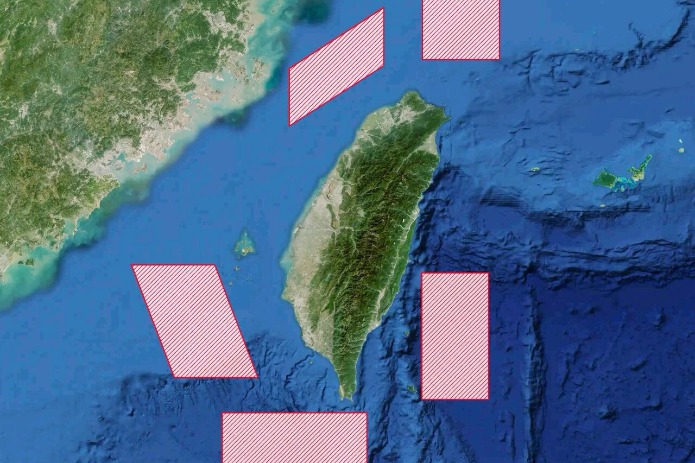
- PLA conducts 'Justice Mission 2025' drills around Taiwan
- Partnership becomes pressure for Europe
- China bids to cement Cambodian-Thai truce