A toast to a fine tradition
Shaoxing's iconic huangjiu yellow rice wine still a signature tipple thousands of years after its first brew. Li Xinlei reports.







Editor's Note: Using a blend of words and visuals, this series explores unique communities and reveals the heart of China through food, architecture, craftsmanship, landscapes and traditions.
Huangjiu, or yellow rice wine, is a traditional Chinese rice liquor with deep historical roots, particularly associated with the region around Shaoxing in East China's Zhejiang province. This area has been a hub for the production of huangjiu for over 2,500 years.
The history of huangjiu in Shaoxing dates back to ancient times, with notable events such as King Gou Jian of the Yue state hosting feasts with rice wine during the Spring and Autumn and Warring States periods (770-221 BC). The Eastern Jin Dynasty (317-420) saw the famous Orchid Pavilion Gathering hosted by Wang Xizhi, a legendary calligrapher and scholar, where huangjiu played a central role in the literati's cultural activities. They enjoyed a winding stream party — an old Chinese custom in which the participants wait by a winding stream and compose poems before their cups full of rice wine float down to reach them.
Shaoxing's prominence in huangjiu production continued to grow, reaching a peak during the Southern Dynasty (420-589) when the city became renowned for its numerous huangjiu breweries. This tradition of excellence continued through subsequent dynasties, including the Yuan (1279-1368), Ming (1368-1644) and Qing (1644-1911), with the craft becoming more sophisticated and widespread.
The international recognition of Shaoxing huangjiu was marked by its gold medal award at the 1915 Panama-Pacific Exposition, which helped introduce it to a global audience.
The unique qualities of Shaoxing huangjiu are attributed to its traditional brewing techniques, which have been preserved and celebrated as part of China's national intangible cultural heritage since 2006.
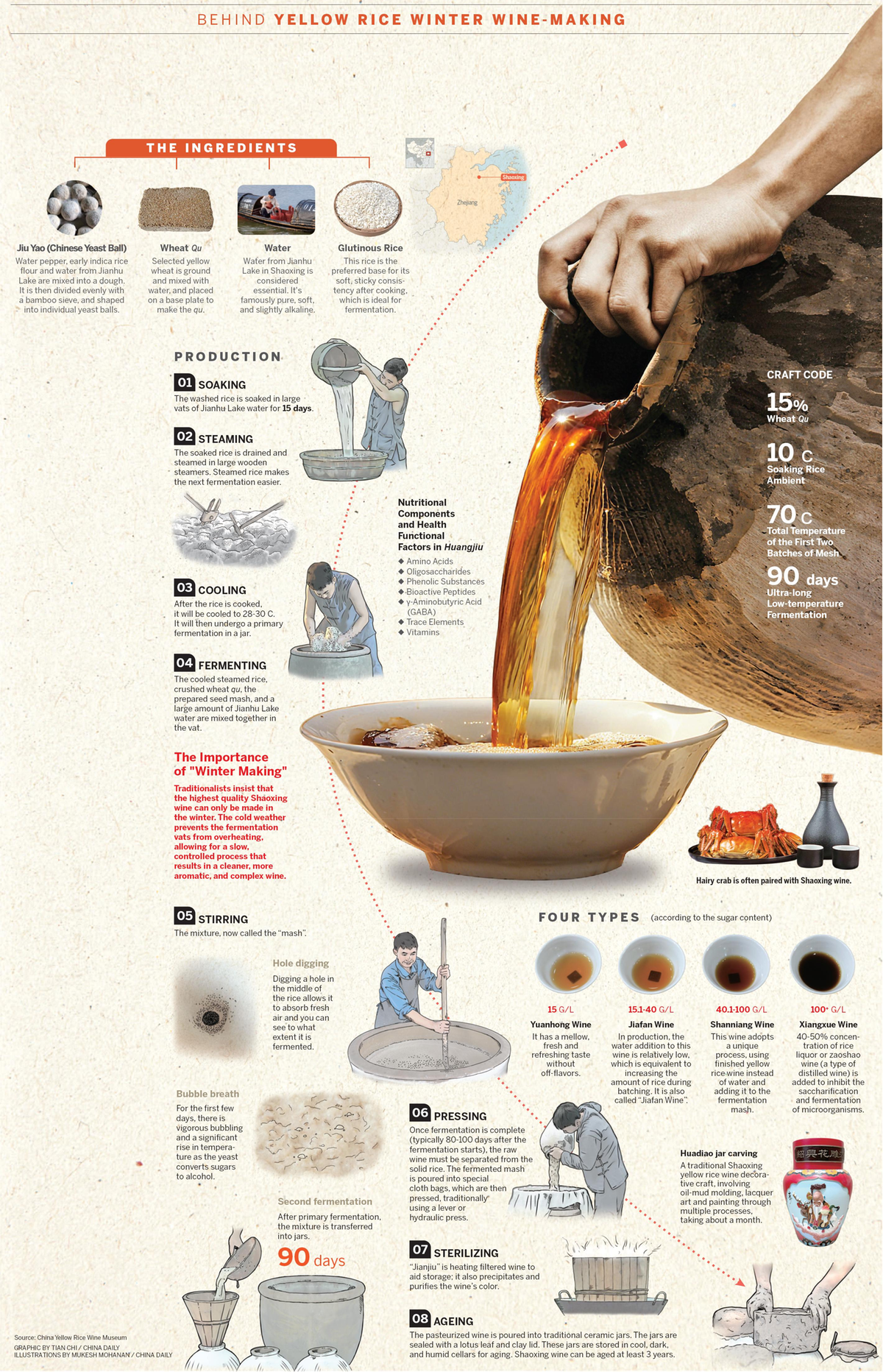
The brewing process meticulously follows nature's rhythms: fermentation starters prepared in the seventh month of the Chinese calendar (around August), wheat qu (yeast) making in the ninth month (around October), with the main brewing commencing around the Beginning of Winter (the 19th solar term, on Nov 7 or 8) and ending around the Beginning of Spring (the first solar term, on Feb 3, 4 or 5).
It is a 90-day cycle honoring nature's pace. From rice soaking and steaming, vat loading and primary fermentation, to skimming for air, dispensing into jars for secondary fermentation, pressing, clarifying, pasteurization and aging — each step embodies the accumulated wisdom and experience of generations of master brewers.
The artistry lies at the very heart of the wine's quality, demanding constant adjustments based on temperature, rice quality, and the performance of both fermenting mash and wheat yeast.
Shaoxing huangjiu enterprises are actively embracing market evolution, driving product premiumization and youth-oriented innovation.
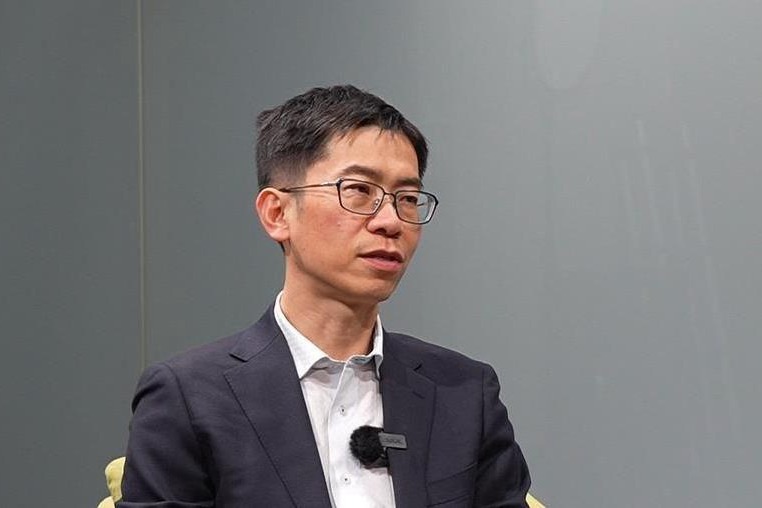
Yu Zhifang, vice-president of the Huangjiu Research Institute at Kuaijishan Shaoxing Huangjiu Co, one of the industry leaders, noted that huangjiu is increasingly favored by consumers for both its health benefits and cultural significance. With the company's output value reaching 2 billion yuan ($281.1 million), they're now actively expanding into Southeast Asian, European and American markets, while introducing new products adapted to local tastes.