Fudging position on Taiwan question unmasks Takaichi's ulterior motives: China Daily editorial







The diplomatic tensions unilaterally caused by Japanese Prime Minister Sanae Takaichi's erroneous and dangerous remarks on China's Taiwan island on Nov 7 have escalated ever since due to the Takaichi government's word play. Instead of retracting her remarks, as China justifiably and solemnly demands, Tokyo has gone to great lengths to play down Takaichi's remarks and obscure their implications so as to mislead the international community.
In response, China's permanent representative to the United Nations, Fu Cong, sent a letter to UN Secretary-General Antonio Guterres on Monday, which will be circulated as an official document of the UN General Assembly, laying bare the contradictions in Japan's current stance on regional security and Taiwan. This is the second letter that Fu has sent to the UN chief. It was in answer to the letter Japan's Permanent Representative to the UN Kazuyuki Yamazaki sent to the UN secretary-general in reply to Fu's first letter.
Fu's latest letter makes clear that at the heart of the contradictions in Japan's stance is Takaichi's provocative assertion that a "Taiwan contingency" could pose a "survival-threatening situation" for Japan, implying potential military intervention. Such rhetoric not only belies Tokyo's assertion that its position on Taiwan hasn't changed, it challenges the postwar international order enshrined in the United Nations Charter.
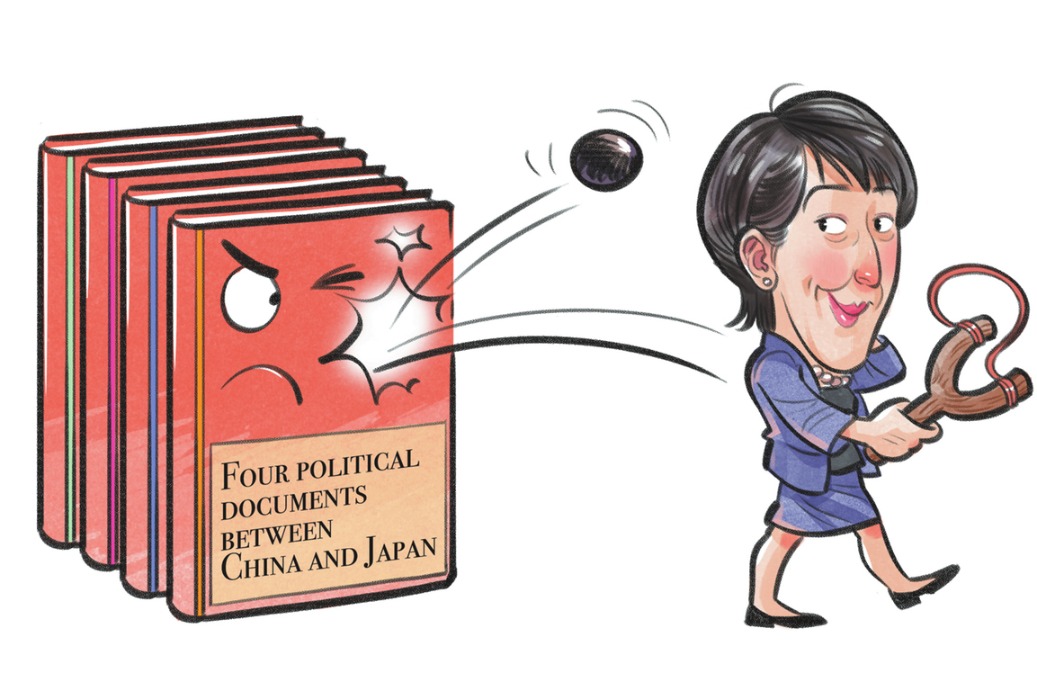
The Japanese government's claim that it adheres to a "consistent position" on Taiwan rings hollow when it repeatedly dodges clarifying what that position is, voicing vague assurances that its position "remains unchanged".
This lack of transparency raises questions about Japan's true intentions and its commitment to international agreements such as the Cairo Declaration and the Potsdam Proclamation, which explicitly affirm China's sovereignty over Taiwan. These documents are not mere historical artifacts; they are foundational elements of the postwar international order that Japan is legally obligated to uphold.
Takaichi's remarks therefore represent not only a fundamental change of Japan's position on the question of Taiwan and break the promises Japan has made in its diplomatic documents with China, they also challenge the postwar international order.
The fact that Takaichi has referred to the "Treaty of San Francisco", which China has never recognized, and her foreign minister when asked about the Japanese side's position on the Taiwan question said that the Japanese government's basic position on Taiwan is as stated in the 1972 Sino-Japanese Joint Statement, and "nothing more and nothing less", points to the fact that the Japanese side is trying to beat about the bush.
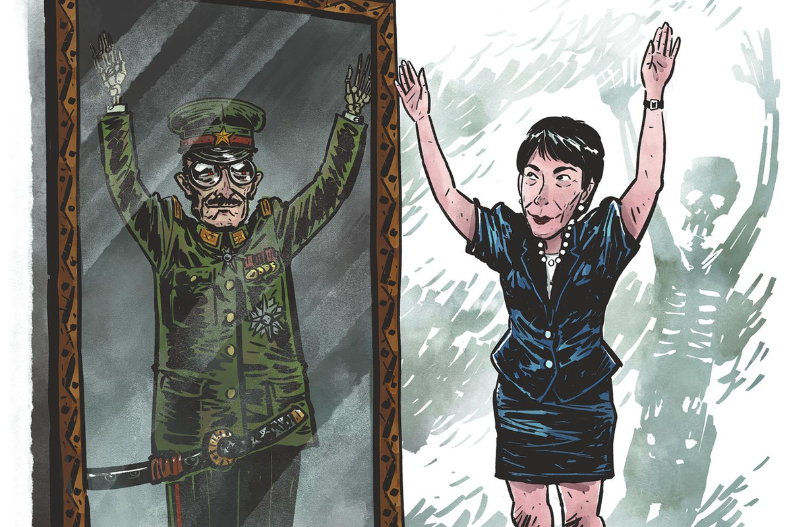
Japan's actions speak louder than its words. Behind the equivocation by the Japanese side on Takaichi's remarks is the fact that since Japan's defeat and surrender in World War II, right-wing forces in Japan have never ceased in their attempts to whitewash its history of aggression and revise its security policies, which they have been incrementally doing for years.
The country's latest increase in defense spending, efforts to revise its "three principles on arms exports" and attempts to reconsider its Three Non-Nuclear Principles are a clear and accelerated departure from the commitments it has made to China and the international community. These moves, coupled with the provocative rhetoric surrounding Taiwan, indicate a shift toward full militarization and a combative posture in the region.
By threatening military intervention in the Taiwan question, Japan is willfully reneging on its postwar commitments and obligations. Takaichi's refusal to retract her remarks shows they were not a slip of tongue, but integral to her "Japan is back" agenda.
It is Japan that is engaged in a prolonged expansion of its military capabilities. It is Japan that has been attempting to use the Taiwan Strait situation, along with other fabricated excuses, as a pretext for advancing its remilitarization. And it is Japan that is proposing armed interference in another country's internal affairs.
This attests to the fact that something needs to be done to instill in the minds of the Japanese awareness of the war crimes invading Japanese troops committed in China and other Asian neighbors, awareness that Japan needs to have the courage to face up to its history of aggression and awareness that Japan can hardly establish real neighborly ties with its neighbors unless it has sincere remorse about its past aggression, as a Chinese Foreign Ministry spokesperson said.
Without such awareness, how can Japan expect to win the trust and respect of the international community?