'Silence Choir' gives voice to deaf children, opens hearts
Youngsters from remote mountainous area overcome hurdles, soar on concert stages







Tuning to vibrations
But how? The two shut themselves away in their hotel room for three days, before emerging with the idea of forming a choir.
"They still need to face their disabilities, and to redefine them on their terms, for this is the only way to shatter the cocoon of limitation our society has wrapped around them — to unfurl their own wings," said Li.
"Their music arises from their experiences and is expressed through their bodies. It answers to no aesthetics but its own, for their world does not exist on the margin — it runs in parallel to ours."
The way Zhang taught the children to sing was by tuning them to the very essence of sound — vibration.
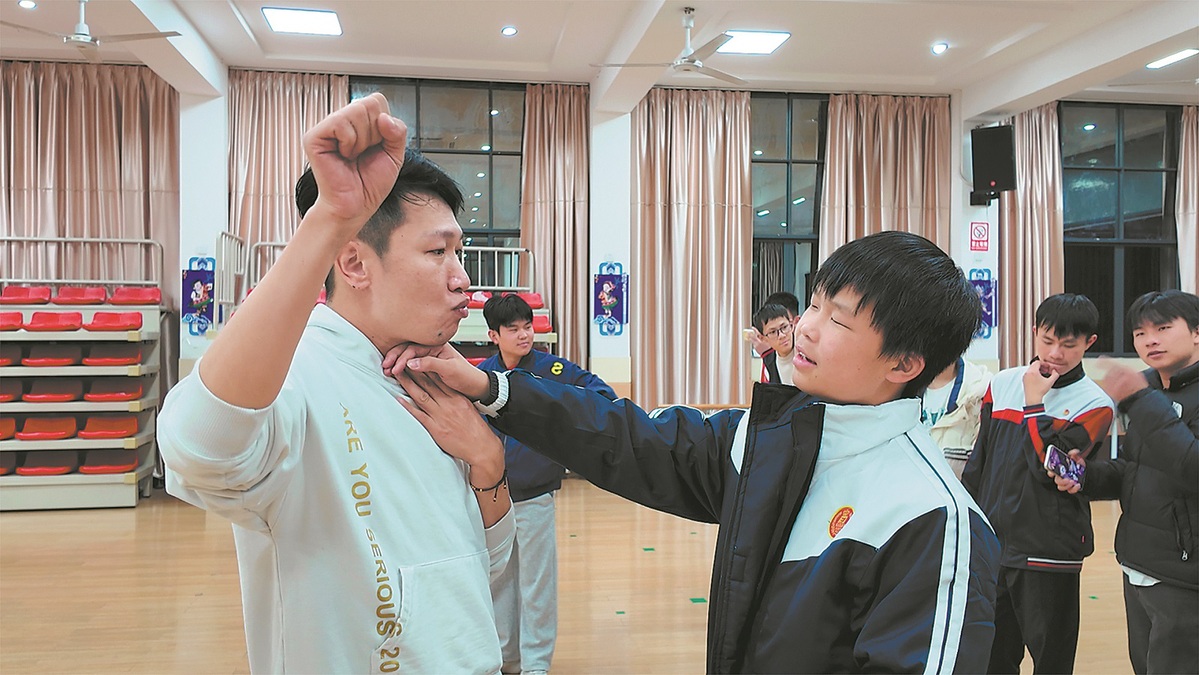
"A child would place a hand on my throat, and I would place mine on theirs. As we both made the 'ah' sound, the air between us trembled. They could feel the pulse of my voice beneath their palms, and I could feel theirs searching for it. That's when they understood: to reach the same pitch, they had to let their own vocal cords hum the way mine did. They learned to listen not with their ears, but with their bodies — to feel the resonance rising through the chest, echoing in the head, and merging into a sound that was wholly their own."
When practicing alone, the children used a tuning meter — the kind musicians use to fine-tune their instruments. As the needle steadied at the desired pitch, the child would memorize the vibration running through their body at that moment. They would repeat this process thousands of times, until the feeling itself became memory — until their body muscles remembered how to produce a sound that corresponded to a musical note.
"In the professional world of music, this is called absolute pitch, or perfect pitch — the ability to hit a note without any reference tone. Even trained musicians usually require years of practice to develop it," Zhang said.
"The idea is simple: if each child can sing a single note, together they can produce a full range of notes that form a piece of music. And we welcomed all who were willing to try and who stayed with us."
Yet in practice, several children had chosen the same note. "That's perfectly fine," Zhang said. "I want them to find their own comfort zone, the note that feels most natural to them. The fact that their comfort zones overlapped didn't bother me at all. Once they open that door, they will slowly stretch beyond it, discovering new notes and expanding their range."
These days, some veteran members of the group, including Yang, can sing three notes.