Salt of the earth
1,100-year-old field transforms from ancient production site to green, agritourism hub







Heritage of a millennium
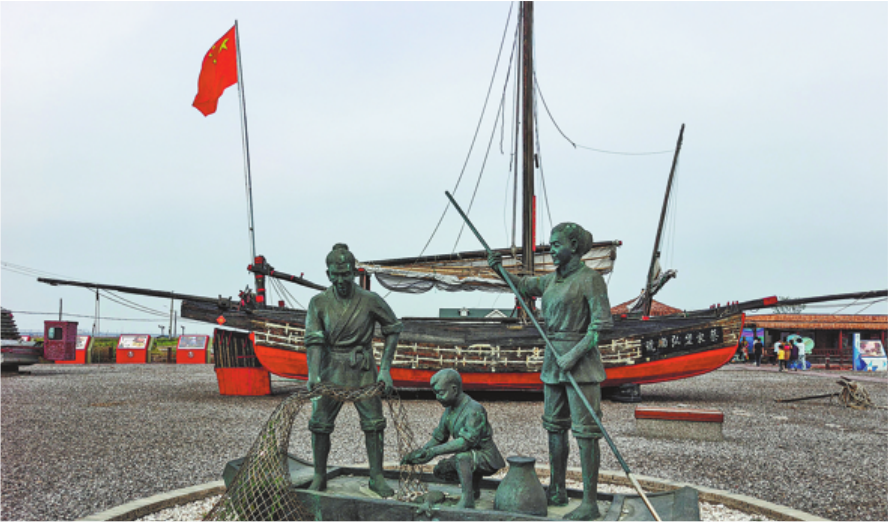
The history of the Hangu Salt Field is a living fossil of China's sea salt development. Its salt-making history can be traced back to the Five Dynasties Period (907-959), when Zhao Dejun, military governor of Youzhou prefecture, established a workshop here to boil salt.
In the early Qing Dynasty (1644-1911), production technology shifted from the method of boiling to evaporation, significantly improving production efficiency and scale.
"We are guarding not just millennium-old salt fields, but also a cultural gene that has been passed down," said Yan Haibin, head of the publicity department at the Hangu Salt Field.
Compared to well salt, rock salt and lake salt, sea salt holds unique value. China's salt product structure consists of 87 percent well and rock salt, 10 percent sea salt and 3 percent lake salt.
"Unlike well and rock salt derived from underground brine, sea salt naturally retains various trace elements from seawater such as potassium, magnesium and calcium without anti-caking agents," Yan said. "This is why it has a fresher, saltier flavor and is more favored by health-conscious consumers."
The Pharmacopoeia of the People's Republic of China 2020 Edition includes "Daqing Salt", clearly documenting its efficacy in "clearing heat, cooling blood and improving eyesight". Records of "using salt as medicine" can also be found in classical Chinese medical texts. For instance, The Divine Farmer's Materia Medica classifies salt as a substance of middle grade that requires dialectical use, noting its salty and cold nature, and its impact mainly on the stomach, kidney, large intestine and small intestine meridians.
In order to upgrade consumption, the salt field is actively developing new products like low-sodium salt and other functional salts to meet consumers' increasing demand for health.