Approved private vehicles now permitted direct access to Hong Kong







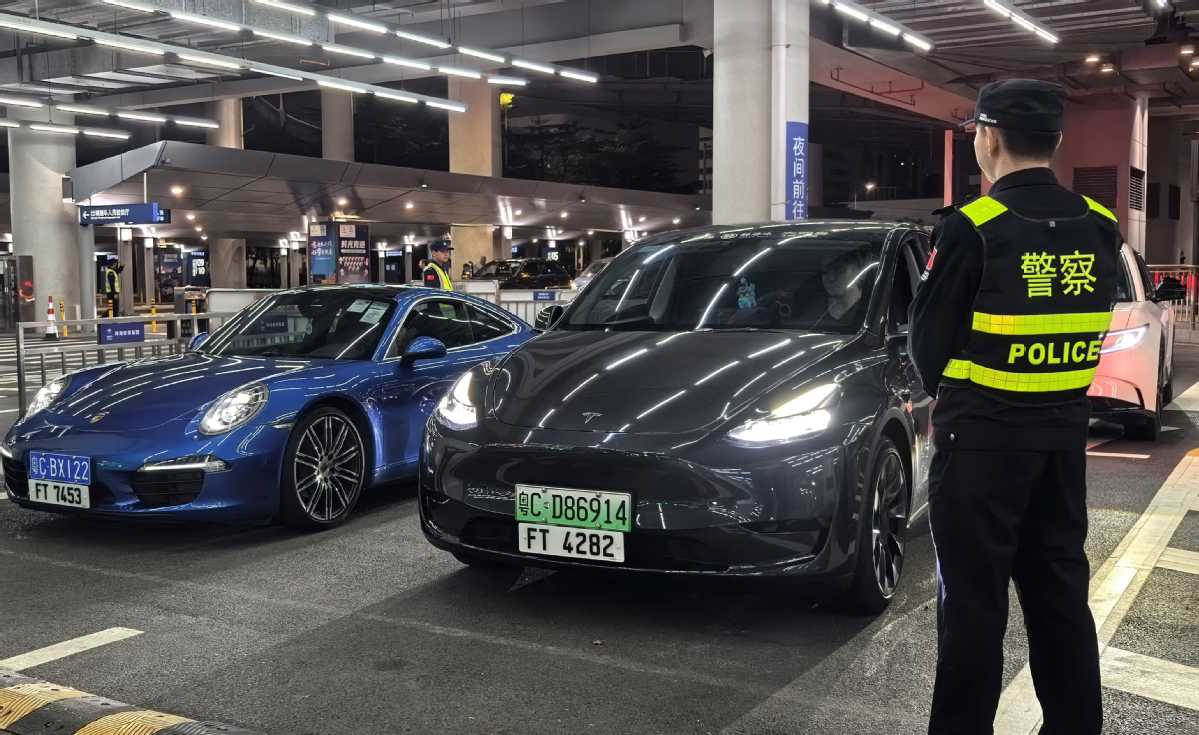
A private car with a Guangdong license plate drove through the outbound lane at the Zhuhai port of the Hong Kong–Zhuhai–Macao Bridge just after midnight on Tuesday, becoming one of the first vehicles to enter downtown Hong Kong under a newly expanded cross-border driving policy.
After a brief temperature check and identity verification, a screen above the lane flashed green, allowing the vehicle to proceed south. The moment marked the formal rollout of a long-awaited policy permitting eligible Guangdong cars to drive directly into urban areas of Hong Kong, a further step in integrating the Guangdong–Hong Kong–Macao Greater Bay Area.
"I am very pleased to be among the first to take part," said the driver, surnamed Peng. He runs a restaurant in Zhuhai with a business partner from Hong Kong and frequently travels there for work. Previously, Peng had to switch to buses for the trip. "It was time-consuming. Now I can drive my own car and complete customs registration and clearance appointments online," he said.
By 8 pm on Monday, over 380 Guangdong-registered private vehicles had been processed, according to the Hong Kong–Zhuhai–Macao Bridge border checkpoint.
The first phase of the policy began on Nov 15. Approved private vehicles were allowed to exit via the bridge and park at the automated car park at the Hong Kong port. The bridge is currently the only designated crossing point under the policy.
Since the policy's first phase began, the bridge customs and border inspection authorities have optimized regulatory processes and enhanced service efficiency. "We have continuously optimized the supervision process and upgraded the one-stop clearance system, setting up five dedicated clearance lanes in each direction for entry and exit," said Lin Jin, head of the second section of customs supervision at the bridge.
By leveraging data sharing, customs authorities have achieved automatic verification of vehicles' registration information, allowing for one-time stop and clearance, according to Lin.
Heading in the opposite direction, there are also a number of cars from Hong Kong and Macao going north into the mainland via the bridge. Since the beginning of this year, the number of Hong Kong and Macao vehicles entering the mainland via the bridge has increased by 25.4 percent year-on-year, according to the bridge customs.


- Fog provides rare, tranquil view of animals at Chongqing zoo
- Mainland police seek information on 2 suspected Taiwan smugglers
- Fujian town produces over 1 billion slippers annually
- Thousands of wild white swans arrive in Shanxi for wintering
- Year-ender: China's scientific achievements in 2025
- Trademark Law being revised to protect IPs