Tracing China's origins
The capital of numerous dynasties, the metropolis tells of imperial power and brings insight into the lives of ancient people, Wang Ru reports in Luoyang, Henan.







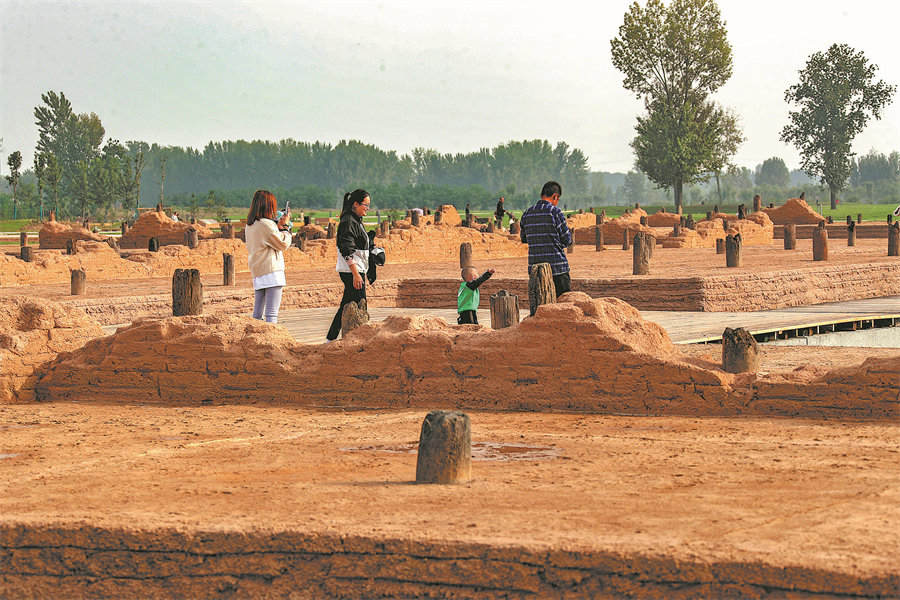
Today, the area includes sites of workshops for bronze casting and turquoise crafting, along with a palace area and locations dedicated to burial and sacrificial ceremonies.
The road we stood on was part of the ancient road network with the city laid out in a grid system, and different areas having specific functions. The governing bodies at the time created a real sense of order in Erlitou.
I then visited the museum to see the jade, turquoise, pottery and lacquerware artifacts that had been discovered at the site. An interactive facility was also available, allowing visitors to "call" the Erlitou people and ask them questions.
"What did you eat?" I heard a man asking.
"We mainly eat millet, supplemented by the meat of domestic and wild animals. We also collect wild fruits and nuts," the voice from history answered.
The visit brought me closer to the people of Erlitou and what life must have been like for them.
Although the site holds huge significance in Chinese history — archaeological excavations began in the 1950s — it is difficult for people today to feel any kind of connection with the period; it is just too long ago.
But by seeing the artifacts they left behind, I got a glimpse into their world and a realization that we still have much in common.