Free trade bears fruit
Updated: 2008-01-07 14:28
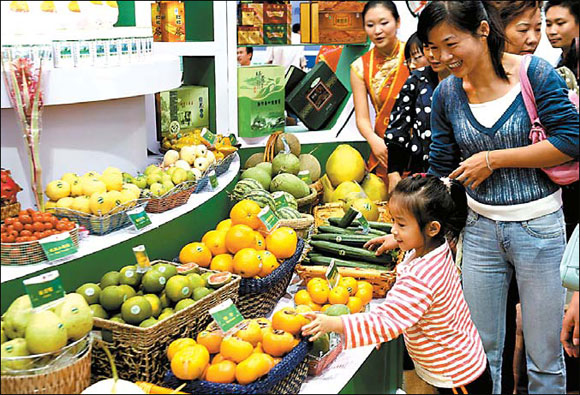
Jack fruit from Vietnam, rambutan from Thailand and durian from Malaysia.
Chinese people are now familiar with finding these tropical fruits in local supermarkets. But most shoppers, particularly residents in northern China, had never heard of them - let alone tasted one - three decades ago. In fact, until 1993 fresh fruits accounted for just roughly 30 percent of China's annual fruit imports and were largely concentrated on bananas, apples and oranges.
Changes emerged as Chinese decision-makers lived up to late leader Deng Xiaoping's expectation of "relying on both domestic and global resources and markets".
China's fresh fruit imports have increased and diversified rapidly since the late 1990s as Chinese enterprises and consumers became increasingly inter-dependent with the rest of the world. Fruits from Southeast Asian neighbors have achieved greater access to the Chinese market since China signed the free trade agreement (FTA) with the ASEAN.
Under the FTA framework signed in November 2002, nations involved must reduce tariffs and remove non-tariff barriers on trade of agricultural products and other goods, and lift limitations on market access for service trade (such as banking and telecommunications) and investment.
China and ASEAN members signed agreements on the free trade of goods in November 2004. They began to take effect in July 2005, and will be completed in 2010 by China and the six ASEAN economies: Indonesia, Malaysia, the Philippines, Singapore, Thailand and Brunei; and in 2015 by the four ASEAN economies: Cambodia, Laos, Vietnam and Myanmar.
"The agreement has largely benefited Chinese consumers - they now spend less on the same products while having multiple choices," says Zhang Kening, an official with department of international trade and economic affairs under the Ministry of Commerce.
Take rambutan imported from ASEAN members, for example. Thanks to the removal of a 20 percent import tax, the price of rambutan in China has now dipped to 48 US cents from 55 US cents in 2004, while import volume jumped to 4,107 tons a year from 2,650 tons, according to the Ministry of Commerce.
Trade of farm products is important but just part of the fast-growing bilateral trade. In the first 11 months of 2007, imports and exports between China and ASEAN reached $182.33 billion, an increase of 25.68 percent from the previous year, according to commerce ministry statistics. ASEAN and China are now each other's fourth largest trading partner.


|
||
|
|