BIZCHINA> Center

|
BIZCHINA> Center
|
|
Related
What to do with yuan's appreciation?
By Xin Zhiming (China Daily)
Updated: 2008-07-07 13:47
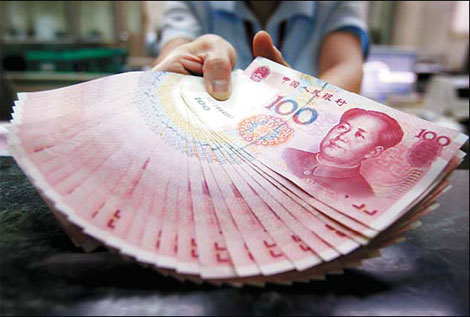
Chinese authorities are in a dilemma. While they have been continually urged by Western governments and financial authorities to let the yuan appreciate faster - no matter how quickly it has already - the currency's recent surge against the dollar has fueled domestic worries that it will ultimately wreak havoc on China's foreign trade and ultimately the overall economy. Rising inflation has further complicated the issue, because a rise in the value of the yuan can to an extent reduce inflationary pressures. With those factors combined, analysts say the yuan's appreciation momentum may not slow significantly at least before the Olympic Games in August. The Sino-US Strategic Economic Dialogue used to be an occasion where US finance officials press their Chinese counterparts to let the yuan's exchange rate move more freely. But this year, although the focus in the US has shifted to energy and environment, the yuan has performed strongly before and after the session. "Political pressure is only one factor," says Liu Dongliang, currency analyst with China Merchants Bank (CMB). "The yuan's exchange rate has been needed to act as a tool to curb inflation." China's consumer price index, the main gauge of inflation, rose by an average 8.1 percent in the first five months of this year. As the spillover from the recent rise in energy and electricity prices surfaces, inflationary pressure may become heavier in the coming months, analysts say. The authorities are believed to be committed to using the yuan's exchange rate to help combat inflation, which is partly pushed up by rises in prices of oil and other major commodities. Strengthening the yuan will make imports of such goods cheaper, although its role may be limited as some economists have argued. "China used to be pressed by other countries to appreciate the yuan," Liu Wei, head of the Peking University's School of Economics, said at a recent forum on China's economy, which was organized by the China Business Journal. "But now the pressure comes from inside - the need to fight inflation." Therefore, "before the inflation is substantially eased, the yuan's upward movement will continue", CMB's Liu says. Only after the Olympic Games will the policymakers possibly reassess the situation to decide what to do next, he adds. What could affect the process is another interest rate hike, as is widely anticipated by the market after the central bank governor hinted that China remains open to using such methods to fight inflation. Such a hike may reduce the pressure on yuan appreciation, analysts say. In the US side, it is unlikely for the Federal Reserve to raise the interest rates to fight inflation, because it is still recovering from subprime crisis. Therefore there would not be a strong boost for the weakening dollar to become stronger, says Dong Yuping, senior economist with the Institute of Finance and Banking of the Chinese Academy of Social Sciences. As a result, it is very possible the yuan will continue to rise in the coming weeks. The US unemployment rate jumped by a half percentage point to 5.5 percent in May on the biggest increase in seasonally adjusted unemployment in 33 years. Meanwhile, the US consumer confidence index slumped to 50.4 in June, from a revised 58.1 in May, leaving the index just barely above prior cycle-lows of 47.3 in February, 1992, and 50.1 in May, 1980. Chen Xingdong, chief economist of BNP Paribas Peregrine Securities in Beijing, says that although the yuan may continue to rise in the near term, there would not be big-margin appreciation for yuan this year. "After September, its exchange rate against the dollar may fluctuate and even drop, because exporters will be unable to afford the impact," he says. Many coastal exporters have gone bankrupt, according to media reports. By far the yuan has risen more than 18 percent against the dollar since it was revalued in July, 2005. It has appreciated by more than 2 percent in the second quarter of this year. The offshore, one-year dollar/yuan exchange rate on the non-deliverables futures market has implied yuan appreciation of 6-7 percent against the dollar in the next 12 months. Given the market expectations for yuan appreciation, analysts say the authorities can take preemptive measures to beat such expectations. There are two ways to deal with the yuan appreciation expectation, says Sun Lijian, senior economist with Fudan University. The policymakers can allow a sudden one-off appreciation of the yuan before allowing it to fluctuate in a fairly volatile way, he says. "Drastic fluctuations may break one-way appreciation expectations, but it is rather risky because we don't know whether the market will go as we desire." The second option would be keeping the current pace of stable and gradual appreciation, but strengthening foreign exchange regulations to prevent speculative investors from making profits, Sun says. "This is the way to play safe." Hu Xiaolian, head of the State Administration of Foreign Exchange, has recently vowed to enhance the check of foreign exchange flows, especially in the trade-active southern regions. (For more biz stories, please visit Industries)
|
主站蜘蛛池模板: 深水埗区| 和平区| 阳泉市| 澄迈县| 囊谦县| 葵青区| 陇南市| 剑川县| 民县| 忻州市| 阳东县| 通辽市| 高邑县| 关岭| 巢湖市| 高唐县| 克东县| 浑源县| 东方市| 长葛市| 明星| 昭通市| 宣武区| 博罗县| 山东省| 高唐县| 二连浩特市| 酒泉市| 东兴市| 黄平县| 阿拉善右旗| 韶关市| 岫岩| 屏山县| 许昌县| 上犹县| 仪征市| 澄江县| 阳朔县| 呼图壁县| 博罗县| 体育| 肃宁县| 阳江市| 渭源县| 张家港市| 桐柏县| 珲春市| 年辖:市辖区| 和林格尔县| 靖边县| 昌邑市| 杨浦区| 海兴县| 衡阳县| 甘南县| 石城县| 霍城县| 泸西县| 石河子市| 柳河县| 建瓯市| 灵川县| 合川市| 阿拉尔市| 叙永县| 徐闻县| 鄂伦春自治旗| 泽州县| 古交市| 浪卡子县| 呼伦贝尔市| 景德镇市| 伊通| 黑龙江省| 东阳市| 西平县| 嫩江县| 泰来县| 佛冈县| 青冈县| 乡宁县|