BIZCHINA> Editor Choice

|
BIZCHINA> Editor Choice
|
|
Related
Hot favorite
By Hu Yuanyuan (China Daily)
Updated: 2008-07-07 14:11 Guess which place was China's second highest supplier of foreign direct investment (FDI) in the first five months of this year? With negligible foreign trade with China, curiously enough, it's British Virgin Islands. With a population of merely 20,000 but registered companies exceeding 290,000, the famous global offshore financial center poured $7.39 billion into China in these past five months. "As a center of international hot money, quite a number of FDI coming from British Virgin Islands are merely hot money seeking a new destination for arbitrage purposes," says Li Youhuan, deputy director of the Industrial Economic Research Institute of Guangdong Academy of Social Sciences.
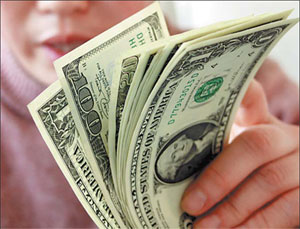
That hot money flooding into China is evident from the fact that although China's trade surplus has started to shrink this year, its foreign exchange reserves are growing at an ever faster pace. In April, forex reserves grew by $74.5 billion, the biggest one-month jump in the country's history. This amount equals half of the total reserve growth for the first three months of the year. Going by a standard formula to calculate "hot money" - foreign exchange reserves minus FDI, trade surplus and interest income - the residual $44.2 billion can be assumed to be the speculative capital that China received in April. The consistent appreciation of the yuan is one of the reasons why international hot money finds China such a hot destination. The Chinese currency has appreciated by nearly 18 percent since it was revalued on July 21, 2005, when China de-pegged its currency from the US dollar and allowed it to float within a band. Most experts expect it to appreciate by another 6 to 7 percent in the next 12 months. Logan Wright, a Beijing-based analyst at Stone &McCarthy, an economic research firm, estimates that China received up to $170 billion of hot money in the first five months of 2008. This far exceeds anything previously experienced by any emerging economy. According to Zhang Ming, an expert with the Chinese Academy of Social Sciences, the amount of hot money that has come into China since 2003 could be as high as $1.75 trillion, almost as much as the country's foreign reserves. Hot money is defined as the funds that flow into a country to take advantage of a favorable interest rate regime in order to obtain higher returns. They influence the balance of payments and strengthen the exchange rate of the recipient country while weakening the currency of the country losing the money. Such funds are held in currency markets by speculators, as opposed to national banks or domestic investors. Thus they are volatile and shift to another foreign exchange market at the drop of a hat in response to changes in relative interest rates. (For more biz stories, please visit Industries)
|
主站蜘蛛池模板: 太和县| 清水县| 上杭县| 平定县| 三亚市| 吉隆县| 鹤山市| 湘乡市| 绥中县| 页游| 米脂县| 东台市| 隆子县| 青冈县| 定西市| 鸡西市| 十堰市| 韶关市| 民勤县| 观塘区| 揭阳市| 包头市| 台州市| 临漳县| 长子县| 乐山市| 宝丰县| 杭州市| 和静县| 睢宁县| 麟游县| 五常市| 绩溪县| 巴中市| 囊谦县| 贺兰县| 兴业县| 平和县| 昭觉县| 齐河县| 庆云县| 吉隆县| 义乌市| 水城县| 无为县| 北票市| 焉耆| 琼结县| 新巴尔虎右旗| 武隆县| 安平县| 深泽县| 徐闻县| 微山县| 青岛市| 濮阳县| 钦州市| 定安县| 攀枝花市| 定日县| 常宁市| 宁乡县| 湘潭县| 疏附县| 灵宝市| 大英县| 海门市| 米脂县| 婺源县| 县级市| 缙云县| 新化县| 响水县| 宣恩县| 普洱| 高陵县| 察哈| 大悟县| 堆龙德庆县| 博湖县| 张家界市| 钟山县|