BIZCHINA> Wen's Lens

|
BIZCHINA> Wen's Lens
|
|
Related
Memories for sale
By You Nuo (China Daily)
Updated: 2008-07-21 14:03
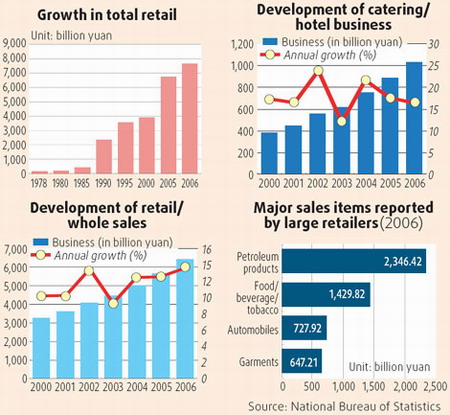
 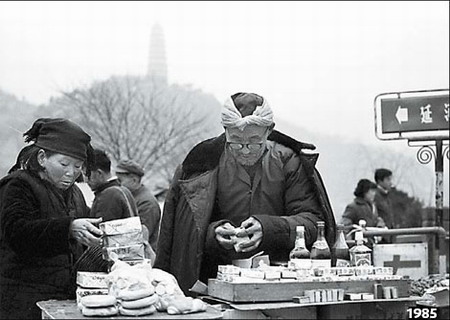 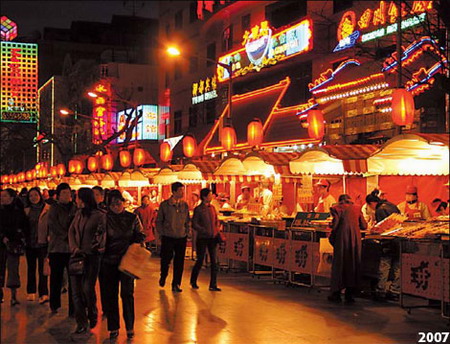 However the factor of inflation is weighed, retailers of all sorts have had a good time in the last three decades, with the country's total retail volume swelling almost 50 times. Back in 1978, around the time when our photographer Wang Wenlan took the black-and-white picture, China's national retail volume was 155.86 billion yuan ($22.81 billion). Or, by rough estimate, each Chinese had an average of some 150 yuan to spend for a whole year on food, clothes, travel, books, magazines, and movie and theater tickets. That was a time when half a yuan could go a long way, one may argue. But even if everything cost only half a yuan in the shops, how many items could one afford? Notice how carefully the old farmer is opening up his new pack of cigarettes - which would have cost him more or less half a yuan. One might not even open the box of a newly purchased laptop with so much care. He was using his fingernail to open a little hole on the top of the pack to prevent the cigarettes from spilling out and getting broken or twisted. And obviously that was an indication that the 20 cigarettes would go a long way, perhaps his next week's smoke budget - with the rest of his supply from the cheaper dry tobacco leaves sold at village fairs. In 2006, by contrast, the nation's total retail exceeded 7.6 trillion yuan. In 2007, the figure rose to 8.9 trillion yuan. In 2008, as business observers generally predict, the figure will again rise more than 10 percent year-on-year. Based on the 2007 figure, each Chinese would had some 6,500 yuan to spend in a year. In the current dollar term, that would be very close to, if not exceeding, $1,000 per person - not as total income, but just to spend on the retail market. That is why the sales of petroleum-related products, most importantly fuel, has already replaced food, beverages and tobacco to become the top selling category of retail goods in China. Accordingly, the sales of automobiles (not including farm machinery and farm vehicles) has exceeded that of all garments. But the golden time for roadside vendors is perhaps already over, as one can see from the color photo. They not only tend to occupy every street corner. They can also virtually form streets - with hundreds of stalls lined up from one end of a street to the other. There are times when there seems to be more vendors on a street than shoppers.
(For more biz stories, please visit Industries)
|
主站蜘蛛池模板: 齐齐哈尔市| 石景山区| 鱼台县| 华坪县| 桃园市| 卫辉市| 尼木县| 两当县| 自治县| 封开县| 濮阳县| 陵水| 新乡市| 长寿区| 康定县| 肥西县| 夹江县| 苏尼特右旗| 西安市| 墨玉县| 潜山县| 定襄县| 甘谷县| 湘潭县| 巴彦县| 新竹县| 北安市| 梁河县| 鞍山市| 宝坻区| 长兴县| 政和县| 灌南县| 商河县| 清丰县| 休宁县| 辛集市| 都江堰市| 长乐市| 顺昌县| 巩留县| 大余县| 香港 | 富川| 贡嘎县| 独山县| 丁青县| 合肥市| 五大连池市| 万年县| 盐池县| 沙田区| 宜春市| 遂平县| 怀柔区| 广东省| 武邑县| 邵武市| 外汇| 马山县| 班戈县| 库车县| 新竹县| 贡山| 遂平县| 溧阳市| 山丹县| 河北区| 夏河县| 溧水县| 洛浦县| 凤阳县| 石林| 南靖县| 沐川县| 勃利县| 海阳市| 乌恰县| 博湖县| 卓尼县| 河南省| 临桂县|
