BIZCHINA> 30 Years of Reforms

|
BIZCHINA> 30 Years of Reforms
|
|
Related
Meeting in the middle
By Zhang Qi (China Daily)
Updated: 2008-09-01 11:44
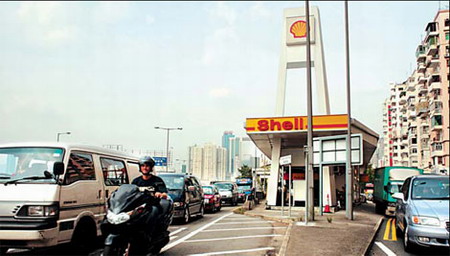 "It took a long time to bring the concept of safety protection to China," says Shell's external affairs director Liu Xiaowei. Liu still clearly recalls what happened in 1997 when Shell set up a joint venture fuel storage business, and asked that the workers wear protection equipment such as safety shoes and hard hats only to find that no one complied. Until she told them that they could be fined for not wearing safety gear, one worker told her that his safety shoes were so posh that he wanted to save them to wear for his wedding ceremony. Indeed, it took a while for Shell to blend its concepts and culture with its local partners, and it also took a long time for Shell to localize its business. When Shell reopened an office in Beijing (it had been in China prior to 1949 and the establishment of the People's Republic of China) in the 1980s, it was a small place with six or seven employees, only involved in trading. Liu remembers when she joined Shell in the 1990s, Shell China's headquarters was based in Hong Kong, and its CEO was a British citizen who could not speak Chinese. There was also not a single Chinese manager. "It was hard work in China because the country was at its initial period of opening up at that time," Shell China's Executive Chairman Lim Haw Kuang says of the first time he visited the mainland in 1996. "Anything to do with energy was regulated. So you couldn't run your business the same way as you did in the West." But one year later, Shell moved its headquarters to Beijing and in 2000, Shell appointed a Malaysian Chinese (who has since left the position) to lead the Chinese market. "You can see Shell's changing attitude towards China by nominating CEOs from a relatively closer area," says Liu. Now Shell says it's the top international energy company with the widest range from upstream to downstream. It has jointly developed the Changbei gas field with PetroChina in Northwest China and delivered natural gas to Beijing, Tianjin as well as Shandong and Hebei provinces. It also became the leading international oil company in China's lubricants market in 2006, following the acquisition of a 75 percent share of Beijing Tongyi Petroleum Chemical Company Ltd and Tongyi Petroleum Chemical Company Limited.
(For more biz stories, please visit Industries)
|
主站蜘蛛池模板: 巍山| 湖口县| 武夷山市| 兴义市| 焦作市| 二手房| 汝州市| 千阳县| 唐海县| 旺苍县| 鹤山市| 榕江县| 西乡县| 明溪县| 汝阳县| 乌鲁木齐市| 怀宁县| 砚山县| 浦城县| 凤翔县| 东至县| 黄石市| 噶尔县| 马关县| 沿河| 平罗县| 米易县| 鄱阳县| 泰安市| 厦门市| 秦安县| 出国| 信丰县| 嵩明县| 邯郸市| 高安市| 弥勒县| 西吉县| 金昌市| 洞口县| 利川市| 涡阳县| 兴隆县| 彭阳县| 杭州市| 锦州市| 巨野县| 城市| 常州市| 德江县| 贵定县| 白朗县| 玛沁县| 永善县| 雷州市| 霍山县| 福州市| 西昌市| 北碚区| 新干县| 遵义市| 科技| 兴宁市| 景东| 邳州市| 宁夏| 静乐县| 平泉县| 广德县| 禹州市| 桂阳县| 衡阳县| 桂阳县| 福泉市| 达日县| 渭南市| 三门峡市| 河津市| 韶山市| 汉沽区| 华安县| 澄江县|
