BIZCHINA> 30 Years of Reforms

|
BIZCHINA> 30 Years of Reforms
|
|
Related
Domestic MBAs on the rise
By Liu Jie (China Daily)
Updated: 2008-09-02 13:58
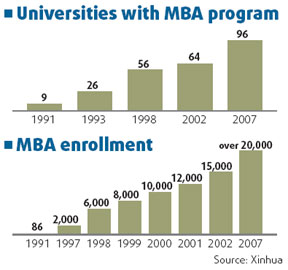
 In the 1990s, only a few universities offered MBA (Master of Business Administration) programs. Going abroad was not a viable alternative for many students because the average family income then was relatively low. Because of the strong demand for management expertise, having an MBA educational background at that time was seen as a passport to secure jobs and high incomes in large domestic enterprises and multinational companies. This has spurred many domestic universities to offer MBA programs either independently or in joint ventures with overseas institutions. The first batch of China's MBA schools was officially launched in 1991 in nine institutions, including Peking University, Renmin University of China and Fudan University. A total of 86 students were enrolled, most of them university graduates majoring in economics and business.
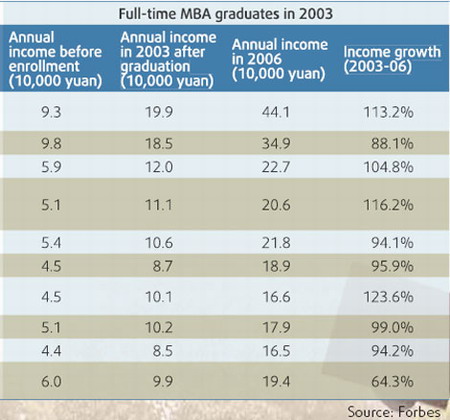
MBA schools, which placed a special emphasis on case studies and group discussions, were something of a novelty in the early days of economic reform as they were fundamentally different from the traditional professional education offered by Chinese universities and colleges at the time, which concentrated on theoretical analysis and research. The first 86 graduates from domestic MBA schools were snapped up by some of the largest and most prominent domestic and foreign enterprises. They were the idols and role models of the many thousands of university students who harbored an ambition to succeed in China's economic bonanza. The burning thirst for advancement among the ranks of young executives in the corporate sector has fuelled an MBA mania. The number of MBA schools here exceeded 60 by the end of the last century and the enrollment of MBA students reached 10,000 in 2000. MBA graduates' annual income surged. The average income of graduates from the class of 2003 in China's top 10 MBA schools grew between 64.3 percent and 116.2 percent in the three years to 2006. Since then, the supply of MBAs seems to have caught up with the demand. New MBA graduates are finding it increasingly difficult to land their ideal jobs, while corporations in China have become more discerning in recruiting. But as the corporate sector continues to expand, the demand for management talent has remained strong. By 2007, there were a total of 96 domestic MBA schools with a combined enrollment of over 20,000 students. The attributes most valued by corporate recruiters are global vision, strategic thinking, strong executive power, as well as sound communications and coordination skills. It's also a good thing for many Chinese MBA schools to improve their education quality, they are adjusting their courses to adapt to the real market and taking measures to enhance MBA students' practical skills. That's bad news for MBA schools that fail to follow the market trend and for students who enter into the program to get the MBA halo rather than developing practical skills.
(For more biz stories, please visit Industries)
|
主站蜘蛛池模板: 盐源县| 桃源县| 深水埗区| 高唐县| 额济纳旗| 兴山县| 商城县| 拜泉县| 汝州市| 陆河县| 花莲市| 铁岭县| 米易县| 平安县| 绍兴市| 蛟河市| 东丰县| 滦南县| 瑞金市| 昌江| 娱乐| 丽水市| 沈丘县| 汕尾市| 门头沟区| 邵东县| 三河市| 浦城县| 兴义市| 隆化县| 彭泽县| 睢宁县| 双鸭山市| 中阳县| 永清县| 曲松县| 苏州市| 温宿县| 随州市| 涿鹿县| 崇左市| 内黄县| 西畴县| 武乡县| 偏关县| 沂水县| 扶绥县| 锦屏县| 扶风县| 平陆县| 乐都县| 巧家县| 湾仔区| 托克逊县| 河池市| 抚顺市| 岳阳市| 剑阁县| 东乌珠穆沁旗| 呼伦贝尔市| 石阡县| 崇仁县| 高陵县| 兴海县| 奉化市| 拜城县| 鄂尔多斯市| 长岛县| 香港 | 全南县| 五华县| 宜昌市| 金湖县| 景泰县| 八宿县| 平和县| 玉树县| 天全县| 清远市| 阳春市| 荣昌县| 库伦旗|