BIZCHINA> 30 Years of Reforms

|
BIZCHINA> 30 Years of Reforms
|
|
Related
Nation promotes vocational education
By Liu Jie (China Daily)
Updated: 2008-09-03 10:45
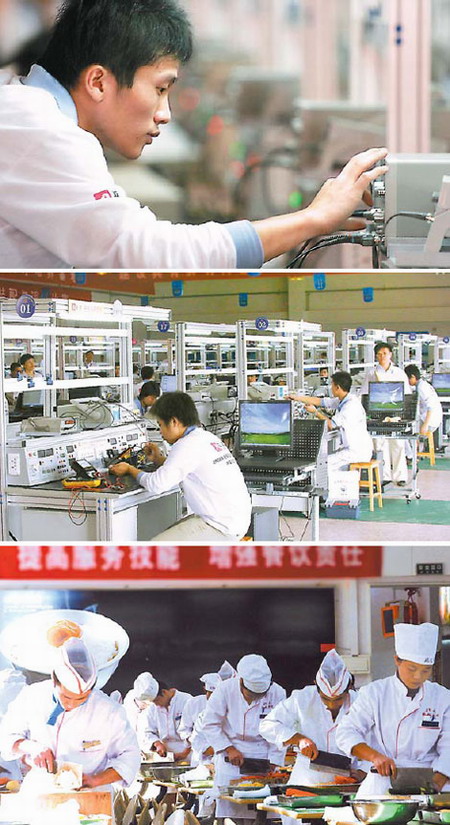 Management talents and engineers may be in short supply, but what the Chinese business sector needs most is skilled workers and technicians. As China's manufacturing industry has climbed up the value chain since the beginning of economic reforms 30 years ago, the demand for highly skilled blue-collar workers on the factory floor has been growing.
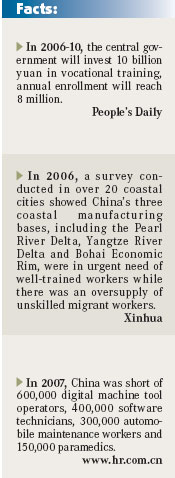
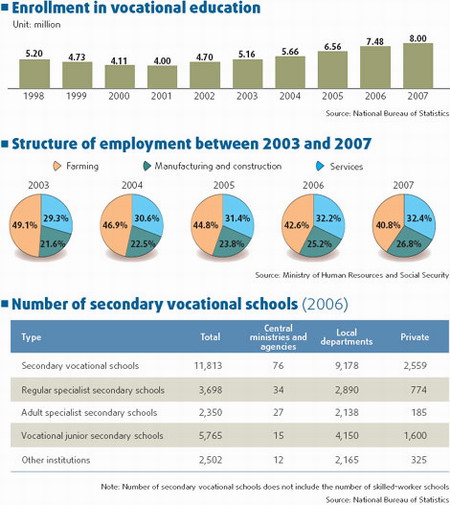
Despite that, factory owners traditionally pay blue-collar workers, even the highly skilled ones, disproportionately low salaries compared with those at the management level. Not enough workers are therefore willing to spend the time and the effort to acquire skills in their trade, leading to a shortage of technicians since the late 1990s. To solve this problem, the government began to promote vocational education, which can help ease the pressure on universities and increase job opportunities for urban youth. According to China Statistics Yearbook, there were 11,570 secondary vocational schools around the nation with over 3 million students in 2003. The number of schools rose to 11,813 and that of students crossed 14 million in 2006. At the same time, the number of schools for skilled workers stood at 2,884, while that of students jumped from 2.35 million in 2003 to 3.21 million in 2006. People's Daily reported in 2006 that the central government planned to invest 10 billion yuan in vocational training in the 2006-10 period, with an annual enrollment target of 8 million. Minister of Education Zhou Ji said at a recent national meeting that China will enroll 8.2 million students in secondary vocational schools this year. He also said that to attract more students to secondary vocational schools, the government will offer more financial support, build a better school management system and try to improve teacher training. But more than a government push, the development of vocational education in China needs corporate support, which may involve cooperation with schools to increase the practical skills of students, offering internship opportunities as well as providing on-the-job training for existing workers. And more important than that is an improvement in salary levels and social status, which will automatically attract more urban youth to the factory floor.
(For more biz stories, please visit Industries)
|
主站蜘蛛池模板: 灵寿县| 德钦县| 门源| 尚义县| 嘉黎县| 仙游县| 洛川县| 乃东县| 营口市| 桂东县| 治多县| 上犹县| 三门峡市| 沂水县| 云龙县| 云梦县| 靖江市| 陈巴尔虎旗| 南宁市| 新干县| 南江县| 视频| 雷波县| 邻水| 芜湖市| 丹棱县| 沾化县| 固始县| 永修县| 永安市| 含山县| 梅河口市| 望奎县| 板桥市| 华安县| 哈巴河县| 信宜市| 崇文区| 高青县| 内丘县| 建德市| 电白县| 鄢陵县| 建湖县| 宾阳县| 雷州市| 鹤壁市| 巨鹿县| 青铜峡市| 新化县| 濮阳市| 潼关县| 通州市| 晴隆县| 阜阳市| 成都市| 武乡县| 水城县| 文昌市| 云安县| 榆中县| 桂平市| 永城市| 泸溪县| 嫩江县| 区。| 汉川市| 镇原县| 天台县| 乌兰县| 商河县| 陆丰市| 兰坪| 菏泽市| 中方县| 拜城县| 息烽县| 武安市| 苗栗市| 黔西| 乐陵市| 杭锦后旗|