BIZCHINA> Center

|
BIZCHINA> Center
|
|
Related
Banks' overseas M&A challenges outlined
By Liu Jie (China Daily)
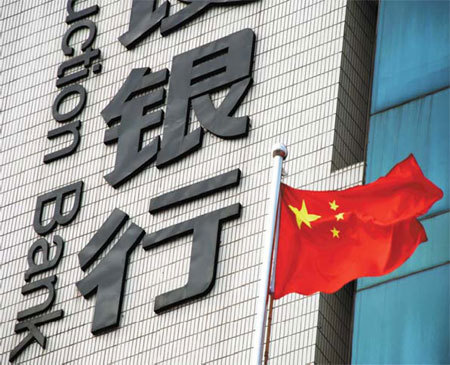
Updated: 2008-10-10 08:58 Chinese banks have good reasons to venture abroad but face a range of challenges, so they need to be selective as they pursue cross-border merger and acquisition (M&A) deals.
According to a latest report, titled Venturing Abroad: Chinese Banks and Cross-border M&A, compiled by The Boston Consulting Group (BCG), Chinese banks have been seeking larger and more ambitious M&A deals, many of which have involved taking stakes in foreign institutions. BCG is a global management consulting firm and the world's leading advisor on business strategy. From 1993 through 2005, Chinese banks made an average of about one cross-border acquisition per year. Most deals were valued at under $20 million. Since then, Chinese banks have made 11 outbound M&A deals, five of which worth at least $1 billion. They conducted the deals in a bid to channel their excess funds, follow customers overseas, become global companies, adhere to national directives, extend products and service offerings, import skills into China, diversify the banks' businesses and risks, increase scales and lower costs, or leverage capabilities abroad. However, in addition to strategic opportunities, they still face many risks. At the management level, risks include lack of full support from senior management, managers lacking experience in overseas markets and M&A, and conflict with targeted companies. Unfamiliarity of regulatory and legal frameworks and lack of support from local regulators and officials are also regulation risks. Operation risks involve insufficient and/or unreliable information to conduct fair valuation, few deal structure options, complexities of cultural differences, failure to extract cost synergies and integrate operation, loss of local talent, loss of existing clients, customers and momentum, inability to transfer best practices, as well as loss of shareholder value or failure to communicate shareholder value, according to the report. "Chinese banks face a series of challenges as they pursue overseas M&A deals, but they are moving inexorably toward a more international profile," said a co-author of the report, Tjun Tang, a partner in BCG's Hong Kong office. Their size alone makes them capable of influencing markets, particularly if they can harness the momentum of China's global challengers - dynamic companies that are heading abroad. "To build strong international positions, however, Chinese banks still need to develop core skills and capabilities," Tang said. "Selective M&A deals can help accelerate this process." According to another co-author, Frankie Leung, also a partner of BCG in Hong Kong, Chinese banks have good reasons to pursue cross-border deals but some investors and analysts believe they should concentrate on opportunities closer to home, given the country's strong growth. "They have also questioned whether Chinese banks have a clear strategy - along with the skills and resources - for venturing abroad," said Leung. He addressed that M&As are inherently risky and complex, and transnational deals tend to pose even greater challenges than domestic ones. The steps that Chinese banks can take to build and execute a strategy for cross-border M&As were recommended as below: Follow a clear and convincing rationale for outbound M&A Start small and build M&A capabilities Ensure deal structure and degree of integration support deal objective Identify approaches to add value to the target company Retain and empower key local management talents Engage in pro-active communication to target company staff, investors and the public There are also opportunities for foreign banks in partnering with their globalizing peers from China. Foreign banks could look for opportunities to provide Chinese banks with the presence to serve their globalizing customer base. In turn, the cash-rich Chinese banks can help foreign banks weather the current financial crisis. "Chinese banks need to look beyond potential financial gains," said co-author Holger Michaelis, a partner in BCG's Beijing office. "They need to look for ways to acquire new capabilities, enhance their offerings, and leverage their emerging-market skills." Western banks, particularly those that have been hit hard by the crisis, might consider selling business lines as a way to free up capital and refocus on core objectives. "Chinese banks have both the capital and the incentive to make such purchases," Michaelis said, adding that Chinese banks are not direct competitors - at least not yet - and therefore present a better option for foreign banks seeking to divest business lines. (For more biz stories, please visit Industries)
|
主站蜘蛛池模板: 基隆市| 潜江市| 镇江市| 固阳县| 东乌珠穆沁旗| 新野县| 绥阳县| 庆城县| 玉树县| 阿城市| 阿尔山市| 吴川市| 五峰| 四会市| 黄大仙区| 平塘县| 怀集县| 蓬莱市| 洪江市| 邻水| 葵青区| 长顺县| 明星| 孝义市| 靖西县| 嘉善县| 布尔津县| 和政县| 嘉兴市| 江城| 威海市| 凤翔县| 邮箱| 三门峡市| 门源| 类乌齐县| 伊金霍洛旗| 鸡泽县| 青龙| 成武县| 乐清市| 宁晋县| 冀州市| 黄平县| 托克托县| 中方县| 杭锦后旗| 肥乡县| 台北县| 乌拉特中旗| 文化| 丹凤县| 虎林市| 衡南县| 武冈市| 新沂市| 双柏县| 仁布县| 周口市| 黄陵县| 镇江市| 新营市| 苏尼特左旗| 黄冈市| 涿州市| 怀仁县| 南开区| 修武县| 常宁市| 增城市| 东乡县| 衢州市| 兰西县| 旬邑县| 化隆| 张家港市| 旬阳县| 进贤县| 花莲市| 子长县| 高淳县| 洪泽县|