BIZCHINA> Editor Choice

|
BIZCHINA> Editor Choice
|
|
Related
Fantastic fizz
By Jiang Wei (China Daily)
Updated: 2008-11-10 14:19
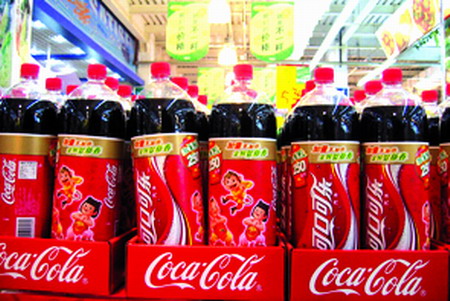 On December 18, 1978, just one day after China and the United States announced the establishment of formal diplomatic relations, Coca Cola, the world largest soda supplier announced its return to the Chinese market. According to the agreement with its Chinese partner, the State-owned China National Cereals, Oils, and Foodstuffs Import and Export Corp (COFCO), Coca Cola would be allowed to sell its products in major Chinese cities and at tourist attractions. Before it set up a bottling plant in China, the products would be distributed by COFCO. The agreement was signed at the Ministry of Foreign Trade and Economic Cooperation, the predecessor of the Ministry of Commerce. However, the ministry was cautious about this American "icon", and its sales were restricted to specially designated retail outlets, such as hotels for foreigners and Friendship Stores, which were designed to serve foreign visitors. It was not the first time Coca Cola tapped the Chinese market. In 1927, the US company had established a bottling facility in Shanghai. By 1948, it had three bottling plants across China. Shanghai also became its first overseas market with annual sales exceeding 1 million crates. Then in 1949, Coke's business on the Chinese mainland ended. As one of the earliest US companies that saw business opportunities in China, Coca Cola returned to the mainland market far ahead of its international rivals, but developing its business there was a long and winding road. The first batch of post-1949 Coca Cola was imported from Hong Kong in late 1979.
A year later the company presented COFCO with a bottling production line with the capacity of 300 bottles per minute and reached a ten-year-long agreement with its Chinese partner authorizing it to solely use the Coca Cola brand in the Chinese mainland market. The production line was later installed at a factory in the Fengtai district of Beijing. In the early 1980s, the company also built bottling plants in Guangzhou, capital of Guangdong province; and Xiamen in Fujian province, giving ownership of the plants to the central government in exchange for better sales and distribution rights. Everything seemed to be going well until the US company tried to promote its products to Chinese consumers on a larger scale. To make the brown carbonated drink, which was strange to the Chinese, more popular in China, company staff went to shops in Beijing to promote their beverage during weekends in 1983, with colorful balloons emblazoned with the Coca Cola logo. Consumers could buy a bottle of Coke for 0.5 yuan ($0.07) and get a pair of chopsticks or a balloon for free. This was the first promotional commercial activity seen in China after its reform and opening up began in 1978. It not only raised the curiosity of many locals but also was strongly condemned by the media as introducing American style commercialism. Authorities decreed that "not a single bottle of Coke should be sold to Chinese". This injunction lasted for about a year. In 1984, Coca-Cola set up its first joint venture in China: a bottling plant in Zhuhai, Guangdong province, with the former Ministry of Light Industry. The following year, the government allowed the company to sell its products to the Chinese people. Since then, Coca-Cola has been steadily expanding its operations in China. Last July, Coke built a new bottling factory in Jiangxi province, bringing the total number of its factories to 36 in over 30 Chinese cities. Coca Cola markets its internationally known drinks in China: Coca Cola, Fanta, Sprite, and Diet Coke. The company has also developed local brands through Tianjin Jin Mei Beverage Co Ltd, a 50-50 equity joint venture formed in 1993 by Coca Cola and State Light Industry Bureau (SLIB). In 1996, Coca-Cola introduced Tianyudi (Heaven and Earth), a line of noncarbonated drinks and in 1997 Xingmu (Smart), a line of carbonated fruit drinks that included green apple, watermelon, and coconut flavors. In recent years, the company has been shifting from introducing established brands to China to developing more brands of beverages for China, which is now its fourth largest market. In its bid to serve a market with a strong growth potential, the company has been conducting large-scale surveys in China of all soft drinks, including some drinks with Chinese flavors. Coca Cola has recently launched a new type of orange juice, developed by a Chinese research and development team, under its Minute Maid brand. In the markets of some eastern and southern Chinese, cities which are close to Coca-Cola's Shanghai R&D center, the beverage company sells more Chinese-style soft drinks, such as Modern Tea Workshop and Health Works brands. Per capita carbonated beverage consumption in China now is 18 bottles a year compared to 400 bottles in the European and American markets. Coke sees this gap as an opportunity to grow into its largest market. "We believe that China could become the largest market for Coca Cola. However, it is hard to predict when it will happen, but it certainly will," Doug Jackson, president of Coca Cola China, says. China's beverage market When Coca Cola returned to the Chinese mainland in the late 1970s, there was only one brand of soft drink that was distributed nationally in China. The rest were limited to local markets. They all shared the same generic name - "Qi Shui" or sparkling beverage. Hampered by outdated and rundown bottling facilities, China's beverage industry was undeveloped at that time. Foreign investment in the industry was, and still is, tightly controlled and subject to government approval. Coke was not popular among Chinese at first. The complaint was that it tasted like cough medicine but vigorous marketing soon made it Coca Cola's leading brand in China. Coca Cola Company's long history in China sets it apart from the more recent arrivals. Coca Cola and its closest competitor Pepsi Cola, which set up its first bottling facilities in Shenzhen, Guangdong province in 1981, have kept their leading roles in the carbonated drinks industry. However, since the 1990s, Coca Cola has been facing intensive challenges not only from other international businesses but also from local Chinese companies. For example, in the carbonated beverage sector, the Hangzhou-based Wahaha group introduced the brand Future Cola in 1998 with the slogan: "The Chinese people's own cola". Future Cola dominates rural China and its second and third tier cities through an extensive distribution network, making Wahaha the third-largest manufacturer of fizzy soft drinks in China. The competition is also intensifying in other sectors, from bottled water, fruit juices and ice teas to milk. China's ice tea industry, which started in 1993, was the fastest growing in the beverage market last year. It has become the third largest sector after bottled water and carbonated drinks. A dozen companies, both domestic and foreign, including Coca Cola, have been involved in this market. (For more biz stories, please visit Industries)
|
主站蜘蛛池模板: 广丰县| 峨眉山市| 商水县| 海口市| 冀州市| 巴里| 西畴县| 射洪县| 武鸣县| 鄄城县| 汶川县| 渑池县| 神农架林区| 平阴县| 诏安县| 呼图壁县| 延边| 四子王旗| 石门县| 虞城县| 蓝山县| 清水县| 巴林右旗| 会东县| 桑植县| 囊谦县| 常州市| 文成县| 托克逊县| 四子王旗| 汕头市| 南丰县| 庆云县| 德化县| 新建县| 崇左市| 三都| 凌海市| 夹江县| 泽州县| 巴彦淖尔市| 开原市| 丰台区| 阿勒泰市| 大关县| 普定县| 溧水县| 柯坪县| 长治县| 堆龙德庆县| 静宁县| 安福县| 屏东市| 阳春市| 林州市| 阳泉市| 华宁县| 莱西市| 永川市| 汶川县| 鄂托克旗| 宝应县| 民权县| 湖南省| 五峰| 湘西| 军事| 黄骅市| 凤阳县| 万盛区| 鲜城| 临桂县| 年辖:市辖区| 嘉鱼县| 丰原市| 同仁县| 西盟| 凤台县| 山西省| 平昌县| 乐陵市| 商水县|