BIZCHINA> Industries

|
BIZCHINA> Industries
|
|
Consumer: Little Sheep bucks trend
By Liu Jie (China Daily)
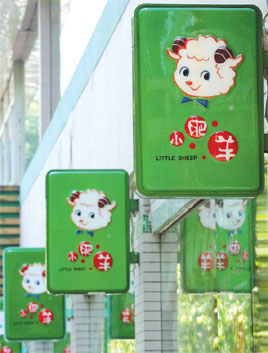
Updated: 2009-01-21 08:01 The densely packed steamy hotpot restaurant in Guijie, Beijing's well-known food street, looked particularly enticing on a cold and windy evening. The line of waiting customers was long and the pace of the seated diners was leisurely, typical gatherings of families and friends putting aside the worries of the economic downturn to concentrate on the choice of dips for the lightly boiled meat. Restaurants like this, belonging to Hong Kong-listed Little Sheep, are valued by investment analysts not so much for their food, which is down-to-earth and inexpensive, but rather for their resistance to the economic downturn that is devastating so many other businesses.
From Jan 5 to 9, share price of Little Sheep jumped 5.4 percent from HK$2.14 to HK$2.25. Meanwhile, Hong Kong market benchmark Hang Seng Index dropped 665 points, or 4.42 percent, to 14,377. Little Sheep said the lamb served in all its restaurants is shipped directly from the pastures in Inner Mongolia. The ingredients of the soup for boiling the meat are a closely guarded trade secret. But "our prices are modest", said Lu Wenbing, Little Sheep's president. A typical meal at any Little Sheep restaurant costs about 60 yuan per person, excluding drinks.
Indeed, eating out is not something that Chinese people, especially those in the cities, give up lightly even in an economic downturn, analysts said. This die-hard attitude is reflected in the popularity of Little Sheep's 103 directly controlled and 240 franchised restaurants at home and abroad, which returned a combined profit of 125 million yuan in 2008, up 37 percent from 2007. At present, 90 percent of all Little Sheep restaurants are located on the mainland and most of the remaining portion are in Hong Kong, with a few in the US and Canada. Since late last year, the company has held back its overseas expansion plan and concentrated on increasing its directly controlled outlets in the home market. "Our target is to open 60 new directly controlled restaurants on the mainland in 2009," said Lu. Separately, Little Sheep has completed its acquisition of seven franchised restaurants for 17 million yuan in Tianjin, Inner Mongolia, Gansu, and Anhui. Meanwhile, the hotpot restaurant chain operator has also achieved an agreement with its mainland's largest franchise agent to directly run the latter's 42 Little Sheep franchise outlets in Hebei province. More franchised outlet acquisitions are expected and expansion to the second and third-tier cities will speed up, according to Lu. But, "we have no plan to buy other hotpot brands so far," he added. "It's a smart decision," said Tan Xiaoyu, an analyst with Guotai Jun'an Securities. "The strategy facilitates Little Sheep to avoid operation risks in the overseas market, especially the developed nations, where recession is worsening." Meanwhile, the Chinese restaurant market is very promising, given the stable disposable incomes of local people and the traditional Chinese enthusiasm for gourmet dining, she indicated. With the economy decelerating and consumer discretionary spending likely to slow, Morgan Stanley expects restaurants to be pressured in 2009. However, it said strong franchises and products with an attractive value proposition will likely capture and retain market share. (For more biz stories, please visit Industries)
|
||||||
主站蜘蛛池模板: 迭部县| 柳州市| 松滋市| 志丹县| 驻马店市| 晋江市| 裕民县| 海城市| 建瓯市| 巢湖市| 孟连| 广西| 茂名市| 敖汉旗| 通道| 大邑县| 东莞市| 阿拉尔市| 林西县| 石泉县| 连城县| 深泽县| 永善县| 蒙自县| 扶余县| 黔西县| 莱芜市| 昆山市| 扎赉特旗| 江北区| 南雄市| 扶沟县| 富源县| 定南县| 安徽省| 廉江市| 吕梁市| 长垣县| 多伦县| 肃南| 鸡西市| 浦城县| 丘北县| 阿拉善盟| 秭归县| 乌兰县| 游戏| 柳河县| 镇安县| 施甸县| 紫云| 静安区| 余姚市| 瑞丽市| 德江县| 庆安县| 信丰县| 大余县| 丰原市| 新乡县| 恩平市| 贵港市| 巴东县| 夹江县| 孝义市| 隆尧县| 孝义市| 昆明市| 佛教| 东安县| 香港 | 定远县| 宜兰县| 安岳县| 望江县| 洛扎县| 景泰县| 寿宁县| 张北县| 陵水| 哈巴河县| 开远市|