BIZCHINA> Top Biz News

|
BIZCHINA> Top Biz News
|
|
King coal losing his power in electricity industry
By Ou Lu (China Daily)
Updated: 2009-02-16 07:56
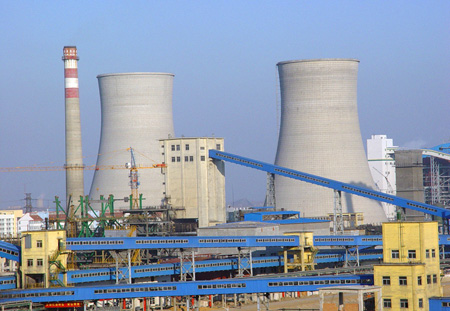
China is likely to continue cutting investment in coal-fired power plants as the lackluster economy may result in a power glut this year, but it will increase its efforts to build more nuclear reactors and wind farms to improve its energy mix, according to Zhang Guobao, head of the National Energy Administration (NEA). Speaking at a recent meeting on the nation's energy strategy, Zhang said the country's investment in the power industry is expected to reach 580 billion yuan this year.
According to the CEC forecast, investment in power generation may remain around 300 billion yuan, with more of it going to sectors such as nuclear power, while the remaining 350 billion yuan will be assigned to build and upgrade power grids. Electricity demand will remain weak this year, but it is likely to rebound in the second half and may increase by 5 percent this year, CEC said. China is speeding up the approval of energy projects to help spur domestic industry, which expanded in the last quarter at the weakest pace in seven years. "Large-scale energy projects require huge investment and could give a boost to manufacturers and raw material suppliers," Zhang told People's Daily on Dec 29. As China implements a more active fiscal policy, with a lower interest rate and more tax incentives, investment in large-scale power projects will be less costly, Zhang pointed out. The country will begin construction of nuclear power plants with a total capacity of 8.4 gigawatts this year alone, including projects in Sanmen of Zhejiang province, Taishan in Guangdong province and Haiyang in Shandong province, according to Zhang. "Starting from this year, the country will build several large wind farms over the next 10 years, each with a generating capacity in excess of 10 gigawatts, in Gansu, Hebei and Jiangsu provinces, and Inner Mongolia autonomous region," Zhang said. The country will also speed up the construction of large coal bases to help the nation withstand potential energy crises. Construction of coal bases will begin in Xilinguole League in Inner Mongolia and Shanxi province. "In addition, transmission lines will be built to link coal-fired power plants close to these coal bases with Shandong and Liaoning provinces," Zhang said. China currently relies on coal-fired plants to supply about 80 percent of its total energy needs. However, transporting coal by rail can often be problematic, as shown by the damage caused to the nation's railway network by last year's massive snowstorms. The authorities were then forced to shut many coal-fired plants, leading to blackouts in many cities, he said. Spending on coal-fired plants will be less aggressive this year. "As much as 80 gigawatts in generating capacity may be added this year and 80 percent of this will come from large generators with a capacity of more than 300 megawatts," the CEC report said. The oversupply of electricity offers a "good opportunity for China to optimize its power industry" by shutting down small, polluting coal-fired plants, said Zhang. "We will try to phase out small plants with a total capacity of 13 gigawatts this year," he said. Nuclear expansion China may soon revise its energy development plans to nearly double its nuclear power capacity in the next decade, according to sources close to the NEA. The authorities will also "start building eight more nuclear power plants in the next three years, with 16 reactors whose total installed capacity will surpass 10 gigawatts", NEA sources were quoted as saying by the 21st Century Business Herald. There are currently 11 nuclear reactors in operation in the country with a combined capacity of about 9 gigawatts, supplying around 1 percent of the country's energy needs. NEA head Zhang Guobao last year said the country would raise the share of nuclear power in the national energy mix from 4 percent in 2006 to 5 percent by 2020. The target capacity for nuclear power was set at 40 gigawatts by 2020. The revised energy development plan aims for nuclear power to generate 70 gigawatts by 2020. (For more biz stories, please visit Industries)
|
||||||
主站蜘蛛池模板: 义乌市| 响水县| 瑞金市| 鄂伦春自治旗| 固始县| 济南市| 靖江市| 开封市| 柘荣县| 大厂| 盐源县| 肇州县| 田林县| 台北县| 元江| 临桂县| 思茅市| 邵阳县| 大新县| 松阳县| 靖州| 仁化县| 德庆县| 蒲城县| 绥滨县| 潮州市| 拜城县| 集安市| 祁门县| 自治县| 阿克苏市| 滨海县| 陆良县| 乐平市| 盖州市| 荔浦县| 台中市| 榆林市| 遂昌县| 若尔盖县| 嫩江县| 定日县| 台中县| 扬州市| 枝江市| 丹寨县| 读书| 廊坊市| 广平县| 达尔| 崇州市| 政和县| 静乐县| 太仓市| 巴里| 天峨县| 长兴县| 双柏县| 沐川县| 大丰市| 诸暨市| 广饶县| 南丰县| 张家界市| 西安市| 冷水江市| 长春市| 永登县| 襄樊市| 五河县| 大方县| 通山县| 岫岩| 莒南县| 云浮市| 柏乡县| 威宁| 孝义市| 阿拉善左旗| 金门县| 怀集县| 溆浦县|