BIZCHINA> Top Biz News

|
BIZCHINA> Top Biz News
|
|
Pacific Asia pursues niche energy prospects
By Steve Hubrecht (China Daily)
Updated: 2009-03-02 07:59
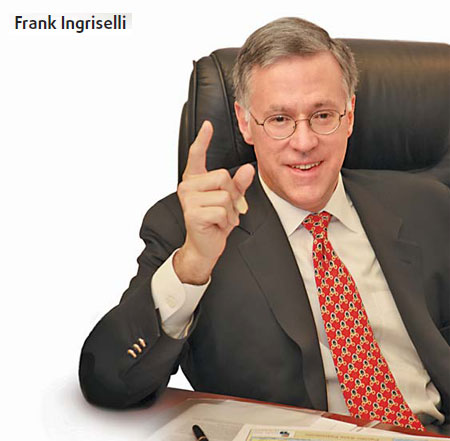 Frank Ingriselli, CEO of Pacific Asia Petroleum, turns and greets Heidi Wong, his company's general manager, as she enters and introduces her to the rest of the room, explaining Wong is a great illustration of Pacific Asia's connection to Texaco; Wong, like Ingriselli, cut her teeth in China's energy industry as a Texaco employee. "We're a mini-Texaco, but really mini is too big of a word. We're like a micro-Texaco," Ingriselli said. Future in CBM gas Pacific Asia is a small energy company that, drawing on the background of a management team filled with former Texaco executives, pursues oil and gas opportunities in China too small to pique the interest of larger companies such as Shell or Chevron or in emerging industries such as coal bed methane gas. The company's two coal bed methane interests (one is already flaring gas in a one-year production program, the other is waiting for final government approval), both in Shanxi province's Ordos Basin, are the biggest part of Pacific Asia's operation in terms of size, and represent the company's brightest future prospects, according to Ingriselli. "Coal bed methane is a natural gas - I think being in the natural gas industry is a very good place to be. The government had announced a few years ago that they want to increase their use of gas to about 10 percent of energy use, so I think there's still a bit to go on that. That creates a lot of demand," he said. Coalbed methane attracts environmental critics in the US and Canada, where the industry is also relatively new, but Ingriselli said that although no oil and gas production is 100 percent environmentally friendly, coalbed methane can be cleaner than most fossil fuel extraction. The micro-Texaco is also seeing good returns from stringing together small oil interests in Inner Mongolia and Heilongjiang, said Ingriselli. The oil wells in Pacific Asia's projects are generally inexpensive ($300,000 to drill) but might only produces 20 or 30 barrels a day, he said. "Chevron and Shell are just not interested in oil wells that produce at that small level and have a fast decline rate. After 10 years they'll be out of production. They're not interested in that. But if you just sit back and look at the economics of that and apply, say 20 barrels a day times the price of oil, to recover a $300,000 well, it's a very nice project. We believe it's a good niche opportunity for our company to be involved in, in China. So we're pursuing ventures like that around China," said Ingriselli. But whatever Pacific Asia may lack in size, it makes up for with extensive experience in the Chinese energy industry. Ingriselli first came to Beijing in 1979 for Texaco, negotiating what would eventually become China's first successful production sharing contract with a foreign company. It took three years to iron out, often negotiating clause by clause, sentence by sentence and paying meticulous attention to the exact wording and grammar, he recalled. The upshot to such thorough negotiation was Ingriselli quickly got up to speed on aspects of the oil industry that otherwise would've taken years to learn. Ingriselli was just three or four years out of law school and had only been with Texaco for a few weeks when he boarded the plane to Beijing, a place he had never even imagined visiting, he said. The city was a different place then, he said. The small vegetable stands he would pass on his walks from the Jianguo Hotel to the Friendship Store are gone, replaced by the cavernous Silk Market building. Small shops are now big plazas. Business is now sometimes done with private Chinese oil companies instead of the China Oil Ministry. The contract was the start of Ingriselli's career in Texaco, but is some ways he has yet to top it, he said, particularly the sense of achievement he had the day it was finally signed. "I still go back to being only three years in the company and meeting the prime minister of China and shaking his hand. Then going over to the Great Hall of the People for a signing ceremony," recalled Ingriselli. "That was clearly the highlight of my career," he said. The contract still produces over $1 billion a year and helped Ingriselli eventually become Texaco's president of technology ventures. On his own Ingriselli left the company in 2001, when Chevron took it over, returned to China and took advantage of all the contacts he'd made to work as an independent consultant. He decided to start his own company, Inner Mongolia Productions, in 2005, which he later took public. He used the funds from going public to broaden its scope of operation and changed the company name to Pacific Asia Petroleum. Ingriselli said he remains upbeat about Pacific Asia's future, despite the global economic downturn, particularly since his company stopped on the verge of borrowing money from the financial market just as the crisis hit. "Nothing is a bargain, but there are good prices out there for acquisitions," he said. The rise of strong national oil companies in China and elsewhere in the world may eliminate some opportunities for bigger foreign companies but presents chances for partnerships, he said. Foreign companies often bring a good deal of technical expertise and experience. Most should be able to work out deals that let national companies keep the lion's share of profits but are still good business for the foreign partner, he said. Picking up big interests and running them alone will get harder in the future, even for big foreign oil companies, said Ingriselli. But CNOOC and other China national energy companies will continue to want help from foreign companies with international projects, so there may be an increasingly number of deals in which a foreign oil company helps a Chinese national company with a project in Nigeria, for example, and in return the Chinese company will let the foreign partner in on some ventures in China, he said. Such a future might prove fruitful for Pacific Asia and Ingriselli, with his background of international negotiation. (For more biz stories, please visit Industries)
|
主站蜘蛛池模板: 玛曲县| 栾城县| 福鼎市| 吴旗县| 辉县市| 龙州县| 连城县| 屏东市| 黎平县| 耒阳市| 额敏县| 闵行区| 上蔡县| 虎林市| 西充县| 肃宁县| 安丘市| 玛多县| 九龙坡区| 边坝县| 马公市| 永德县| 湖南省| 莲花县| 确山县| 栾城县| 米易县| 江城| 龙泉市| 衡南县| 自贡市| 马边| 伊吾县| 临夏县| 且末县| 尼玛县| 盐池县| 光泽县| 杨浦区| 旬阳县| 漯河市| 莫力| 梅河口市| 吉安市| 邹城市| 抚顺县| 鄱阳县| 精河县| 嫩江县| 扎赉特旗| 西城区| 鸡泽县| 土默特右旗| 崇明县| 武平县| 桃园县| 内黄县| 长岛县| 黄浦区| 城固县| 嘉定区| 麻城市| 北海市| 锦州市| 高淳县| 永安市| 晋宁县| 博爱县| 竹溪县| 天镇县| 彰武县| 基隆市| 城固县| 淮安市| 黑龙江省| 且末县| 扶沟县| 东阳市| 洪泽县| 沿河| 昌图县| 盐池县|
