|
|

NPC & CPPCC Annual Sessions > Biz & Economy > News
|
China's economic stimulus plans benefit environmentBy (Xinhua)
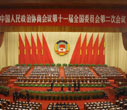
Updated: 2009-03-10 21:02 A message from the ongoing annual session of the National People's Congress (NPC), or the parliament, tells saving energy and protecting environment is a big government agenda, though keeping a "steady and relatively fast" economic growth is a paramount task amid the global economic crisis. China approved a massive 4-trillion yuan ($586 billion) two-year investment plan last November to curb economic downturn, but this precludes boosting economic growth at the cost of environment. The 4-trillion yuan spending list also included a 210 billion yuan investment in environmental protection and energy conservation, said Zhang Ping, Minister of the National Development and Reform Commission, the country's top economic planner at a press conference during the NPC session. In the government report by Premier Wen Jiabao during the annual session contents concerning environmental protection were obviously available. He said the country is facing problems such as severe environmental pollution and high energy- and- resources intensity, but government policies would not miss environment. Some hard facts: China's seven major water systems, including the Yangtze and Yellow rivers, were "mildly" polluted; more than half the 500 cities and counties monitored reported cases of acid rain, according to the annual report on environment for 2007 by the Environmental Monitoring of China under the Ministry of Environmental Protection. And China is a major carbon emitter, with about 19 percent of the global emissions of CO2, according to a World Energy Council report published in 2008. While preventing the already cooling economy from further sliding would be the top task of the government this year, Wen said China would continue its drive toward energy conservation, emissions reduction, and environmental protection. This "Green" determination has also been boosted by the country's achievements in its environmental initiatives as figures show China's energy consumption per unit of GDP dropped 4.59 percent in 2008, and 10.08 percent in the past three years. Last year both chemical oxygen demand (COD), a main index of water pollution, and the total emission of sulfur dioxide, a main air pollutant, were down 4.42 percent and 5.95 percent respectively; and down by 6.61 percent and 8.95 percent for the past three years, said Wen at the NPC's annual session. But more efforts must be made before China could reach its goal of reducing its energy intensity by 20 percent and major pollutants including COD and sulfur dioxide by 10 percent before 2010, according to the country's 11th Five Year Programs (2006-10), a guideline for the country's economic and social developments. "Saving energy and reducing emissions is such a significant measure in promoting scientific development and building a harmonious society," said Huang Huahua, an NPC deputy from the southern Guangdong Province. But analysts also admit great pressure in realizing the reduction target as companies are less likely to invest in green facilities amid the financial pains. It also presents a test to the government to balance growth with industrial restructuring and upgrading. "The 210 billion yuan spending in energy conservation and environmental protection shows the government is deeply concerned about the issue," said Zhang Boju, an environmentalist with the Beijing-based NGO Friends of Nature. But he said the cause of environmental protection goes beyond money. "It's most important that the policies be properly and efficiently implemented top-down," indicating concerns for environment while initiating some large infrastructure building projects might be diluted at local levels. "The 4 trillion yuan is a massive spending that will bring about massive changes. Any big project without a sound environmental evaluation and strict regulation would likely cause irreversible consequences," Zhang Boju said. He also said the best policy, environment-wise, would be precautions against possible pollution instead of throwing money to repair the damages. Wen said the government will continue energy conservation in the three key areas of industry, transportation and construction. It will also speed up the construction of 10 key energy conservation projects, such as upgrading coal-burning furnaces, green lighting, and energy conservation in government organizations. The country will accelerate the development of clean energy, such as nuclear, wind and solar power, said the premier. In fighting the downturn, the country also issued a series of support packages for 10 industries since January, including the steel and auto sectors. "These packages are not only intended to offset the current economic slowdown but would promote industrial restructuring and upgrading. The plans reflected public concerns and the effort to protect the environment," said NDRC vice minister Liu Tienan at a February press conference while elaborating on the support packages for the 10 industries. Under the packages, blast furnaces with capacity of only above 1,000 cubic meters would be allowed, while those under 400 would be banned from operating in the steel industry, said Chu Xueliang, an analyst with China Jianyin Investment Securities. Chu said about 100 million industrial capacity in the steel sector could be eliminated due to the raised standards. "There would be mandatory, clear regulations for the elimination of such capacities," said Zhu Hongren, director of the Department of Operations Monitoring and Coordination under the Ministry of Industry and Information Technology at the joint February press conference.
|
       |
主站蜘蛛池模板: 延吉市| 富阳市| 哈密市| 尤溪县| 凭祥市| 武威市| 长沙县| 舒兰市| 格尔木市| 武陟县| 北辰区| 应城市| 景泰县| 辽阳县| 祁门县| 沅陵县| 昂仁县| 左云县| 屯留县| 礼泉县| 道孚县| 琼海市| 仙居县| 清水县| 江津市| 铅山县| 鄂伦春自治旗| 永丰县| 平罗县| 铜陵市| 皮山县| 贵定县| 乾安县| 茂名市| 林周县| 宜章县| 宜兴市| 合川市| 青铜峡市| 兴安盟| 红安县| 江安县| 洛浦县| 合川市| 新蔡县| 蕉岭县| 临海市| 高雄市| 洱源县| 靖州| 平武县| 绥棱县| 海口市| 汶川县| 邳州市| 南雄市| 双江| 云南省| 莲花县| 洪雅县| 乾安县| 武汉市| 山阳县| 肃宁县| 宾阳县| 临高县| 柞水县| 金昌市| 黑水县| 宁明县| 昂仁县| 嘉黎县| 大关县| 尼木县| 保德县| 临夏市| 衡南县| 天门市| 安阳市| 响水县| 和田市| 怀集县|