Economy
Tightening policy to be outlined in conference
By Wang Bo (China Daily)
Updated: 2010-12-11 10:08
 |
Large Medium Small |
|
 |
|
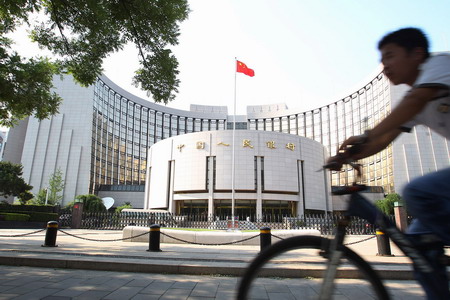
The People's Bank of China on Friday raised the proportion of money that lenders must keep on reserve for the third time within a month. [Photo / Provided to China Daily] |
BEIJING - With the three-day Central Economic Work Conference that kicked off on?Dec 10?setting the tone for economic policymaking in 2011, the nation is preparing to tighten its monetary policy next year with more interest rate hikes to battle rising inflation, analysts said.
The central bank on Dec 10 raised the proportion of money that lenders must keep on reserve for the third time within a month.
The move comes during the ongoing Central Economic Work Conference, which is expected to mete out solutions to rein in inflation.
The decision to increase the banks' reserve requirement by 50 basis points, which will come into force on Dec 20, demonstrates policymakers' determination to fight explosive liquidity and rising inflation.
"We expected the requirement rise this time, and I think it is perfectly timed to help manage excessive liquidity," said Lu Zhengwei, chief economist at Industrial Bank in Shanghai.
The high-profile Central Economic Work Conference, which kicked off on Dec 10, will outline the nature of next year's economic policymaking, as the nation tightens its monetary policy with more interest rate hikes to battle rising inflation, analysts said.
Media reports said the meeting is scheduled to end on Dec 12. In a statement released after a top-level meeting of the Communist Party of China on Dec 3, policymakers decided to shift the monetary stance from "relatively loose" to "prudent", setting the tone for the Central Economic Work Conference, the annual economic planning meeting usually held in early December.
Zhou Xiaochuan, governor of the People's Bank of China, the central bank, said on Dec 9 that prudent policies should be adopted to lower financial risk. His comment follows China's consumer inflation surging to a 25-month high of 4.4 percent in October - with the prices of 18 types of vegetables rising by 60 percent - leaving little room for the country to meet its 3 percent inflation target for this year.
Meanwhile, the nation's new yuan-denominated loans have increased by 564 billion yuan ($84.7 billion), 269.2 billion yuan more than last year, according to a central bank statement released on Friday. Liquidity is deemed a major factor in rising prices.
"We look for continued monetary normalization in coming quarters, including two more reserve-requirement ratio hikes and three more interest rate hikes," Wang Qian, economist at JP Morgan Chase, said in a research note.
"These policy moves could be front-loaded in the coming months, as headline inflation remains elevated and the economy risks overheating early next year," Wang said.
| ||||


The central bank raised the interest rate in October for the first time in nearly three years and since then has lifted banks' reserve requirement ratio - the proportion of money banks must set aside as deposits - three times in an effort to curb inflation.
Deputy central bank governor Hu Xiaolian said in a statement in late November that inflationary pressure is building because of a continuous capital inflow, and the monetary authority will focus on steering money and lending growth back to normal.
Chinese banks extended 6.9 trillion yuan in new loans in the first 10 months of this year. That amount, together with the record 9.6 trillion yuan in new loans directed into the economy last year, has added to inflationary pressure and asset bubble risk.
Economists expect the country will set a lower lending target but tolerate higher inflation in 2011, both of which will be discussed at the economic meeting.
"The government is likely to set a lower credit growth target for next year as corporate profit recovers and inflation climbs," said Wang Tao, chief China economist at UBS Securities.
"We expect a new loan target will be set for next year at 6.5 to 7 trillion yuan. That translates into a 14 to 15 percent credit expansion pace, still higher than headline economic growth," she said.
Economists also agree that the country will allow further yuan appreciation to ease inflationary pressure on imports. "We believe one possible policy response to inflationary pressure could be the front-loading of yuan appreciation because in an environment of rising global commodity prices and import inflationary pressure, the most effective way to contain import inflation is by allowing the yuan to appreciate," Wang from JP Morgan said.
"We forecast a gradual 5 percent appreciation in the yuan/dollar exchange rate next year," he said.
Reuters contributed to this story.