Energy
Nuclear power standards come under scrutiny
By John Duce (China Daily)
Updated: 2011-03-22 10:58
 |
Large Medium Small |
Plant operator conducts safety inspections on installations
HONG KONG - China Guangdong Nuclear Power Group Co, the majority owner of the Daya Bay plant near Hong Kong, is conducting safety checks on its power stations, including those under construction, following the Japan nuclear crisis.
The country's second-biggest atomic plant operator is also reviewing locations for future projects, China Guangdong Nuclear said in a statement on Saturday. CLP Holdings Ltd, Hong Kong's largest power producer and owner of 25 percent of the Daya Bay plant, is reviewing future nuclear investment on the mainland, the company said in a statement on Monday.
 |
|
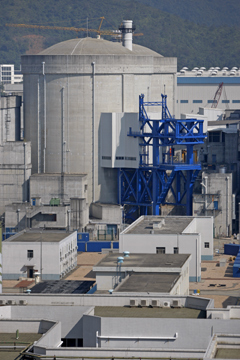
The Ling Ao I nuclear power plant in Daya Bay. The Japanese disaster has stoked global concerns about the safety of nuclear power plants.?[Photo / Bloomberg] |
Japan is racing to prevent a reactor meltdown at Fukushima Daiichi power station whose cooling systems were knocked out by a 9.0-magnitude earthquake and tsunami on March 11. China, planning to build more nuclear reactors than any other country, said on Wednesday that it has suspended approval of all new atomic projects until a safety review has been carried out. "We are reviewing the implications on any new investment, taking into account the Fukushima accident, as well as the relevant national policy on the mainland," CLP said.
There will be no change to operations at Daya Bay, 50 kilometers from Hong Kong, spokeswoman Anthea Cheng said in a phone interview.
Routine checks showed the power station was operating normally, Hong Kong Nuclear Investment Co, the unit of CLP that owns 25 percent of Daya Bay, said on Friday.
CLP rose 1.5 percent to HK$60.85 ($7.80) in Hong Kong trading at the midday break, compared with the 1.2 percent gain in the benchmark Hang Seng Index.
The Japanese disaster has stoked global concerns about the safety of nuclear power plants. Lawmakers in Hong Kong have raised queries about Daya Bay after Hong Kong Nuclear Investment said on Nov 16 that a small radiation leak in a contained area of the plant was discovered on Oct 23.
The leak was classified by China Guangdong Nuclear as the least serious on a scale of one to seven set by the International Atomic Energy Agency and posed no danger to the environment or public health.
Daya Bay began operations in 1994 and uses newer pressurized-water reactors that have greater safety features than the boiling-water reactors used at the 40-year-old Fukushima plant, Hong Kong Nuclear Investment said on Friday.
Hong Kong's government has scheduled a "comprehensive" nuclear safety exercise for early next year, according to a statement released on Saturday. The government said it carries out exercises at least once a year to check the ability of departments to deal with any emergency at Daya Bay.


CLP signed a cooperation agreement with China Guangdong Nuclear in July to take a 17 percent stake in the Yangjiang atomic plant about 220 km west of Hong Kong, which is due to start producing electricity in 2013. The project is still under discussion, according to Monday's statement from CLP.
China is building at least 27 reactors and has 50 more planned, World Nuclear Association data show. China Guangdong is conducting feasibility studies on 25 reactors with capacity totaling more than 28,000 megawatts, the company said.
China National Nuclear Corp, the country's largest atomic plant operator, said on Thursday that it started safety checks at the company's plants across the nation on Wednesday.
Bloomberg News
| 分享按鈕 |