While interviewing Jason Inch by telephone about his latest book, China's Economic Supertrends - How China Is Changing from the Inside Out to Become the World's Next Economic Superpower - a small earthquake propelled my chair backwards. Perhaps it was an omen: Every author would like to shake the world with his or her latest work. We shall have to wait to see if the predictions in Inch's optimistic treatise come true, but it is difficult to argue with his scholarship.
He can draw on a very good pedigree when preaching his take on where the world's second-biggest economy is heading.
Inch is a Shanghai-based economist, academic and consultant who has been researching China's economic, demographic and political trends since 1992. He is a professor who has been living in China since 2003 and holds a master's degree in business administration from Canada's Richard Ivey School of Business. He also attended China Europe International Business School in Shanghai. He holds a Bachelor of Arts degree in Asian Studies from the University of Victoria in Canada and speaks fluent Japanese and Mandarin.
The book takes Aug 8, 2008, as its starting point - the day the Olympics began in Beijing. Inch sees it as the beginning of what he calls an Olympic decade, a time during which he predicts China will overtake the US to become the world's largest economy when measured by GDP.
Inch first documented his insights into China's economy, people and leadership in 2008 in a book called Supertrends of Future China, which was written with James K. Yuann. The authors accurately predicted that China would not only survive the global financial meltdown that began then but would thrive.
Inch's theory is that China's economic development will be driven until 2018 by three growth engines that he deemed turbochargers, a roadmap and four economic supertrends.
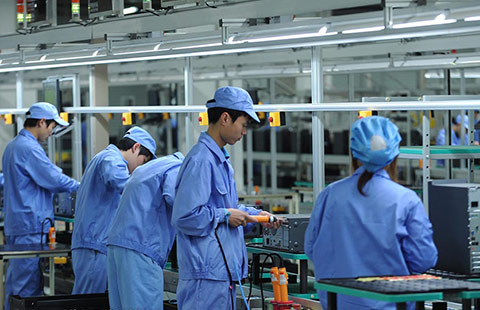
The growth engines are China's export-driven manufacturing industry, consumption in the domestic market and foreign direct investment. The supertrends are new manufacturing, urbanization, sustainability and affluence. These latter, he argues, are where opportunities lie for investors, businesses and individuals.
The roadmap is best exemplified by the country's 12th Five-Year Plan (2011-15).
This book will be followed by two others, one looking at China's demographics and the other, which will be published after the country's leadership change later this year, will take politics as its subject.
One of the problems with producing a book about a quickly changing country is in ensuring that it is up to date. Inch admirably remains pretty contemporaneous, although admitting that he published before it became clear how deep the recessions would become in Europe and the US.
However, "I do not see the US or European trade dropping enough to affect China's growth", he said. "In the longer term, that is obviously a big worry. Recently, there has been more trade with Japan, (South) Korea and Southeast Asian nations. In the longer term, that will offset any losses from the US and Europe."
Inch believes there is only a remote possibility of China's economy having a hard landing, as happened to Japan and South Korea.
"China has so many controls," he said. "China is such a large economy. I don't think it is correct to say there will be a hard or soft landing. Some parts of China will be more affected than others - for example, trade and the Yangtze River Delta. Certain sectors will suffer. However, I don't believe in a hard landing for the economy."
As for protectionism, Inch foresees a retrenchment in the solar power industry as the US imposes tariffs on Chinese photovoltaic cells, and possibly bankruptcies and mergers and acquisitions, although he remains "fairly optimistic" about the sector as a whole.
In his conclusions, Inch poses the rhetorical question, "When is the best time to do business, to invest or to work in China?"
His reply?
"The answer is still, and always, an emphatic 'now'. This book establishes the growth engines, the turbochargers, roadmap and supertrends that propel China forward. They are not short-term trends; they are the defining characteristics of China's Olympic decade and maybe a defining part of what will likely be the China century. The global center of gravity is shifting to Asia and, sooner or later, will be focused on China. This book has shown why and how to be there, but what and when is up to you."
For his part, Inch puts his money where his mouth is: The 40-year-old plans to stay in China for another five years. After that, it is anyone's guess what may happen, but the trends appear self-evident.

Copyright 1995 - . All rights reserved. The content (including but not limited to text, photo, multimedia information, etc) published in this site belongs to China Daily Information Co (CDIC). Without written authorization from CDIC, such content shall not be republished or used in any form. Note: Browsers with 1024*768 or higher resolution are suggested for this site.
License for publishing multimedia online 0108263 Registration Number: 130349