Three generations of Chinese leaders have set the goal that China becomes a "moderately well-off society". Achieving this, by around 2020, will not be easy. China must transform its industries so that enterprises provide higher value and generate higher profits, which enable higher wages for workers.
The key is innovation. Science and technology must be emphasized and commercialized, education must infuse society with creativity, and intellectual property rights must be protected.
The challenge of innovation is what China's new leaders face.
Paradoxically, creativity in China often begins with copying. In Dafen village, more than 2,000 artists, working on oil-painting assembly lines, mass-produce classical masterpieces of Van Gogh, Picasso, Monet, Raphael and Da Vinci, such as Da Vinci's Mona Lisa. Dafen controls 60 percent of the global oil-painting market.
But when the financial crisis hit, painting factories lost foreign orders and many went bankrupt. Painters had to turn to China's domestic market. Only a few could transform themselves from duplicators to originators, but that transformation is the big test for China itself.
Shenzhen is a vibrant metropolis, the cradle of China's reform. In the city center is the world's largest mobile phone market, supplying 80 percent of China's phones. Many are counterfeit, but who says the Chinese can't innovate? I can buy cheap phones with whimsical functions - such as supporting Excel, working a weapon (defensive), or blessed by a mysterious monk. With one phone, not only can I make calls, I can also shave!
One nimble company controls nearly 80 percent of the mobile phone market in Bangladesh, a poor country far away, beating world brands like Nokia and Motorola. Why such success other than price? Imitation, improvements, and localization - which are "second-generation innovation".
In 2011, China recorded over 1.63 million patent applications, including 526,000 for invention patents, ranking first in the world.
Commercialization, however, is uncertain and unpredictable. Converting research ideas into marketable products is the dream of many inventors, but the marketplace is cold and unforgiving, and often a bridge is needed.
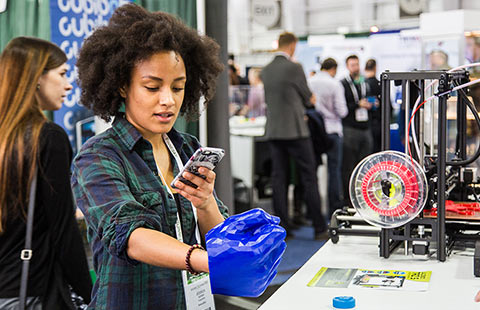
Huang Yan is a 31-year "patent manager" with a keen sense of how markets work. He has about 2,000 patent products in his portfolio, including an LED surface light source and a low-cost 3D printer. Huang's business method is clear: First, he determines the market demand, and then he finds the patents - not the other way around.
In 2012 China adopted the "national strategic emerging industry development plan". Target industries include energy saving, environmental protection, information technology, aviation, biomedicine and new energy vehicles. Energy is especially vital. China's lack of energy resources is a high hurdle for development. (China has surpassed the United States as the largest energy-consuming country in the world.) Hence, the worldwide race for new energy technologies.
Electric vehicles are key. The critical components - lithium batteries - derived from China's aerospace technology, specifically from the Shenzhou manned spacecraft (of which China is very proud). The Shenzhou battery system was developed by Wang Dong, who is now general manager of Shanghai Aerospace Energy Company, which builds batteries for electric vehicles. Stressing safety, reliability and long life, the company's batteries can be charged fully within half an hour. (When key high-tech firms cannot achieve economies of scale and make profits, the Chinese government may support them.)
As the electronics revolution was to the 20th century, the biomedical revolution will be to the 21st century. This time, China intends to be an innovator, not a copier; a leader, not a follower.
In 2009, two Chinese scientists made a major biomedical breakthrough, hailed worldwide, by cloning a mouse from its skin cell. One is Zeng Fanyi, who earned her MD and PhD degrees at the University of Pennsylvania and is vice-director of Medical Genetics at Shanghai Jiao Tong University. Zeng and her team are now pursuing another pioneering program: mammary gland bioreactors.
What's that? Transgenic animals, conceived artificially with injected, targeted genes that express specific functions. The animals secrete in their breasts pharmaceutical proteins that can be used to cure hereditary diseases. While Zeng's transgenic procedure works, its commercialization remains unrealized. So Zeng's research receives ample support from the government, which has been increasing science funding at over 20 percent per year. But bringing new pharmaceuticals to market is a long and perilous process. Only 8 percent of China's investments have become effective drugs.
But who will invest in new ideas - new technologies or brands - if they will be stolen? For innovation to succeed in China, intellectual property rights must be protected and enforced. IPR is perhaps China's largest and most intractable obstacle in becoming an innovative country. Earlier, only foreign companies decried the outrageous copying - stealing, to be blunt - of patented products, but now Chinese companies are shouting the loudest.
Education underlies China's economic future. But what kind of education is optimal for today's knowledge-based industries? Influenced by traditional Chinese culture, students are inculcated with collectivism, forming the habit of obeying authorities. In China it is inconceivable for a student to challenge a teacher. Chinese science students abroad perform stronger on exams but weaker on experiments.
In 2009, among 65 countries taking standardized tests for 15-year olds, Shanghai students took first place in reading, math and science. But of the 50 leading R&D universities in the world, 40 are in the US and the remaining 10 are in Europe - none are in China. In 2009, there were 280,000 scientific papers published in China, but less than 1 percent were published in leading journals.
To bring world-class science to China, Chinese universities, with strong support from China's leaders, offer aggressive incentives to bring world-renowned scientists, originally from China, back to China.
Rao Yi, a distinguished neuroscientist in the US before returning to China, is now dean of Life Sciences at Peking University, and is an outspoken critic of Chinese science. He argues that in allocating science funding, administrators should not influence decisions.
Education reform is now considering how college admissions can rely less on exams, how students might personalize their own education, and how social achievements can be recognized. Some middle-class parents decide to reject China's brutal college entrance examinations and give their children a thoroughly Western education in China. Attracted by the market, many private schools have sprung up.
China's leaders call for "indigenous innovation" - the country must develop its own technologies and proprietary products. Yet China's industrial transformation from assembler-manufacturer to innovator-designer is complex, risky, open to surprise, and will surely take time.
Moreover, innovation requires freedom. To become an increasingly innovative society, China must become an increasingly free society. China must also enforce IPRs and rethink the essence of education.
China's new leaders face the challenge of innovation. The Chinese people are watching.
The author is an international corporate strategist and investment banker. He is the author of The Man Who Changed China: The Life and Legacy of Jiang Zemin and How China's Leaders Think.


Copyright 1995 - . All rights reserved. The content (including but not limited to text, photo, multimedia information, etc) published in this site belongs to China Daily Information Co (CDIC). Without written authorization from CDIC, such content shall not be republished or used in any form. Note: Browsers with 1024*768 or higher resolution are suggested for this site.
License for publishing multimedia online 0108263 Registration Number: 130349