Building on past successes


|
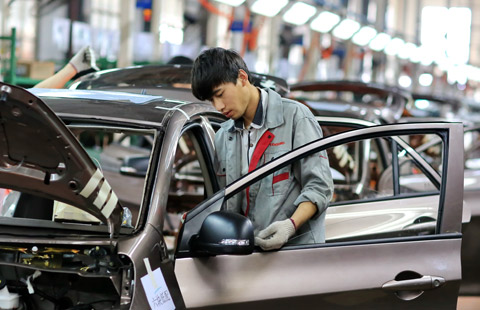
 Lenovo Group Ltd is among the many Chinese companies that have expanded overseas. [Photo / Provided to China Daily]
|
Modifications to business models needed for brands to achieve long-term development
Beijing recently played host to the Third Global Think Tank Summit and, not surprisingly, China's economic development model topped the agenda.
Once again strong arguments were presented for complete and total change in the low-cost business model still pursued by many Chinese companies. Widely respected authorities from government and industry unanimously echoed this need for change, claiming that economic growth would not continue at such rapid pace unless a major shift takes place - and soon.
Over recent years many have also cited a lack of business success internationally as a major concern for China's long-term development. Even the most well-known Chinese brands such as Haier Group and Lenovo Group Ltd remain barely visible on the international brand-awareness radar.
But perhaps it is also important for China's future to reflect briefly on the incredible, even miraculous, speed of economic emergence. China's growth record since the commencement of China's "open door" policy in the late 1970s is the envy of the world - and not just the developed world. Other fast developing nations such as India, Russia and Brazil have been completely outpaced by China. China's recent, more modest gross domestic product figures of around 7.5 to 8 percent still trump India and Brazil's recent efforts with neither managing to report GDP much above 5 percent.
Chinese companies have outperformed those from other developing nations and this should also be presented when arguing for change in any business model. Instead of what appear to be clarion calls for an about-turn, it is vital to portray the strengths behind China's impressive and unprecedented economic progress. These strengths include the speed with which foreign direct investment has been leveraged to increase efficiencies in production and distribution. Establishing and maintaining a low production-cost competitive advantage is still often presented as simplistic and unsustainable. But achieving the lowest-cost position while producing more and more is not at all simple. If it were so, then why have India, Russia and Brazil not fared better?
Chinese industry should, therefore, receive praise for its immense contribution over the last few decades.
Rather than sweeping away the performance of many Chinese companies over the last few decades, the key to continued success lies in building on these strengths. Instead of these rather pessimistic prognoses, commentators should be outlining the steps necessary to build on this solid economic platform now in place across China.
Many of the most famous brand producers, such as H.J. Heinz Co and Nestle SA, started out with the aim of possessing a low cost competitive advantage. Indeed, many of these still produce at low cost for non-branded competitors. Clearly, the disciplines required to achieve efficiencies in production and distribution are also those behind any expansion into the more profitable and sustainable price-insensitive market for branded produce.
It is also the case that corporate expansion almost inevitably involves the establishment of a portfolio of products and brands where each line and even item occupies a quite distinct and different market position. The success of Chinese companies in the low cost/price category should, therefore, not be seen as a weakness but rather as a key building block from which an impressive portfolio will emerge.
It is the balanced nature of this portfolio that is key to sustainable competitive advantage. Premium brands, especially those that aim to evoke exclusivity, also present limitations to future growth. Exclusivity and mass production and consumption will always experience an internecine relationship.
Chinese companies are, however, over-reliant on low cost positioning so plans for - and implementation of - a hybrid strategy should be firmly in place. But the firm foundations of efficiency and cost control have been laid and the importance of this building block cannot be underestimated.
Many have consistently called for more innovation within Chinese companies but creativity can only succeed once firm control is in place. Such cost controls and efficiency were also considerably innovative, new features of Chinese management after the one-child policy was introduced.
Innovation is nothing new, therefore, to Chinese companies, which have worked so well with foreign companies and foreign direct investment. It is now, however, the time for the next phase in innovation, which not only further solidifies a low-cost, efficient corporate culture but which also complements this with a brand-building mentality that permeates every organizational level.
The steps needed to pursue this path to a more balanced portfolio will vary from industry to industry and from company to company. Each individual company possesses a unique culture in which change has to be compatible.
But key to any successful, lasting change in any business model is self-belief and determination within Chinese management. It is the undisputed and unequivocal successes over recent decades that should fuel this mind-set.
The author is a visiting professor at the University of International Business and Economics in Beijing and a researcher at Nottingham University's School of Contemporary Chinese Studies.