Going global? Not so easy


As the world tries to recover from the financial crisis, China has once again astonished everyone with its exorbitant and frequent overseas buying.
Shuanghui International Holdings Ltd, China's largest meat producer, offered to buy US pork giant Smithfield Foods Inc. The deal was given the go-ahead from the Committee on Foreign Investment in the United States. If completed, the deal worth $7.1 billion will be the largest acquisition of an American firm by a Chinese company.
|
 |
Numerous Chinese firms made a name globally by acquiring their more renowned foreign peers. Chinese IT firm Lenovo acquired IBM's PC division in 2005, bringing more brand recognition to Lenovo and an increased market share both at home and abroad. In 2010, Geely, a Chinese automaker based in East China's Zhejiang province, bought a 100-percent share of the Sweden-based Volvo. Volvo's sales volume is expected to hit 800,000 units by 2015. This year, China National Offshore Oil Corp Ltd acquired Canadian oil and gas company Nexen for $15.1 billion. CNOOC's oil and gas output is expected to increase by 20 percent and its proven reserves may grow by 30 percent after the Nexen purchase.
As more Chinese companies clamor to go global, the country has vaulted to become the world's third largest overseas investor in 2012, a significant jump from the sixth spot in 2011.
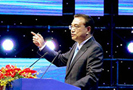
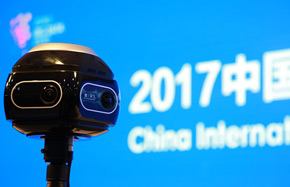
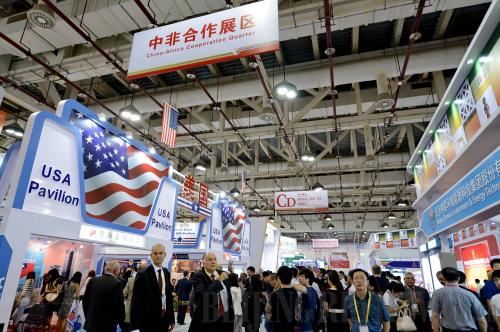
Nevertheless, Chinese Vice Premier Ma Kai said outward investment by Chinese companies is still in a nascent stage. Ma's remarks came in his keynote speech at the 17th China International Fair for Investment and Trade, which opened on September 8. The CIFIT has been held in Xiamen, a coastal city in Southeast China's Fujian province, annually since 1997.
"Chinese companies lack competitive experience when going global," said Ma.
Ma's viewpoint was echoed by experts and industry insiders who attended the CIFIT. The Chinese Government, they say, needs to make overseas investment easier and better understood to companies that wish to seek markets outside of China.
Branching out
Even though global foreign direct investment contracted 17 percent in 2012, China still became the world's third largest investor, after the United States and Japan, according to a report jointly released by the Ministry of Commerce, the National Bureau of Statistics and the State Administration of Foreign Exchange at the 17th CIFIT. China's outward FDI rose 17.6 percent year on year in 2012 to a record high of $87.8 billion, while global FDI slid 17 percent last year amid uncertainties confronting the world economy, according to the 2012 Statistical Bulletin of China's Outward Foreign Direct Investment.
The trend hasn't stopped this year. In the first seven months of 2013, China's outward FDI in the non-financial sector totaled $50.55 billion, up 19.7 percent year on year. Chinese investors made direct investments in 3,275 foreign companies in 156 countries, according to the MOFCOM.
Huo Jianguo, President of the Chinese Academy of International Trade and Economic Cooperation, a think tank under the MOFCOM, said that the surge in outward FDI was mainly driven by domestic enterprises eager to tap overseas markets and profit from using global resources. "Debt crises and slowing growth in developed economies opened up great opportunities for Chinese enterprises to invest abroad, and the appreciating yuan helped the process," Huo said.
Zhao Zhongxiu, Vice President of the Beijing-based University of International Business and Economics, said globalization has been a buzzword for Chinese companies since 2003. Many Chinese companies, with massive amounts of cash in hand, think the time is ripe to expand overseas after the financial crisis roiled the world and led to fire sale prices of some cash-strapped foreign companies, said Zhao. "There are two types of Chinese companies that want to go global—big state-owned companies that wish to acquire foreign technologies and resources, and the more nimble small and medium-sized private firms that look for business opportunities in overseas markets," he said at a sideline of the 17th CIFIT.
Wu Liang, Administrative Deputy Editor in Chief of the Economy & Nation Weekly magazine, said that "going global" is more than a buzzword for Chinese firms: It's an absolute imperative if they want more say in the world's IT revolution. "The IT revolution changed the world, with the Internet reshaping industrial structures and a reshuffle of the global value chain. If Chinese companies fail to seize overseas opportunities during this process, they will lag further behind their foreign peers."