Pilot FTZ to build open economy


Despite rumors about what reforms the FTZ may herald, its long-term policy objectives will generally remain consistent with the requirements of the TPP.
It has four main goals. The first is achieving zero tariffs on all merchandise traded, including agricultural products. The second involves protecting intellectual property rights, and making sure that labor, environmental and safety conditions meet international standards. The third centers on enhancing economic and regulatory fairness and transparency, and removing subsidies and preferential policy support for specific industries and State-owned enterprises. The fourth seeks to fully liberalize the financial services industry, and open up the capital account to facilitate the free convertibility of currency and free movement of capital.
In addition, the FTZ should include all major industries to create a fair sense of competition among State-owned, private and foreign businesses. It should also follow a negative-list management approach, which is to say, it needs to grant access to any businesses that are not prohibited. The traditional method of examining and approving tenants should also change to a registration-based system.
In short, the pilot FTZ scheme should serve as a perfect opportunity to build an open economy on a macroeconomic level by testing out innovative systems in a context of global competition. From this, China can learn about other economic management methods and assess the impact of full liberalization.
Many scholars have compared the Shanghai FTZ to the situation in Shenzhen in 1979, when China began experimenting with more liberal economic policies. Others have drawn analogies with the country joining the World Trade Organization in 2001.
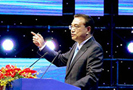
Construction of the Shanghai FTZ is part of a series of reforms by Premier Li Keqiang. These are focused on de-leveraging debt, reducing financial support and upgrading industrial infrastructure in order to better allocate resources through a market mechanism.