 |
|
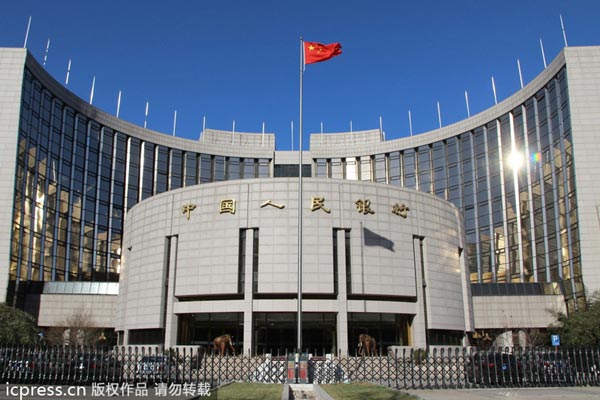
The headquarters and head office of the Peoples Bank of China (PBOC), Chinas central bank, in Beijing, China, 27 November 2013. [Photo/icpress.cn] |
The People's Bank of China, the nation's central bank, injected a net total of 113.8 billion yuan ($18.6 billion) into the country's banking system through open market operations in 2013, a decrease of 92 percent compared with 2012, according to a Securities Times estimate.
The central bank adjusted liquidity levels on China's money market mostly via the issuance of central bank bills as well as repurchase agreements, known as repos, and reverse repos. Analysts said that it's becoming clearer that the central bank is taking a more prudent position. The PBOC is urging lenders to avoid shadow-banking activities, cooling some overheated sectors such as real estate, and curbing local governments' infrastructure programs, analysts added.
In June and December, money rates in China's interbank market spiked to record highs, and some market participants fretted about liquidity levels. Many observers said that the credit crunch was caused by the central bank's hands-off policy, as it refused to aid some market players with cash injections.
"The tougher ones are yet to come. It seems that the central bank will prevent any bank from defaulting, which would cause systemic problems. But it will keep forcing the banks to better manage their cash flows," said Xu Gao, chief economist and head of economic research at China Everbright Securities Co Ltd.
The upcoming Chinese New Year, which will begin on Jan 31, will see the seven-day repo rate at relatively high levels of 5 to 6 percent until early February, compared with the 3 to 4 percent levels seen for most of 2013, analysts said. The rate may be even higher in late January, ahead of the major holiday period.
The credit crunch in June and December proved that "Chinese banks now rely more on the interbank market for funding because of increased competition for deposits - the result of bottom-up interest liberalization and pressure of rolling nonperforming loans," said Wang Tao, chief China economist at UBS China.
Since the start of the global financial crisis in 2008, the Chinese economy has become increasingly dependent on ever-growing credit, mainly boosted by loans from State-owned banks to government-sponsored infrastructure and real estate projects.
China's total social financing - a broad liquidity gauge - increased 13 percent in the first 11 months of 2013 compared with the same period in 2012. On the other hand, growth in the real economy has seen the slowest pace in years.
Many analysts see the spikes in the interbank rates in June and December as a warning that China's economy is overburdened with debt. They added that the central bank has been urging banks to quicken their delevaraging pace.
Copyright 1995 - . All rights reserved. The content (including but not limited to text, photo, multimedia information, etc) published in this site belongs to China Daily Information Co (CDIC). Without written authorization from CDIC, such content shall not be republished or used in any form. Note: Browsers with 1024*768 or higher resolution are suggested for this site.
License for publishing multimedia online 0108263 Registration Number: 20100000002731 

